
Thank you for reading our post, please rate this article at the end.
Reading Time: 9 minutesLast Updated on August 12, 2026 by Paul Clayton
Table of Contents
Buying Used RVs from Dealers vs Private Sellers
Key Takeaways
-
- Market Reality: Any used RV priced under $5,000 or $10,000 should be considered an “as-is” purchase, regardless of the seller’s claims.
- Pricing Dynamics: Private sellers often set unrealistic prices based on emotion or debt, but they offer more room for aggressive bargaining. Dealers have higher overhead and inflated prices, but offer easier access to financing and assistance with paperwork.
- The Inspection is Non-Negotiable: Never hand over money without a professional inspection. A seller’s refusal to allow a third-party inspector (such as one from NRVIA) is a major red flag.
- Seller Transparency: Private sellers usually have a better “feel” for the rig’s history but may hide flaws; dealership sales staff are often seen as less knowledgeable about specific units and are incentivized to close deals quickly.
- Risk and Safety: Private sales carry a higher risk of scams (especially on platforms like Craigslist), whereas dealerships offer a more “professional” environment and potential limited recourse if things go wrong.
- Inventory vs. Convenience: Dealerships offer the convenience of seeing multiple units in one place, but private listings (via RV Trader) offer a much wider variety of brands and floor plans if you are willing to travel.
Interest in the RV lifestyle is at an all-time high, and today, we’re seeing many people getting into RVing by purchasing pre-owned RVs. It makes much more sense to get a pre-owned RV than to buy a new one.
If you’re going to get a pre-owned RV or a used RV under $5,000, your purchase options are pretty much limited to private sellers and RV dealerships. For most dealerships, this price point would be a trade-in.
Each purchase option has its fair share of benefits & drawbacks, and I don’t think there’s a clear answer to which platform is best. There are mixed reviews; therefore, when purchasing an RV under $5,000, you must consider the best long-term ownership decision.
Now, for those torn between the two, here’s a detailed discussion based on user experience to help make the right choice.
Pricing
A pertinent issue when purchasing an RV is the pricing. Of course, all used travel trailers under $5,000 have a $5k ceiling height, but some are cheaper than others. Remember that private or dealer sellers may be ethical or devious in their pricing model.
Most sellers I’ve encountered are ignorant and will give incorrect answers or advice. Their primary goal is to dispose of your used RV at the best possible price.
- Today’s Best Pop-Up Campers
- New vs. Used RV: Navigating the Price Trends
- Can You Rent an RV for a Year?
Let’s start with the private sellers.
Most private sellers ask for unrealistic prices for their used RVs, trying to recoup what they owe or what they originally paid, disregarding current market prices. Of course, not all RV private sellers are this way, but generally, the private sale transactions will vary as much as the individuals involved.
In such cases, bargaining is the way of life, and I’d argue that it’s much easier to find lower prices from private sellers. Conversely, dealers are usually more “professional” in pricing used RV trailers and will most likely use the perceived market rate. However, like other sellers, they’re still trying to get the most out of the sale.
A big issue for dealers is high overhead, which may lead them to quote inflated prices to cover it, including discounts and more attractive trade-in values.
However, the overhead on the dealership might be worth it if you need financing and warranties. Dealerships have financing advantages, which are certainly faster and often offer better rates.
Whatever route you choose, one thing to remember about used RVs is that the market is strictly as-is—you negotiate what’s included or has been repaired before.
While most RV dealers will always assure you they’ve gone through everything, that’s rarely true. In most cases, it’s about allowing buyers to test and fix what they complain about.
When buying a used RV for under $5,000, ensure the contract states that the purchase is subject to an inspection by an inspector of your choice and to your sole satisfaction. The sale purchase should also allow a thorough inspection and repairs of any defects.
The dealer or private party should not receive a dime until the inspection is complete. If the seller doesn’t welcome an inspection, that might be a sign to avoid the rig.
Inspecting a used RV rig is crucial if you don’t want surprises along the way. nrvia.org provides some good RV inspectors. They may not be cheap, but they are worth it.
 Rig History
After buying several RVs from private sellers, I’m doubtful I’ll buy another new one. I’ve found better deals, and many private sellers will have usually worked out all the bugs. With a private seller, you learn a lot about how the rig was cared for from what the previous owner says.
I’d argue that a private seller knows more about what they’re selling.
On the other hand, dealers are like slimy used-car dealers, and I don’t expect them to know much about a particular rig. All rigs are general-purpose, and they may not know what’s wrong with any of them. In most cases, they rely on what the previous owner told them during trading.
But don’t take my word for it.
Private sellers aren’t truthful either and don’t know how to lie very well, but a dealership salesman gets paid the better they lie. While I expect a private seller to be conversant with their used travel trailer under $5,000, they might be one of these sellers that don’t share the WHOLE story with you unless you ask the right questions. Therefore, they’re unlikely to share the “gotchas” that may come your way.
On the other hand, dealers may encourage you to spend time with the rig and look for issues. If you find one, they will fix it, but not after you drive off. A private seller doesn’t provide any guarantee.
In short, everything is a crap shoot regarding the travel trailer history; Pick a deal you’re comfortable with and go for it.
Discount and Warranties
RV dealerships take the lead regarding discounts and warranties here. I’ve never had a private seller discount, but at least with a dealership, you have some help if anything goes wrong. Generally, you’ll likely have more recourse with a dealer than a private seller if something goes wrong.
On the other hand, since there is no standardized price for private sellers, you shouldn’t expect a typical discount percentage.
And this is why most sellers set a high price for their travel trailers, leaving room for negotiation. Others will just pick a random value in the air and wait for events to show what’s reasonable. It’s not a useful idea, but quite common.
On the other hand, dealers will price their units high because the buyers will feel great if they get a discount. But remember, the final price will still be high enough to cover their profits. I always advise going to the buying table with a WYSIWYG attitude. IMO, the warranties and discounts are usually crap.
The other most important thing is knowing the unit’s value and offering what makes sense to you. Ignore the seller’s asking price, be prepared to back up your offer with data and other supporting materials, and see where the negotiation goes.
Risk
I’ve run across several scam postings on Craigslist, and from experience, it happens more often than you would think. Generally, the risk of being duped or scammed is much higher in a private seller RV deal than in a dealership deal.
The good news is you can always follow my checklist to determine why an RV owner is disposing of their travel trailer:
- Never purchase a travel trailer if you consider the deal too good. Always follow your instincts.
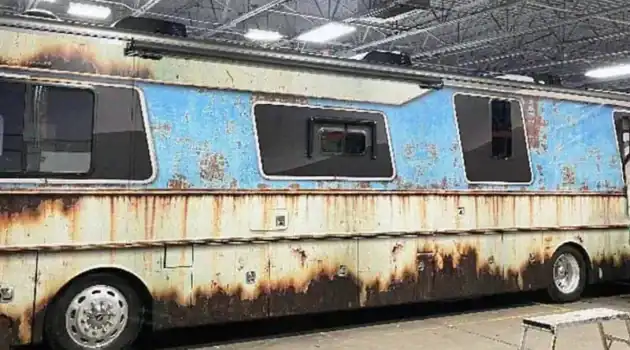
- Avoid travel trailers you think are already bringing financial misery to the current owner. The owner can barely keep up with the maintenance and will sell you a dilapidated RV.
- You should also stay away from lemons. These travel trailers seem unfixable, with many patch jobs and mismatched repairs.
- RVers may also dispose of their travel trailers if they are too big or too small for their needs. This is fine.
- If they’re also looking to upgrade to something fancy and have enjoyed using the existing rig, you can bet they’ll pass it along to you.
- Even after verifying everything, don’t be too quick to immediately give out money. The market isn’t so hot that you’ll lose your rig.
Variety
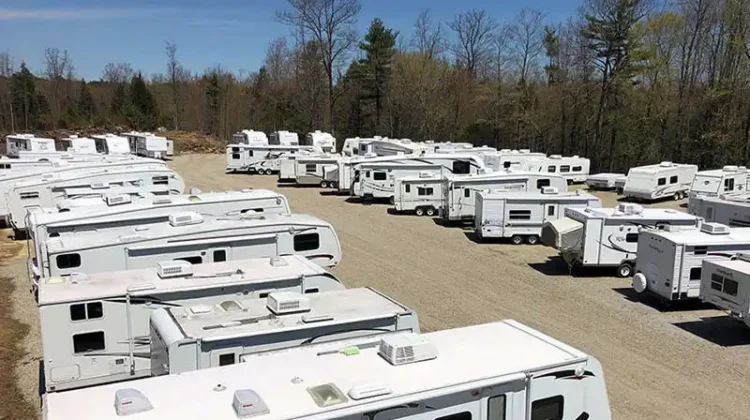
RV dealers are great places to buy new RVs. They have a selection, all conveniently located in one place for you to “touch and feel.” However, even with this convenience, their inventory is limited and may not include all the RV brands, floor plans, or designs you desire.
RV dealerships generally work hard to sell their existing RVs, not the ones you desire or want. On the other hand, private RV sellers give you a chance to pick almost any RV that may tickle your fancy. With online RV marketplaces like RV Trader, you can find any RV on your wish list, including fancy or classic RVs.
RVTrader, for example, lists over 150,000 RVs in its database, and this should be more than enough to find what you’re looking for.
The only drawback with the private sellers is the distance. Most RVs aren’t in a single location; you might need to travel thousands of miles to view them. It can complicate the purchase process.

Buyer Beware- What to Consider when Purchasing Travel Trailers Under $5,000 or even $20,000
Here’s a quick rundown of the important tips to consider when purchasing your next travel trailer under $5,000 or even $10,000:
- Sellers, whether private sellers or RV dealers, aren’t your friends
- Always assume the seller has zero knowledge about the travel trailer
- You should be the expert and learn everything about the travel trailer. The more knowledgeable you are, the better you’ll be during the negotiation.
- You must always perform a pre-purchase inspection before committing to the sales agreement. It’ll save you from unpleasant surprises and give you an idea of the issues to deal with
- Consider the RV sale to be final. Assume there will be no warranties or promises. Unless you have these in writing, they don’t exist.
- Private sellers will collaborate and work with you on what gets reported to your DMV, but a dealer won’t
Frequently Asked Questions
Q: Is it better to buy a used RV from a dealer or a private seller?
There is no single “best” option. Private sellers often have better knowledge of the rig’s history and lower prices, while dealerships offer the convenience of financing, professional paperwork, and a centralized location to view multiple units.
Q: Can I get a warranty on a used RV priced under $5,000?
Generally, no. Most budget-friendly used RVs are sold “as-is.” While some dealers may offer limited short-term warranties, they are often factored into an inflated sale price. It is safest to assume all repairs will be your responsibility once the sale is final.
Q: How do I avoid getting scammed by a private seller?
Always follow your instincts and never send money before seeing the unit. Avoid deals that seem “too good to be true,” use reputable marketplaces like RV Trader, and ensure you perform a hands-on inspection to verify the rig isn’t a “lemon” with hidden water damage or mechanical failure.
Q: Should I hire a professional inspector for a cheap used RV?
Yes. Even for an RV under $5,000, a professional inspection (such as through NRVIA) is highly recommended. It prevents expensive surprises and provides you with data to negotiate a lower price or request specific repairs before signing the contract.
Q: Why are private seller prices often higher than the market rate?
Many private owners price their RVs based on what they originally paid or what they still owe on their loan. This “emotional pricing” often ignores current market values, making it essential for buyers to bring their own data to the negotiation table.
Final Thoughts
Trust Yourself, Not the Seller: Assume every seller is either uninformed or biased; your own research and expertise are your best defense during negotiations.
Get Everything in Writing: Verbal promises regarding repairs or warranties are meaningless in the used RV market unless they are officially documented in the sales contract.
Focus on Condition Over Price: While the “ceiling” might be $5,000 or $10,000, the true cost of the RV includes the repairs you’ll face after driving off the lot.
Walk Away if Necessary: The market is vast enough that you should never feel pressured to buy a “lemon” or a rig that doesn’t feel right.
Final Choice: Choose a private seller for the best potential price and maintenance history, or choose a dealership if you value financing options and a centralized shopping experience.
Remember that you’re buying a travel trailer, not the seller. So, do your research and buy the one that seems like the best deal for you, regardless of the seller.