

Kansas RV Rental: Flint Hills Prairie, Big Lakes and Wide-Open Roads
Kansas surprises people who only know it from the interstate. Get off I-70 and you’ll find the rolling Flint Hills, the last great stand of tallgrass prairie in North America, chalk badlands rising out of the western plains, and big reservoirs lined with campgrounds. Add Old West towns, a world-class space museum and some of the darkest night skies in the Midwest, and Kansas makes a relaxed, uncrowded RV trip.
Campsites are affordable and easy to find, but the state has its own challenges: strong crosswinds, sudden spring storms, cashless tolls and long stretches between services out west. This guide covers where to pick up an RV, where to go, where to camp and how to drive Kansas safely.
Browse Kansas RV rentals on Outdoorsy
Kansas RV Rental at a Glance
| Main pickup areas | Kansas City suburbs (Olathe, Overland Park), Wichita, Topeka, Lawrence, Manhattan |
| Top destinations | The Flint Hills, Monument Rocks and Lake Scott, Milford and El Dorado lakes, Hutchinson, Dodge City |
| State park camping | About $10–$25 a night depending on hookups, plus a small daily vehicle permit |
| Free camping | Limited; the Cimarron National Grassland in the far southwest is the main option |
| Best seasons | Late spring and fall |
| Watch for | High winds, severe spring storms, cashless turnpike tolls, few services in western Kansas |
Source: Kansas Department of Wildlife and Parks. Fees are rounded estimates and can change.
Best Places to Pick Up an RV in Kansas
Kansas City Suburbs
Olathe, Overland Park and the rest of Johnson County have the most rentals in the state, and Kansas City International Airport is a short drive away. From here you’re about two hours from the Flint Hills and close to the lakes around Lawrence and Topeka.
Wichita
Kansas’s largest city is the best starting point for the southern and western half of the state. Cheney and El Dorado state parks are less than an hour away, and Hutchinson’s Cosmosphere is a short drive northwest.
Topeka, Lawrence and Manhattan
These college and capital towns sit along I-70 in the northeast. Manhattan is right next to Tuttle Creek and Milford lakes and the northern edge of the Flint Hills, making it a great base for a lake-and-prairie trip.
Across the Border
Many Kansas City rentals are listed on the Missouri side, so it’s worth searching both states. Western Kansas trips also pair well with a Colorado RV rental.
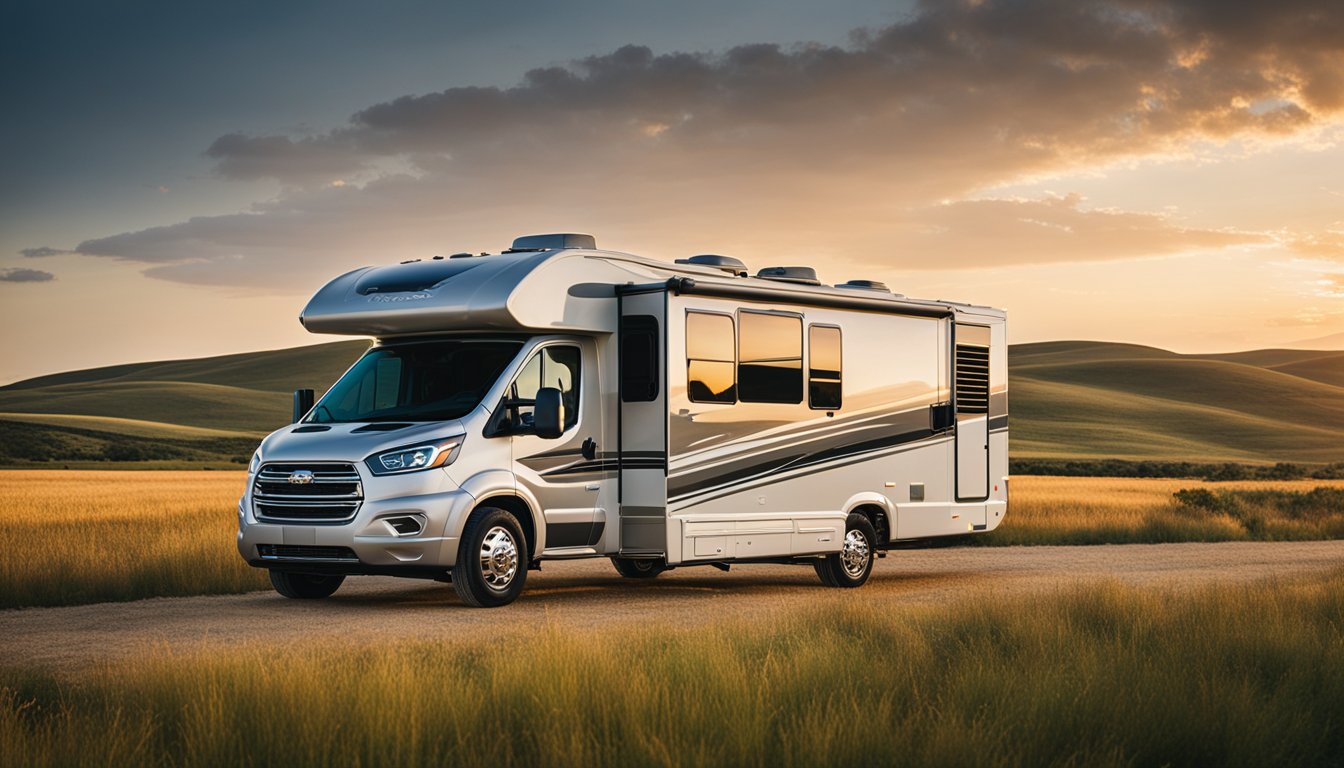
Kansas’s Best RV Road Trips
The Flint Hills
The Flint Hills Scenic Byway (K-177) runs south from Council Grove through endless rolling grassland. Stop at the Tallgrass Prairie National Preserve near Strong City to hike the prairie and maybe spot the bison herd. The preserve has no campground, so stay at Council Grove Lake or at El Dorado State Park, the largest state park in Kansas, at the south end of the hills.
Monument Rocks and Lake Scott
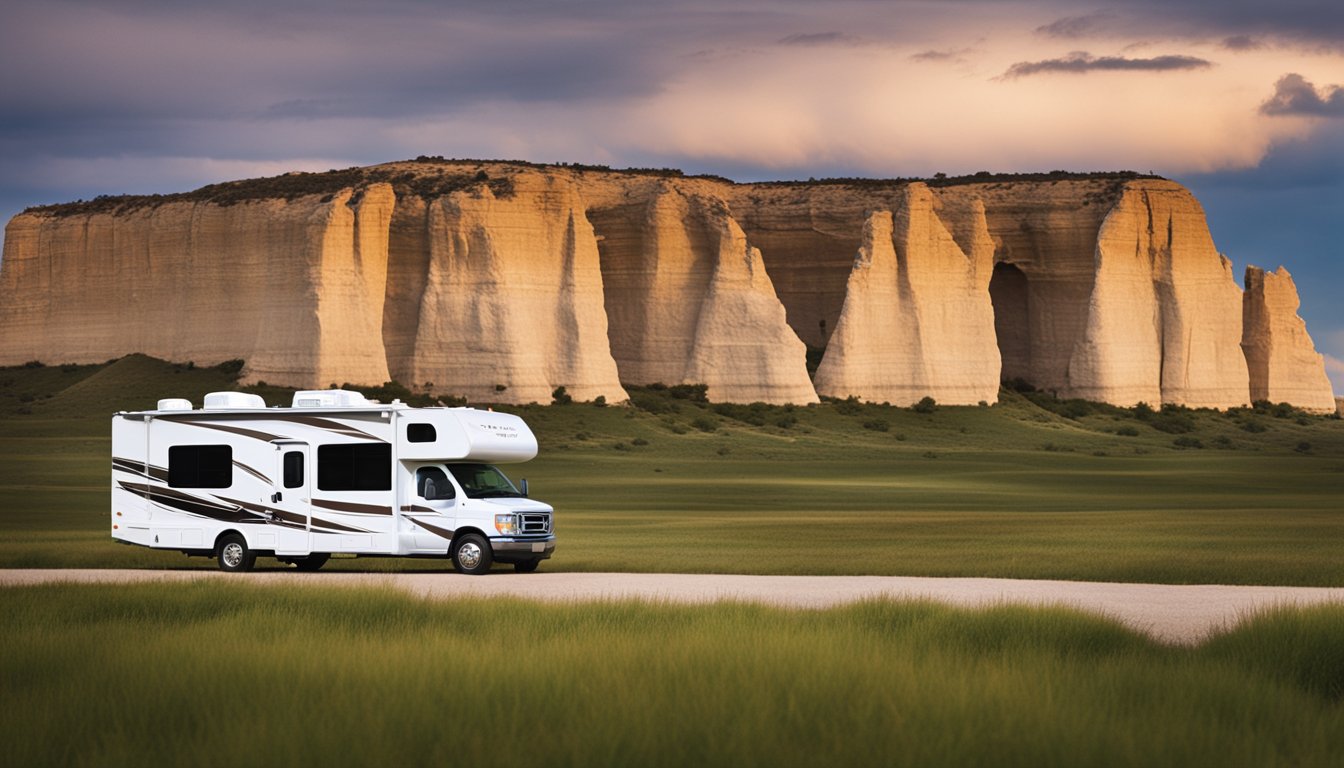
In western Kansas, Monument Rocks and Little Jerusalem Badlands State Park reveal towering chalk formations left by an ancient inland sea. Neither has camping, so base yourself at Lake Scott State Park, a sheltered canyon oasis with campsites, a spring-fed lake and the ruins of El Cuartelejo pueblo. The roads to Monument Rocks are gravel and dirt and can turn slick after rain, so check conditions first.
Lake Country
Kansas’s big reservoirs are its best RV destinations. Milford Lake, the largest lake in the state, along with Tuttle Creek, Wilson, Perry, Clinton and Cheney, offer state park and Army Corps of Engineers campgrounds with electric hookups, boat ramps and beaches.
Old West and Route 66
Follow the Santa Fe Trail to Dodge City’s Boot Hill Museum, visit the Eisenhower Presidential Library in Abilene, and see the space artifacts at the Cosmosphere in Hutchinson. In the far southeast corner, Kansas has a short stretch of historic Route 66 through Galena and Baxter Springs.
For stargazing ideas, see our list of top national parks for stargazing, and use our best camping apps to plan your route.
Where to Camp in Your Rental
Kansas State Parks
Kansas’s state parks, most of them on lakes, are some of the most affordable in the country. Expect about $10–$25 a night depending on how many hookups you need, plus a small daily vehicle permit and a booking fee. Some popular sites carry a small extra charge in spring and summer, and holiday weekends require multi-night minimum stays. Reserve through the KDWP online system, especially for summer weekends.
Source: KDWP park fees
Army Corps of Engineers Campgrounds
The Corps runs many lakeside campgrounds across Kansas, often with electric and water sites, and books them through Recreation.gov. They’re a great alternative when state parks are full.
Private Campgrounds
Private RV parks along I-70, I-35 and near the cities offer full hookups and pull-through sites, which can be handy on a long travel day.
Free Camping
Kansas has little public land, so free camping is limited. The main exception is the Cimarron National Grassland near Elkhart in the far southwest, where dispersed camping is allowed. Some small towns also offer free or low-cost city park camping; check locally before you stay.
Choosing between sites? Read our tips for choosing the perfect campsite.
Driving an RV in Kansas
Respect the Wind and the Weather
Strong crosswinds are common across Kansas, especially on I-70 in the western half of the state, and tall RVs catch the wind like a sail. Slow down in gusty conditions, keep both hands on the wheel, and consider waiting out high-wind warnings. Spring and early summer also bring severe thunderstorms, large hail and tornadoes. Keep weather alerts turned on, know where you’d take shelter, and never try to outrun a storm in an RV.
Know the Turnpike Tolls
The Kansas Turnpike, which links Kansas City, Topeka and Wichita, uses all-electronic, cashless tolling. Vehicles with a K-TAG or a compatible tag from states like Oklahoma and Texas pay the lowest rate. Without one, the toll is billed to the vehicle’s plate by mail at a higher rate, so ask the owner how tolls will be handled.
Source: High Plains Public Radio
More Kansas Driving Tips
- Fill up often out west. Towns can be far apart in western Kansas, so don’t let the tank run low.
- Watch for farm equipment. Slow tractors and combines share rural highways, especially at harvest time.
- Avoid wet dirt roads. Rural gravel and dirt roads can become impassable for a heavy RV after rain.
- Plan for winter. Snow and ice can close I-70 and other highways, and many rentals are winterized in the off-season.
New to RVing? Start with our tips for new RV owners.
When to Rent an RV in Kansas
- Spring (April to May): Green prairie and wildflowers, but also peak severe-weather season. Stay flexible and watch the forecast.
- Summer (June to August): Lake season. Days are hot and campgrounds are busiest on weekends and holidays.
- Fall (September to October): Comfortable temperatures, golden prairie grass and calmer weather. Often the best time to go.
- Winter (November to March): Cold and windy, with fewer rentals and limited campground services.
How Much Does an RV Rental Cost in Kansas?
Rental prices depend on the type of RV, the season and how far ahead you book. Campervans and small towable trailers are the most affordable options, while large Class A motorhomes cost the most. Longer trips often earn weekly or monthly discounts. Check live Outdoorsy prices for your dates.
Beyond the nightly rate, budget for:
- Mileage and generator fees beyond the included allowance
- Insurance or a protection plan
- Delivery, cleaning and dump fees
- Campsite fees and state park vehicle permits
- Turnpike tolls and fuel, which add up quickly across a wide state
Comparing platforms? Read our RVshare vs. Outdoorsy comparison.
Frequently Asked Questions
Where can I pick up an RV rental in Kansas?
The Kansas City suburbs, especially Olathe and Overland Park, have the most rentals, followed by Wichita, Topeka, Lawrence and Manhattan. Many owners also offer delivery to campgrounds.
How much does it cost to camp at a Kansas state park?
Roughly $10–$25 a night depending on hookups, plus a small daily vehicle permit and booking fee.
Can I camp for free in Kansas?
Options are limited, but dispersed camping is allowed on the Cimarron National Grassland in southwest Kansas, and some small towns offer free or low-cost city park camping.
Does the Kansas Turnpike take cash?
No. The turnpike is fully cashless. A K-TAG or compatible tag gets the lowest rate, and vehicles without one are billed by mail at a higher rate.
Is it safe to drive an RV in Kansas wind?
Usually, with care. Slow down in gusty crosswinds, and pull over or delay your trip during high-wind warnings or severe storms.
Heading into a neighboring state? See our Missouri, Oklahoma and Nebraska RV rental guides.


