

Thank you for reading our post, please rate this article at the end.
Reading Time: 10 minutesLast Updated on May 14, 2026 by Paul Clayton
Table of Contents
Your Used RV Is Not Welcome Do To The 10 Year RV Rule
While it might seem discriminatory, the “10-Year Rule” is a common industry practice used by private RV parks to maintain a specific standard. Understanding that this rule is often used for selective enforcement rather than as a hard line can help owners of older rigs navigate their travels without being turned away.
Key Takeaways
-
- Definition of the Rule: The 10-Year Rule is a policy under which campgrounds (primarily upscale resorts) reserve the right to deny entry to any RV manufactured more than 10 years ago.
- Primary Motivations:
- Aesthetics: Resorts want to maintain a “high-end” gated community appearance and avoid “eyesore” rigs.
- Safety & Liability: Older, poorly maintained rigs are seen as higher risks for oil leaks, electrical issues, or mechanical breakdowns that could damage the property.
- Legal Protections: Some parks use the rule to prevent “squatting,” as older, non-functioning rigs are harder to evict or move if a tenant refuses to leave.
- Selective Enforcement: In many cases, the rule is a “judgment call.” If an RV is 15 years old but looks pristine and well-maintained, most park managers will waive the restriction.
- Navigating Restrictions:
- Provide Visual Proof: Offer to send recent, high-quality photos of your rig during the reservation process to prove its condition.
- Focus on Maintenance: Keeping decals fresh, the exterior clean, and avoiding “tarp repairs” can bypass most age-related scrutiny.
- Duration Matters: Parks are much stricter about age requirements for long-term or seasonal stays than for a single-night stopover.
- Reliable Alternatives: Public lands (BLM), National Parks, State Parks, and County Parks almost never enforce age restrictions and are generally more inclusive of all RV types.
Generally, the price and condition of an RV are the two main factors that determine its value.
However, RV age is another factor you should always account for, especially if you plan to RV in upscale RV parks.
- Today’s Best Pop-Up Campers
- New vs. Used RV: Navigating the Price Trends
- Can You Rent an RV for a Year?
See, if your RV is older than 10 years, some RV campgrounds may refuse to make reservations due to the 10-year RV rule. It’s not a common rule, but it exists, and I have witnessed RVers getting rejected from campgrounds. I’ve been a victim too, several times in my ’95 Yellowstone class C.
What’s the 10 Year RV Rule?
The 10-year RV rule is simply a policy adopted by some RV camps that denies older RVs access or entry.
I know it sounds ridiculous and terribly discriminatory, but it’s not the only absurd rule in camps. For example, some RV parks enforce the RVIA sticker requirement. Other parks will only accept Class A rigs. I also know parks that don’t allow pets. It’s a free market.
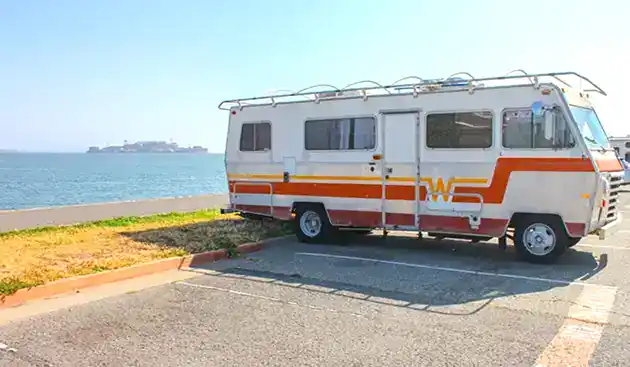
However, the 10-year RV rule policy is mainly based on the assumption that RVs over 10 years old might be too weathered or worn.
But, in my opinion, the policy is similar to the origin of the “no shoes, no shirt, no service” rule. It was meant to keep out the hippies and black folks and was selectively enforced against a certain class of people they didn’t like. Therefore, the rule is all about classism.
The good thing is, in most cases, you’ll find parks with this policy use a “judgment call” on older RVs, and sometimes, they’ll grant you access if your rig is well-kept and maintained.
From experience, there are two main types of upscale parks with RV age limits.
The first category of the park is the “resort” type of park. These are the gated community parks with paved roads, manicured lawns, and fancy amenities.
The resort parks reposition themselves as the perfect destination for the long-term-stay working class and will only accommodate the “choicest” RVers. They’re likely to turn the average RVer down unless their rig is classy, and they have the financial might to drop three figures a night to spend time at the park.
The second category of parks with the policy is those that have to. If your run-of-the-mill, dirt-roaded camp is enforcing this policy, they’re trying to maintain a semblance of dignity.
It’s trying to keep riff-raff from accessing the establishment and to maintain a park free of rusted RVs that are usually more mold & rust than a machine.
Of course, the latter camps are budget-friendly, and even with the rule, you’ll still be fine with your older and well-maintained RV.
Just send them your RV picture; if it’s in decent shape, there is no need to worry. I feel the rule is meant to keep the undignified RVs out, not to grant access to the newish ones.
What’s the Purpose of the 10 Year RV Rule?
In the section below, we’ll look at some major reasons campgrounds enforce the 10-year RV rule.
1) Safety
I suspect one of the major reasons for the 10-year rule is to keep falling apart RVs from coming in. It’s all about ensuring you don’t park some broken-down liability on their establishment.
Generally, it’s not like many camps with this rule will turn just any old RV, but they’ll mainly target the old junky units that people hardly maintain.
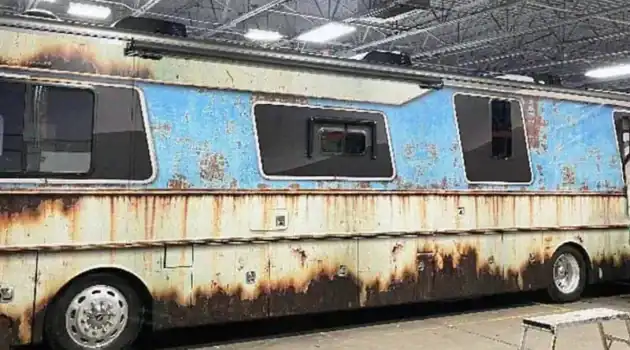
Some older RVs are prone to mechanical damage, especially if they are not well-maintained. It might be a harmless drip or a serious oil spill.
And so, rather than the campground inspecting every RV for mechanical defects, some have chosen a cutoff age for RVs to limit the number of RVs with such issues.
The good thing is that if it’s all about mechanical health, you’ll, in most cases, have the rule waived for you, even on an old RV, provided it’s well-maintained.
2) Aesthetics
Some camps, especially the large resort areas or the exclusive parks, usually have more than enough patrons and can be picky about which rigs they accept.
Such campgrounds don’t want a “trailer trash” image and try to limit the shitty ass old rigs that look like a dump.
These camps have a “look” they’re trying to achieve and don’t want eyesores around. And therefore, the age limits are there to give the air of fine living, much like a gated community.
3) Guest Consideration
This may sound stupid, but sometimes patrons staying in a three-figure-a-night park don’t want to park their million-dollar RV next to a piece of shit that looks like it was on the set of National Lampoon’s Christmas Vacation.
An old camper could be an eyesore to the picky patrons, and if they complain about your rig, you’re likely to get kicked out.
Generally, the potential for losses and the need to please high-end clients are two of the reasons most camps have an age limit.
4) Legal Reasons
The fourth reason I suspect some campgrounds decline older RVs is that I assume they’ve had issues with ruffians or drugs in the parks.
Some RVers will set camp in private parks and extend their stay. They become squatters in parks, and evicting them becomes an issue, especially in states with strict tenant policies.
So, rather than the hassle of going to court to seek an eviction letter and everything, most camps would rather not open this can of worms.
5) Convenience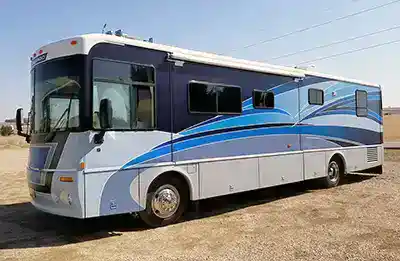
Campgrounds with no rules or standards are likely to attract barely street-worthy rigs. And once they extend their stay at the park, they become even less streetworthy.
The problem is that when the park owner needs to remove them from the park, they must deal with the headache of dealing with a broken-down RV on their property.
It’s all the hassle that sometimes makes camp owners set an age limit on all RVs accessing their establishment.
What To Do if Your RV is Older than 10 Years
It’s disheartening to be denied access to a campground with your older RV, especially if it’s all you can afford.
However, there are several tips you can still use to help you gain access, even with an older RV, even in parks with a 10-year RV policy.
GO BLM Camping
If you have an old RV and are constantly getting denied access to campgrounds, you could consider BLM (Bureau of Land Management) camping.
BLM camps are usually less crowded compared to RV parks. There’s also no competition for resources, and no one is on your neck with some stupid rules.
Visit Parks with No 10-Year Rule
I’ve camped several times in camps with the 10-year policy, and the experience is usually pretentious. The crappy subdivision makes the experience less enjoyable.
I’d rather stay in state or county-owned parks, or somewhere that’s inclusive.
So, unless you like RVing in “orderly” parks where you have to follow some strict, crazy rules, I’d consider the national, state, or county-owned parks without the 10-year RV crap rule.
Make your Rig Appealing
I’ve camped in parks with the 10-year RV policy, and I’ve seen it waived on some older RVs. It all depends on the RV’s condition.
Actually, most parks have the 10-year rule, but it’s only used to keep the trailer-trash RVs out, not the decent ones. Most parks have it in writing and only bring it out when needed.
Most RV parks may ask you to send a photo of your RV when making a reservation. And if there’s evidence, it’s in decent shape; most are usually chill.
The key is ensuring you don’t show up in an RV patched up with tarps. Your rig doesn’t have to be pristine, either, or look like it’s going to win any pageant. Ensure the finish and decals are fine, and the presentation is decent.
Research
Finally, you must always research a campground before heading out. Don’t just go there blindly.
 Call or email management to inquire about campground rules and accommodations. Even if you don’t see a mention of age restrictions, inquire whether your rig will be allowed.
And the good thing is you can do it in the comfort of your house. Apps like Dyrt will let you find campgrounds and their reviews.
Reservation Tips
If you have a camper older than 10 years and the reservationist asks about your truck’s age, here are some ways to handle the question.
White Lies Will Do
If you have one of those RVs with a timeless look, you could make up a year for your RV to suit the camp’s age parameters.
After all, there are hundreds of RV models in the market, and I don’t think there’s a way a camp’s staff will differentiate between an 8-year-old and a 20-year-old RV unless they check on the registration, which rarely happens.
The odds of a staff member checking the actual year of your rig manufacturer are pretty slim, especially if your RV is well-maintained.
When I’m asked the age of my camper, I usually say 8 years, yet it’s more than 15 years old. It’s well-maintained, though, and I’ve never been requested to show proof of age or anything.
Take Clear Pictures
Many campgrounds will likely bend the 10-year rule on any RV, provided it’s well-maintained.
Most campgrounds will ask you to send photos of your RV when you make a reservation. I suggest you wait until the weather is clear and the conditions are good, and then take a picture of your RV.
Unless the campground is full, you can always be sure no one wants to see a customer leave, especially if you send snapshots of a neat, clean RV.
Consider your Stay Duration
Finally, consider your length of stay. Unless you’re camping in an upscale park, most parks aren’t rigid on the 10-year RV policy and will still allow the iffy-looking RVs, provided they’re not on a long-term stay.
Most of the time, they’ll deny access to these campers if they’re seeking to stay for weeks or longer.
Frequently Asked Questions
Q: Is the 10-year rule a legal requirement for all campgrounds?
No. It is a private policy set by individual RV park owners, not a government regulation. Because RV parks are private businesses, they have the right to set their own entry standards, similar to a “no shirt, no shoes, no service” policy. You will rarely find this rule enforced at public locations like National, State, or County parks.
Q: Why do campgrounds care how old my RV is if I’m paying the same rate?
Campgrounds primarily use the rule to protect their brand and property. They want to maintain a high-end aesthetic (avoiding “trailer trash” stereotypes), ensure guest safety by minimizing mechanical risks like oil leaks or electrical fires, and avoid the legal headache of dealing with broken-down rigs that may become abandoned or difficult to evict.
Q: If my RV is 12 years old but in perfect condition, will I automatically be rejected?
Not necessarily. For many park managers, the rule is a “safety net” rather than a strict law. If your rig is well-maintained, clean, and has intact decals, many parks will make an exception. It is always best to be proactive by offering to send clear, recent photos of your RV to the management during the booking process.
Q: What types of RV parks are most likely to enforce age restrictions?
You are most likely to encounter this rule at “luxury resorts” and gated RV communities. These parks often cater to long-term stays or high-end travelers and prioritize a uniform, upscale appearance. Budget-friendly private parks may also have the rule in their fine print, but they usually only enforce it to keep out “eyesore” vehicles that appear unroadworthy.
Q: What should I do if my older RV is denied entry?
If a private park won’t budge, your best options are to look for public lands managed by the Bureau of Land Management (BLM) or visit government-run parks (State/National), which do not discriminate based on vehicle age. You can also use apps like The Dyrt to find inclusive campgrounds that specifically mention they welcome vintage or older rigs.
Final Thoughts
I hate it when people create blanket rules to address specific issues. But again, some of the justifications for this policy are valid and legal. And the good thing is that, provided your RV is well-maintained and neat, you can always circumvent this rule.
-
Condition Over Chronology: The 10-Year Rule is less about the actual manufacture date and more about the pride of ownership. An older, polished rig is far more likely to be accepted than a five-year-old rig that is dirty or falling apart.
-
Do Your Homework: To avoid the frustration of being turned away at the gate, always call ahead or research specific park policies on apps like The Dyrt before arriving.
-
Honesty vs. Strategy: While some owners use “white lies” or “timeless” designs to bypass age questions, the most reliable way to secure a spot is through transparent communication and a well-kept vehicle.
So, you don’t necessarily have to go for a new rig in your next RV purchase. Simply choose an old and well-maintained RV. It’s much cheaper and depreciates much less than a new rig. And if you keep it in good condition, you shouldn’t have a problem accessing any RV park. Eliminating, Your Used RV Is Not Welcome Due To The 10 Year RV Rule.