
Thank you for reading our post, please rate this article at the end.
Reading Time: 11 minutesLast Updated on July 2, 2026 by Paul Clayton
Table of Contents
Best Lures For Inshore Saltwater Fishing
Inshore fishing requires a strategic approach to lures and timing to be successful in the “skinny water.”
Key Takeaways
-
- Versatile Staples: The Paddletail Jig is rated as the best all-around lure for finding fish in new areas. It is inexpensive, easy to use, and highly effective for trout and redfish near structure or on the flats.
- Specialized Lure Selection:
- Weedless Spoons: Essential for fishing over grass and mud flats where traditional hooks would snag. Gold is the most popular color for inshore environments.
- Topwater Plugs: Best used during low-light periods (dawn/dusk). Popular models include the Heddon Super Spook and Rapala Skitterwalk.
- Bucktail Jigs: A “go-to” for snook, but also versatile enough for pompano and redfish.
- Jerkbaits/Twitchbaits: 5-inch soft plastics rigged weedless are the standard for grass flats.
- Equipment Optimization:
- The “Topwater” Line Rig: Use a braid-to-mono setup. Braid provides buoyancy and casting distance, while a 2-to-3-foot monofilament leader acts as a shock absorber to prevent hooks from pulling.
- Rods: A longer (7ft+) rod with a fast action/taper is recommended for better casting distance and imparting the necessary “walk the dog” action to lures.
- Optimal Timing:
- Redfish: Most active early in the morning.
- Seasonal Shifts: While dawn and dusk are generally best, midday can be productive in early spring because it is the warmest part of the day, increasing fish activity.
- Environmental Awareness: Polarized sunglasses are mandatory for “sight fishing” on the flats. Anglers should also look for “signs of life,” such as jumping baitfish or sudden changes in water color indicating depth shifts.
Here are the best lures for Inshore Saltwater Fishing
1. THE PADDLETAIL JIG
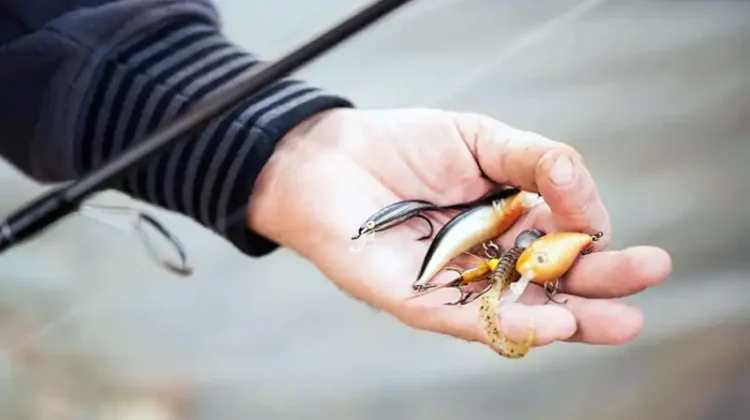
A soft-plastic paddletail on a jig head is an inexpensive, easy-to-use inshore fish lure. It’s particularly good for catching trout and redfish near structure or on the flats. The paddleletail jig can be fished with a straight retrieve or by bouncing it off the bottom with a twitch-twitch motion.
2. THE WEEDLESS SPOON
We may use the Johnson Minnow Spoon on grass and mud flats because it is weedless. For inshore anglers, gold spoons appear to be the most common, but almost any color will suffice.
3. TOPWATER PLUGS
Topwater lures are a great way to entice inshore fish and get them to strike with a bang. Two of our favorite topwater plugs are the Heddon Super Spook and the Rapala Skitterwalk. For tarpon, single- and inline hooks dig deeper into fish with rough mouths than treble hooks do.
4. THE BUCKTAIL JIG
Bucktail jigs are one of our favorite snook lures, but they also work well for pompano, redfish, trout, and bass. This lure is inexpensive to purchase and even easier to produce if you have the required materials.
5. JERK BAITS AND TWITCH BAITS
We like the 5-inch tails rigged weedless on a weighted hook for soft-plastic jerkbaits. This is our go-to rig for catching redfish, trout, snook, and other species on grass flats. Another form of lure you should be familiar with is hardbody twitch baits, which act similarly to their soft plastic cousins.
Getting Started With Inshore Saltwater Fishing
Saltwater fishing within 30 yards of shore is known as inshore fishing. Inshore fishing is referred to by a variety of names, including “skinny water” and “flats fishing” by anglers. When I was a kid in Florida, “fishing the flats” literally meant running your boat up on a sandbar and fishing with the lightest tackle you could find while waiting for the tide to come in. It wasn’t until several years later that I had ever heard of “skinny water fishing.”
- 22 Fishing License Questions and Requirements
- The 10 Best Spinning Rods For Bass
- The Ultimate Guide to Understanding Fishing Hooks
- What Are The Different Types of Fishing Lines?
- Beginners Guide to Bass Fishing
Check whether your state requires a saltwater fishing license. Tidal movement will help you plan your trips. Polarized sunglasses can help detect fish under the water’s surface. To get the best action, use live or natural baits like shrimp or baitfish. When preparing an inshore saltwater fishing trip, consult a local tide map. Visitcom/Fishing for more fishing advice.
Just keep your head above water for as long as you can hold your breath. Public piers are ideal for learning how to use inshore saltwater fishing gear, rig baits, and land fish. Look for baitfish jumping on the surface, as well as any changes in water color that could suggest a change in depth.
What is the most effective lure for catching fish? The Paddletail Jig is a jig with a paddletail. A soft-plastic paddletail on a jig head is one of the best lures for finding fish in new places. This is a low-cost, simple-to-use lure that will capture just about any inshore fish. It’s particularly good for catching trout and redfish near structure or on the flats.
Where do I look for the best lures? A soft-plastic paddletail on a jig head is one of the best lures for finding fish in new places. This is a low-cost, simple-to-use lure that will capture just about any inshore fish. It’s particularly good for catching trout and redfish near structure or on the flats.
Related Questions
Do redfish react to topwater lures?
While both trout and redfish can strike a topwater lure, they seem to have preferences for how it is retrieved. It’s normal for a fish to blow up your lure without being hooked, so don’t attempt to set the hook when this happens.
What redfish lures do you use?
According to common opinion, cut mullet is the best bait for Redfish. This bait will work well, particularly if you can get some fresh mullet and cut it up. Frozen mullet may also be used, but it’s a dangerous proposition because the frozen flesh can mush up in the water and slip off the hook.
When is the best time of day to go fishing?
The best times to fish in the summer are early morning and late evening. It’s best to go out at dusk in the spring and fall.
In the southern United States, you can usually catch fish all year, but winter is always a decent time to go fishing.
When fishing for redfish, what do I look for?
According to common opinion, cut mullet is the best bait for Redfish. This bait will work well, particularly if you can get some fresh mullet and cut it up. Frozen mullet may also be used, but it’s a dangerous proposition because the frozen flesh can mush up in the water and slip off the hook.
What is the best action rod for topwater fishing?
Any light spinning rod and reel will suffice, but a longer (7ft+) rod with a quicker action/taper will yield much better results. These rods allow you to cast further, more accurately, and impart a lot more action to your lures, particularly “walk the dog” topwater lures like the slippery dog.
What equipment do I need for pier fishing?
For a successful day on a Florida pier, whether you’re targeting Spanish Mackerel or Sheephead, having the right logistics is just as important as your tackle. Since you often have to trek from a parking lot to the end of a long pier, efficiency is key.
1. The Logistics (Essential Gear)
-
Wheeled Fishing Cart: This is the most important piece of non-fishing gear. Piers are long, and carrying coolers, rods, and tackle boxes by hand is exhausting. A cart with balloon tires (for sand) or standard rubber wheels (for concrete) keeps your gear organized and mobile.
-
Hoop Net (Pier Net): If you hook a large Snook or Redfish, you cannot “crane” it 20 feet up to the deck without snapping your line. A drop-down hoop net lets you safely lower a basket into the water to retrieve the fish.
-
Ground Rod Holders: Many piers have railings with pre-installed pipes, but if not, bringing your own rod holders or “sand spikes” to secure to the pier structure is vital for dead-sticking bait.
2. Rod & Reel Setup
-
7ft to 8ft Medium-Heavy Rod: A longer rod is necessary to clear the pier railings and to gain extra distance when casting into the wind.
-
4000 to 5000 Series Reel: You need a reel with a strong drag and enough line capacity to handle a fish that decides to run under the pier pilings.
-
Line Rigging: As discussed, a 30lb braided mainline with a 20lb–30lb monofilament leader is the standard. The mono leader is essential here because it resists the abrasion of the concrete pilings better than a braid.
3. Specialized Pier Tackle
-
Bucktail Jigs: These are versatile pier staples. You can “vertical jig” them against the pilings for Sheephead or cast them out for Snook.
-
Got-Cha Plugs: If you see birds diving or fish breaking the surface, these are the gold standard for catching fast-moving species like Spanish Mackerel from a pier.
-
Sabiki Rigs: Use these to catch “liveies” (small baitfish) directly from the pier to use as fresh bait for larger predators.
-
Heavy Sinkers: Depending on the tide and current around the pilings, you may need 2oz to 4oz pyramid or bank sinkers to keep your bait from drifting into other anglers’ lines.
4. Tools & Accessories
-
Pliers with Line Cutters: Essential for quick hook removal and trimming heavy leader material.
-
Polarized Sunglasses: These are non-negotiable for “sight fishing” around the pilings to see where the fish are holding in the shadows.
-
Fillet Knife & Cutting Board: Many piers have cleaning stations; having your own sharp knife ensures you can prep your catch immediately.
When is the perfect time to go topwater fishing?
When fishing topwaters, low-light periods such as dawn and dusk are still good bets. However, in early spring, the hours of noon to mid-afternoon can be the most productive. This is because on sunny days, the warmest daily water temperature occurs in the early afternoon hours, which is when bass are most involved.
What is the best redfish lure?
- Saltwater Skitter Walk by Rapala (Topwater)
- Waxwing Suspension Shimano (Subsurface Wobbler)
- Splasher Sebile (Topwater)
- 17MR-18 MirrOlure (Suspending Jerkbait)
- 105 Halco Hamma (Topwater)
- Yo-Zuri Crystal 3-D Minnow Jointed (Yo-Zuri Crystal 3-D Minnow) (Floating Jerkbait)
- Mullet Twitchbait by LiveTarget (Floating Jerkbait)
What is the perfect bait for pier fishing in saltwater?
- Saltwater anglers use shrimp as a lure
- Shellfish such as clams, mussels, and crabs are eaten by a variety of fish species
- Cut bait has a good scent and is one of the most effective ways to attract saltwater fish
What is the perfect bait for saltwater pier fishing?
- Saltwater anglers use shrimp as a lure
- Shellfish such as clams, mussels, and crabs are eaten by a variety of fish species
- Cut bait has a good scent and is one of the most effective ways to attract saltwater fish
What is the best topwater lure fishing line?
The “best” line for topwater fishing is almost always a combination of braided mainline and a monofilament leader. Because topwater lures stay on the surface, you need a line that floats; fluorocarbon is generally avoided because its density causes it to sink, which can pull the nose of your lure underwater and ruin its action.
1. The Ideal Setup: Braid-to-Mono
The consensus among professionals for lures like the “Heddon Super Spook” or “Rapala X-Rap” is a hybrid approach:
-
Mainline (30lb–50lb Braid): Braid is the preferred choice for topwater because it is buoyant, has zero stretch (great for long-distance hook sets), and has a very thin diameter for long casts.
-
Leader (15lb–20lb Monofilament): Adding a 2-to-3-foot mono leader is critical. Monofilament floats better than braid and provides a “shock absorber” effect. This stretch prevents the hooks from ripping out of a fish’s mouth during an aggressive strike and keeps the braid from tangling with the lure’s treble hooks.
2. Why Line Type Matters for Topwater
-
Buoyancy: You need a line that stays on the surface. Braid and Monofilament float; Fluorocarbon sinks.
-
Stretch: Topwater lures (especially those with treble hooks) require some “give.” If the line is too stiff, a fast-moving fish might pull the hooks out before they set. Mono provides this necessary stretch.
-
Action: For “Walk the Dog” lures, a slightly stiffer leader (like 20lb mono) helps prevent the lure from swinging back and catching the mainline during its side-to-side zig-zag motion.
3. Recommended Strength by Species
-
Inshore (Redfish & Snook): A 10lb–20lb braid mainline with a 20lb–30lb monofilament leader is effective for the flats and back-country mangroves of Florida.
-
Peacock Bass: These fish are aggressive and not typically “line shy.” Many anglers prefer a heavier 30lb braid to handle their explosive strikes and to prevent them from diving into heavy structure.
-
Bass & General Freshwater: A 30-lb braid-to-15-lb mono leader is the standard for walking baits and poppers.
Technical Tip for Your Gear
If you are using a high-speed reel (7.1:1 ratio or higher), the braid-to-mono combo is especially helpful. The high-speed retrieve allows you to pick up the slack created during “walking” maneuvers quickly, while the mono leader ensures that when you finally engage the fish, there is enough cushion to keep the lure pinned.
Field Test: Heddon Super Spook vs. Rapala Skitterwalk
Testing Grounds: The grass flats of Bull Bay and the mangrove shorelines of Turtle Bay.
1. Sound Profile & Water Displacement
-
Heddon Super Spook: Features a single, massive “thunk” rattle. This low-frequency sound travels further in deeper or stained water. It displaces a significant amount of water, making it the “loudest” option.
-
Field Note: Best for windy days in the Harbor when you need to cut through the surface chop to get a fish’s attention.
-
-
Rapala Skitterwalk: Utilizes a multi-ball internal rattle system that creates a higher-pitched “chatter.” It mimics the frantic sound of a school of finger mullet much more closely.
-
Field Note: Ideal for those glass-calm Miami canal mornings or the slick-calm back country of the Cape Haze Peninsula.
-
2. Ease of Action (The “Walk”)
-
Heddon Super Spook: Known for a very wide, lazy zig-zag. Because of its weight and aerodynamic shape, it is arguably the easiest lure for a beginner to “walk.”
-
Technical Tip: Use the braid-to-mono setup here; the mono leader provides just enough “drag” to keep the nose from swinging too far and tangling the front treble.
-
-
Rapala Skitterwalk: Offers a tighter, faster “skittering” action. It sits a bit lower in the water, which helps it stay pinned to the surface during a fast retrieve.
-
Technical Tip: If you are using a high-speed reel, the Skitterwalk is less likely to “skip” out of the water during a rapid retrieve.
-
3. Hook-Up Ratio & Hardware
-
Heddon Super Spook: Typically comes with three heavy-duty treble hooks. While this increases the chance of a snag, it is notorious for catching fish that “miss” the initial blow-up.
-
Rapala Skitterwalk: Usually features two oversized VMC black nickel hooks. The reduced number of hooks actually makes it easier to unhook a thrashing Snook without damaging the fish (or your hands).
4. Casting Distance
-
The Winner: Heddon Super Spook. It’s “one-knock” internal weight shifts to the tail during the cast, allowing it to fly like a bullet even into a stiff Florida sea breeze. This is a massive advantage when you need to stay far back from a spooky school of Redfish in 12 inches of water.
The Final Verdict for Florida Anglers
| Condition | Recommended Lure | Why? |
| Windy / Choppy Water | Super Spook | The loud “thunk” and heavy displacement cut through the noise. |
| Slick Calm / Clear Water | Skitterwalk | The realistic rattle and tighter action won’t spook finicky fish. |
| Targeting Trophy Snook | Skitterwalk | Higher quality VMC hooks handle the violent head-shakes of a large Snook better. |
| Max Casting Distance | Super Spook | Tail-weighted design handles wind better for long-distance sight-casting. |
On topwater, how do you catch redfish?
What rod is perfect for topwater fishing?
The Best Rods for Topwater Bait Fishing. Depending on the size of the topwater baits you’re tossing, use a 6 1/2 foot spinning or baitcasting rod.
What colors work best as lures?
The most basic rule is that brightly coloured baits should be fished in dingy or dirty water, while soft, subtle colors should be fished in clear water. The reasoning is that silt reduces a bass’ visibility, and colors like chartreuse, purple, and orange are easier to see than bone, pumpkinseed, and smoke.
Final Thoughts
Success in inshore saltwater fishing is built on the trifecta of versatile lures, correct line setups, and environmental timing. By utilizing buoyant lines like braid and mono for topwater, and relying on the reliable action of a paddletail jig for subsurface exploration, anglers can effectively target redfish, snook, and trout.
Ultimately, understanding tidal movements and water temperatures is just as important as the lure itself, ensuring you are fishing when and where predatory species are most active.