
Thank you for reading our post, please rate this article at the end.
Reading Time: 22 minutesLast Updated on March 17, 2026 by Paul Clayton
Table of Contents
Budgeting for RV Rentals and Ownership
Key Takeaways
-
- Diverse Options for Every Budget: Costs vary wildly by class, ranging from $8,000 for a basic pop-up camper to over $1 million for a luxury Class A motorcoach.
- Rent vs. Buy: Renting is ideal for short-term vacations and testing different models, while ownership is a long-term lifestyle commitment that requires significant capital.
- The “Sticker Price” is Just the Start: Owners must budget for hidden extras, including sales tax (0%-9%), registration, insurance, storage ($2,000–$3,000 annually), and specialized maintenance.
- Financing Strategy Matters: A larger down payment and shorter loan term can save you tens of thousands of dollars in interest over the life of the vehicle.
- Rapid Depreciation: Unlike real estate, an RV is a depreciating asset that typically loses 60% of its value in the first five years.
- Operational Costs: Fuel efficiency is low (8–12 mpg for large coaches), and campsite fees range from free (wild camping) to over $50 per night for luxury resorts.
- Resale Challenges: Selling an RV can be difficult if the debt exceeds the vehicle’s value (being “underwater”) or if the unit is more than 10 years old, as financing becomes harder for buyers to secure.
- Lifestyle Impact: Factors such as traveling with pets or neglecting maintenance significantly reduce the unit’s eventual resale value.
If you are considering an RV for vacation, you have two choices: You can make an outright purchase or rent a vehicle for the length of your holiday. You must be aware of the RV Prices and costs you’re likely to encounter.
Both options have merit, and your choice is personal, so let’s examine your options.
- Can You Rent an RV for a Year?
- New vs. Used RV: Navigating the Price Trends
- Today’s Best Pop-Up Campers
As it’s impossible to cover all aspects of buying or renting in one article, given the vast number of ramifications, this review will give you some broad brushstrokes that you can use. Look at this as an exercise to help you decide what is most likely the best path for you to follow.
We will examine outright purchases, including some pitfalls to avoid when buying, and then consider the costs of renting for a vacation.
RV Prices: Purchase Outright
Buying an RV requires careful consideration. Before you leap into buying the flashy unit advertised in the morning newspaper, perhaps you should understand exactly what you are getting into.
Things that you should be considering are (a) what you intend to do with this RV, (b) what your family needs concerning traveling, and (c) how much you can spend upfront and how much it will cost you each month.
What do you intend to do with this RV?
This may sound like a ludicrous question, but it does need some thought.
- Do you intend to live in the RV full-time and become a gypsy?
- Is this RV just for vacations? If so, where do you plan to travel with it? If you are an adventurous family, it is highly unlikely that you want to take a million-dollar motorhome and drag it through the wilderness just to undertake wilderness adventures.
- What tow car do you have, or will you want a coach RV?
- How many people will you need to accommodate?
- Will you use this during winter, when heating will be an issue?
All of these questions must be considered first, so you have a clear idea of what you want to buy, as there is a significant price difference between a travel trailer, a 5th wheel, and a coach-type RV.
Types of RV
There are several types of RVs, and the class or type of RV can also drastically affect the price. Let’s start by looking at the RV classes you will find on the market.
Class A

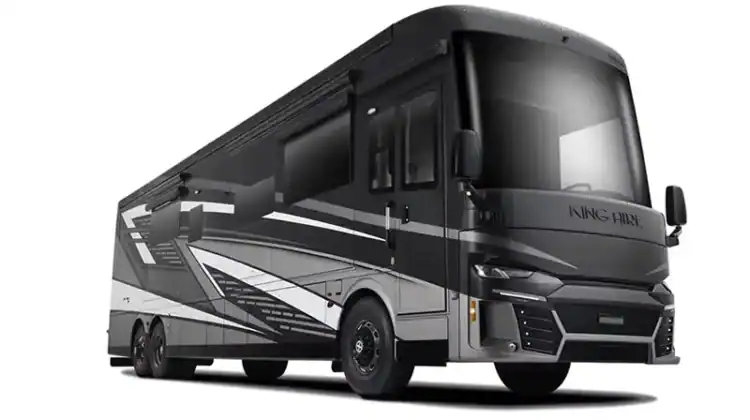
Class A RVs are the very large coach-style RVs. They vary in size, but most are 20 to 45 feet long and are typically the epitome of luxury RV travel. They can be either gas or diesel-powered, but regardless of the fuel type, they will be heavy on gas; they are large vehicles carrying a heavy load.
This class of RV will be fitted with all the modern conveniences. It is difficult to maneuver and will not fit into many smaller campgrounds.
Class B
 In some circles, this is the smallest type of RV and is also known as a campervan or a sleeper van. It is the easiest RV to drive and will also be cheaper to buy and run. However, due to its reduced size, it will not have all the luxury conveniences fitted.
However, they still have the basic amenities and can make for a great, less expensive vacation. These RVs will fit in any campground.
Class C
 This is the “medium” size RV. It is built on the chassis of a medium-sized truck and will provide everything you need for a comfortable holiday. These are the campers with the over-cab sleeping area.
They will offer more modest amenities than class A, but are still equipped with everything you need for a lovely camping holiday. They are also gas- or diesel-powered, but their fuel consumption will be considerably less than that of Class A vehicles.
Campers
The truck camper is typically made of lightweight materials such as aluminum or fiberglass and is designed to be easily loaded and unloaded from the pickup truck bed. Its appearance is that of a Class B RV. Truck campers are the easiest to maneuver and the least expensive to operate.
Truck campers come in various sizes and configurations, from small and basic units with a sleeping area and minimal amenities to larger models that offer more living space and amenities such as a kitchen, bathroom, and heating/cooling systems.
Pop-Up and Foldable Trailers
This is the first type of towed RV. These are the smallest and most compact travel trailers. When closed, they appear something like a utility trailer, but they reveal a travel trailer once at the campground. Due to their limited space, they will include only the most basic amenities, but because they are lightweight, they are easy to tow and will have the least impact on your fuel consumption.
Travel Trailers
There is a large selection of towable RVs, and their sizes vary considerably. They range in size and weight from lightweight, single-axle trailers to large, luxurious, double-axel models. Many floorplans are available, and the amenities are quite varied, so look around before buying.
5th Wheel Trailers
These are also towable RVs, but they must be towed by a truck, as the hitch is specialized and has to be fitted to the truck’s bed. This type of towable RV is large and usually luxurious, with multiple levels of accommodation. It can also be difficult to accommodate in many smaller campgrounds.
Some examples of the cost of RVs
Before going into the cost overview, here are a few examples of the prices you are looking at for various RVs. Age, mileage, and condition also play a considerable part in assessing a vehicle’s value.
- Travel trailers: As mentioned earlier, travel trailers can range from $10,000 to $50,000, with luxury models costing up to $150,000. Here’s a breakdown of some specific models and their prices:
- Forest River R-Pod: A new model costs around $18,000.
- Airstream Basecamp: A stylish, modern travel trailer that starts at around $38,000 for a new model.
- Keystone Montana: The Keystone Montana is a larger, more luxurious travel trailer, with prices starting around $50,000 for a new model.
- Class B campervans: Class B campervans are generally more expensive than travel trailers, with prices starting at around $80,000 and going up to $200,000 or more for luxury models. Here are some specific models and their prices:
- Winnebago Travato: This popular campervan starts at around $120,000 for a new model.
- Airstream Interstate: The Airstream Interstate is a high-end campervan with prices starting at around $175,000 for a new model.
- Hymer Aktiv: The Hymer Aktiv is a European-style campervan that starts at around $105,000 for a new model.
- Class C motorhomes: These are larger and more spacious than campervans, with prices ranging from $50,000 to $150,000. Here are some specific models and their prices:
- Thor Four Winds: The Thor Four Winds is a popular Class C motorhome that starts at around $80,000 for a new model.
- Winnebago Minnie Winnie: The Winnebago Minnie Winnie is another popular Class C motorhome. A new model starts at around $90,000.
- Coachmen Freelander: A budget-friendly Class C motorhome. A new model starts at around $70,000.
- Class A motorhomes: The largest and most luxurious RVs, with prices ranging from $100,000 to over $1 million. Here are some specific models and their prices:
- Fleetwood Bounder: The Fleetwood Bounder is a popular Class A motorhome that starts at around $170,000 for a new model.
- Newmar Dutch Star: The Newmar Dutch Star is a high-end Class A motorhome, with new models starting around $350,000.
- Prevost H3-45: The Prevost H3-45 is a luxury motorcoach that can cost over $1 million when fully customized. Liberty now has a model that is over 2 million.
Here is some Camper pricing
- Truck campers: Designed to be loaded onto the bed of a pickup truck. They are compact and easy to maneuver, making them popular for off-road use. Prices for new truck campers can range from $10,000 to $50,000 or more, depending on the size and features. Here are some specific models and their prices:
- Palomino Backpack: This lightweight truck camper costs around $10,000 for a new model.
- Lance 825: The Lance 825 is a popular truck camper that starts at around $30,000 for a new model.
- Arctic Fox 811: The Arctic Fox 811 is a high-end truck camper, and a new model starts at around $50,000.
- Teardrop campers: Teardrop campers are small, lightweight trailers towed by a car or SUV. They typically have a small sleeping area and basic amenities, such as a kitchenette and storage space. Prices for new teardrop campers can range from $5,000 to $30,000, depending on the size and features. Here are some specific models and their prices:
- Little Guy Mini Max: This compact teardrop camper costs around $25,000 for a new model.
- Escapod Topo: The Escapod Topo is an off-road teardrop camper with prices starting at around $19,000 for a new model.
- Polydrops P17A: The Polydrops P17A is a futuristic teardrop camper with prices starting at around $14,000 for a new model.
- Off-road campers: Designed to be rugged and durable, they can handle rough terrain and challenging conditions. They typically feature heavy-duty suspension, high ground clearance, and all-terrain tires. Prices for new off-road campers can range from $15,000 to $100,000 or more, depending on the size and features. Here are some specific models and their prices:
- Bruder EXP-6: The Bruder EXP-6 is a luxurious off-road camper with prices starting at around $150,000 for a new model.
- Boreas XT: The Boreas XT is a high-end off-road camper with prices starting at around $40,000 for a new model.
- Turtleback Adventure: A mid-range off-road camper, with prices starting around $20,000 for a new model.
Small campers, also known as micro campers or mini campers, are compact and lightweight trailers designed to be towed by a car or SUV. They are a great option for those who want to go camping without the hassle and expense of a larger RV. Here are some examples of small campers and their estimated costs:
- Happier Camper HC1: The compact, customizable camper starts at around $26,000 for a new model.
- Airstream Basecamp: A stylish, modern small camper. A new model starts at around $40,000.
- Forest River Rockwood Geo Pro: The Forest River Rockwood Geo Pro is a lightweight and affordable small camper that starts at around $20,000 for a new model.
- Taxa Cricket: The Taxa Cricket is a unique and rugged small camper that starts at around $37,000 for a new model.
- nuCamp TAB: The nuCamp TAB is a cute, retro-inspired small camper. A new model starts at around $23,000.
Pop-up campers, also known as tent trailers, are lightweight and affordable camping trailers that offer the convenience of a camper with the flexibility and outdoor feel of tent camping. Their collapsible design allows them to be easily towed and stored when not in use. Here are some examples of pop-up campers and their estimated costs:
- Forest River Flagstaff: A popular, well-reviewed pop-up camper. A new model starts at around $10,000.
- Jayco Jay Sport: The Jayco Jay Sport is a spacious and comfortable pop-up camper that starts at around $13,000 for a new model.
- Coachmen Clipper: A lightweight, affordable pop-up camper. A new model starts at around $8,000.
- Palomino Puma: A versatile, well-equipped pop-up camper. A new model starts at around $12,000.
- Starcraft Comet: A modern, stylish pop-up camper. A new model starts at around $15,000.
Remember that these prices are estimates and may vary depending on the dealer, location, and the specific features and options you choose. Additionally, all RVs depreciate over time, so a used RV of any type will generally be less expensive than a new one.
RV Ownership Cost Overview
There are several categories of cost that the prospective RV owner needs to assess.
Initial Purchase Costs
When browsing the internet or dealer sites, the initial purchase cost of the vehicle is usually the first thing people think of, but remember that this is not the only piece of the purchasing puzzle you must consider.
Sticker Price
It is wise to take your time and look around before settling on any vehicle. Mint-condition, pre-owned vehicles can substantially save on the cost of purchasing new, and you should not simply discount pre-owned in favor of new.
A nice, pre-owned camper or travel trailer might set you back around $15,000, while a 5th wheel or a late model, pre-owned RV of similar quality will make a dent of, at a minimum, $40,000 in your wallet. A new, middle-of-the-road motor home should cost you in the region of $150,000, while the most expensive will ask you to part with $1 million or more.
Extended Warranties
It is worth your while to review any extended warranties available for the unit you are considering. If you are good with your hands and can undertake a lot of maintenance work on your own, the warranty may not be justified; but if you are not a handyman, spending a few hundred dollars upfront may save you a great deal in repair costs at a dealer’s workshop.
Finance Costs
Very few families can afford to part with the money required to buy an RV in cash, so you will likely be looking to finance this purchase. As with any financing plan, how you pay for your purchase will enormously affect your ultimate price.
All finance contracts depend on four variables: your credit score and history, the amount you put down, the interest rate, and the length of time you take to repay the loan.
A good credit score is essential, no matter your country. In the USA, this number ranges from 300 to 850, with a higher score preferred, and in the UK, it is similar.
The score calculation will vary from country to country, but they will all be based on roughly the same variables. These include your payment history for all loans and credit cards (especially any late payments and the severity of the delay), and the number, type, and age of any credit-based accounts you have. And how you service those accounts, the total amount of debt you are carrying, and any public records of bankruptcy.
How many recently opened credit accounts do you have, how many people have requested a credit report on you, how much revolving credit do you have, and how is it used? A quick search on the internet will give you several sites that will allow you to check your score.
Basic finance tells us that the larger your down payment, the smaller the monthly repayments and the shorter the term. Small amounts down can mean large monthly payments.
The longer the term over which the contract is repaid, the lower the monthly premiums, but ultimately a higher total cost as the interest paid will be higher throughout the deal. Shorter terms mean higher monthly payments but a lower overall cost as the total interest paid will be smaller.
Examples:
Purchase a new RV at a sticker price of $150,000 with a $50,000 deposit. The interest rate is 5% over 15 years.
In this example, the monthly payment is $790.79 with a total interest of $42,342.85, making the total cost of this vehicle $193,842.85
In this example, if we reduce the number of years to 10, the monthly payment rises to $1,060.66, but the overall interest drops to $27,278.62, and the total vehicle cost is $178,778.62.
Reducing the time by five years has saved a total of $15,064.23.
What you pay depends on your circumstances and your ability to repay monthly. Make sure you factor in the payment when budgeting, so you know the payment range you need to stay within when negotiating.
Sales Tax
Where you purchase your RV can affect the final price of your vehicle. Some states do not charge sales tax, while in others you may pay 5, 6, or even 9% on top of the vehicle’s sticker price.
Registration and Annual Licensing
Registering an RV can significantly increase the initial purchase price. Each state in the USA has its own method for calculating registration costs, and you will need to look up the applicable fees for the state where you wish to register the vehicle. State fees vary: some use age, some a flat rate, some value, and others fuel efficiency.
Europe and the UK also have their own methods for calculating registration and annual fees, so ensure you find out what they are, so they can be added to your calculations.
Insurance
The insurance industry does not consider RV dwellings, so you do not need to purchase homeowners or flood insurance. However, as an RV is an automobile, you must buy automobile insurance.
Your insurance company’s charges will be based on standard items such as the drivers’ ages, driving records, financial history, and vehicle value. Check with your insurer before purchasing, as not all insurers cover RVs.
Also, it is wise to remember that RVs, like all automobiles, will be insured at their current value, not replacement value. If your RV is stolen or seriously damaged somehow, you may find yourself in a situation where you still owe thousands of dollars after being paid out by the insurer. Investigating Gap Coverage and factoring it into your insurance coverage is in your best interest.
Gap Coverage will pay you the difference between your current vehicle value and your outstanding financial commitment to the vehicle.
Double-check what your insurance covers if you have expensive items inside the vehicle. You may need additional all-risks insurance to cover the vehicle’s contents rather than merely the vehicle itself.
Tow or towed vehicles and their costs
Here, we are looking at two different types of vehicles. The first is a tow vehicle used to pull a travel trailer or a 5th wheel, and the second is towed behind your RV to make transport easier once parked at a campsite.
If you are considering purchasing a 5th wheel or travel trailer, you must assess your current car’s towing capacity to ensure it can tow the trailer you intend to purchase. 5th wheel units can only be hauled by trucks, so if you do not currently own a truck, the cost of purchasing one must be added to your budget.
If you are considering purchasing a coach-type RV, especially a Class A or C, you should seriously consider towing a small car behind it. Nothing is more frustrating than getting to a campsite and setting up your camp only to discover that you are missing something important.
Maneuvering such a large vehicle in tight spaces and small supermarket parking lots can be a nightmare, so a towed car makes excellent sense. Also, if you want to do some sightseeing in the area, driving around in your coach can be almost impossible, especially on small country roads. Hence, another vehicle is a good idea that may make your trip more memorable.
Maintenance of your RV
Like any other vehicle, an RV requires regular maintenance and servicing to stay in good condition and to be driven safely on the road. Again, the costs will depend heavily on the age and condition of your RV, where you take it, and how many miles you drive.
Maintenance costs are unlikely to be the same each month, making budgeting difficult. You can expect many months to go by with no charges, and then be hit with a few thousand in one month. A separate savings account with maintenance money set aside will help smooth out these bumps in your family’s spending. The same account can be used to save for your annual expenses, such as insurance, registration, and licensing costs.
Some of the costs to consider for a coach-type RV:
- Servicing – the costs of tires, oil, coolant, brake components, clutch components, and batteries.
- Condition Maintenance includes replacing carpets and upholstery, repairing or replacing cupboards, doors, mattresses, and appliances, and painting and detailing the exterior.
- Equipment Maintenance includes servicing thermostats for heating and cooling equipment, regularly servicing heating and cooling hardware, and replacing water and sewerage pumps.
Travel Trailers and Fifth Wheels will have lower maintenance costs because they do not have an engine to consider, but the tow vehicle will still require maintenance.
Some hidden expenses to consider
Not all the costs of purchasing and owning an RV are apparent upfront. Here are a few expenses that may catch you out if you do not consider them:
- Storage costs – not everyone has the space to store their RV at home when it is not in use. Admittedly, you can opt to hire out your RV when it is not in use by your family, but this comes with additional risks as well, and it isn’t likely that you’d be able to rent it out constantly, so you still need storage. Parking an RV at a storage facility can cost $2,000 to $3,000 per year, so factor this in.
- If you intend to live for long periods in your RV, understand that campsites close to big cities or popular tourist destinations will cost more than those in smaller towns or off the beaten track.
- Electricity, gas, and propane prices vary considerably around the county and can significantly affect travel costs.
- Speed will seriously affect your costs. Maintaining a safe 55 mph will save you considerable gas, diesel, and money.
- The wear and tear on your RV is not always readily apparent, but the more you use it, the more it becomes apparent.
Your Lifestyle will affect your RV costs

RV enthusiasts come from all strata of society and a myriad of backgrounds. What one family may consider a necessity, another will consider a luxury or an extravagance they can do without. This means that the type of campsite you want to use, where you choose to eat, and what you choose to do for entertainment will all directly bear the cost of owning your RV.
Your wallet may well become the judge of what you can do and which options you choose, as all these options are graded by cost:
- There can be a vast difference between the two campsites regarding what they offer and how much each night costs. Campgrounds that offer every luxury will cost more per night than those that offer fewer luxuries. Purchasing a copy of the 2025 Good Sam Travel Savings Guide for the RV & Outdoor Enthusiast is a good idea. It will cost around $25.
- This guide lists over 12,000 campsites in the USA and Canada and can save you thousands of dollars in campsite fees by allowing you to choose the one that suits your budget rather than the one you are directed to by well-meaning locals.
- Wild Camping is free.
- There are many “primitive” campgrounds, where you can expect to pay between $5 and $10 per night. These campgrounds have ablution facilities, but it is unlikely that there will be electricity or water at your site.
- National Parks will average around $25 to $30 per night for reasonable facilities.
- There are many luxurious campgrounds with on-site water and electrical hookups, laundries, restaurants, swimming pools, planned activities, and optional extras such as access to golf courses or horseback riding. These will cost around $50 per night.
- Meals. It is a simple fact that cooking your own food will cost less than eating out all the time. This is also true while traveling, but being on the road should not stop you from preparing your own meals. All RV campers and trailers come equipped with fridges, so keeping your food fresh and cooking your meals should not be difficult.
- Trade labor for a stay. This can be an option on many sites. If you are good with your hands, it may be possible to trade a certain amount of maintenance work for a free stay. Many campgrounds are happy to offer you the position of Campground Host.
- Exploring the Local Life is a blog that explores campground hosting and the RV lifestyle. This job entails staying for free in exchange for light maintenance and cleaning, answering campers’ queries, providing information on the surrounding area, collecting fees, and acting as the owner’s eyes and ears while not in attendance. Workers on Wheels gives job listings for campground hosting and other ways to earn money while living in an RV.
Costs of Actually Traveling
Many people have the misguided notion that traveling with an RV is an inexpensive way to live. This may be true for some people, but not for all. Most large, coach-type RVs will get, at best, 8 to 12 miles to the gallon, so that driving can be an expensive pastime. This is also true for those towing travel trailers and fifth wheels, as the weight of these trailers behind a car can significantly impact the standard fuel consumption figures.
Do your research online and look for articles that give you ideas about the costs of traveling around the US. Remember to check the article’s publication date, though. Don’t fall into the trap of using information from five-year-old material.
Join one of the Discount Camping Clubs
Think about joining one of the discount camping clubs, such as Passport America. These clubs offer huge discounts on thousands of campgrounds across the USA, helping you save significant money.
The cost of selling your RV
The first thing you must understand when buying an RV is that, like most cars, it is an asset that will continually drop in value—it will never be appreciated as a fixed property has the potential to.
When the time comes for you to sell your RV, either to buy something else or because you want to give up that mode of travel, you must understand that you will lose money on the sale. There are three main reasons for this loss: (a) depreciation, (b) the continual drop in the value of the vehicle, and (c) the costs associated with selling.
You can almost guarantee that your RV will lose approximately 60% of its value over five years. If you did not do your homework up front and made poor financing decisions, you may find it impossible to sell the vehicle, as it is now worth less than the outstanding balance.
Some tips on buying your RV

People who set out to buy an RV make common mistakes. These mistakes are sometimes easily overcome, but some can cause financial ruin to the unwary, so careful consideration must be given before you sign a piece of paper or hand over your hard-earned cash.
Mistakes in buying an RV come from people who:
- Buy the first RV they see, only to discover it is utterly unsuited to their needs.
- Please don’t take the time to study the market and its needs before buying.
- Don’t plan for unexpected events or changes in circumstances. This is particularly dangerous if the purchaser opts for a lower payment over a longer period.
- Neglect the maintenance and repairs needed.
Lack of Foresight
Buying an RV is a significant financial commitment, and many people buy only by looking at their situation today, without considering how it may be very different in the years to come. You can weather unexpected storms and retain ownership of your RV if you undertake severe financial planning beforehand. You must understand how RV buying and selling work, and, with that in mind, consider what may happen in the future and how you will deal with it should it occur.
Don’t stick your head in the sand and refuse to consider tomorrow; this lack of foresight can leave you in severe financial difficulty.
Many people near retirement or already retired decide to purchase an RV, and some even sell their brick-and-mortar homes to do so. Many buy new or almost new RVs, reasoning that they will need little or no maintenance, so they spend a considerable amount on the vehicle. They then set out to travel and enjoy their retirement without doing their homework, and find they have taken on a huge financial liability.
Add a calamity such as illness, an accident, or a financial meltdown, and life in an RV suddenly becomes an economic disaster. The unfortunate couple then discovers that selling the RV is not possible. The financial and emotional costs add up very quickly.
Why is it not possible to sell?
There are several reasons why selling an RV is sometimes almost impossible. Some of these are listed here:
- The outstanding debt exceeds the vehicle’s current value because they either paid too much for it or financed it at an unrealistic rate.
- The vehicle is too old, and no finance company will fund the sale, so they are left looking for a cash buyer.
- The market is flooded with similar RVs.
- The particular model is unpopular due to features that make it expensive to maintain.
A possible scenario that you must consider
Here is a situation that is all too common today.
A young-at-heart couple, aged 59 (him) and 57 (her), decided to sell their house and buy an RV. They purchased a three-year-old coach and, for the next 12 years, used the RV as a home and a work base as they traveled, enjoying the freedom and working where they could.
At ages 71 and 69, they decided it was time to repurchase a house and sell the RV. They bought the house, did some renovations, and moved into their new home. Within months of moving into the house, the husband had a heart attack and passed away.
The widow was left with a reduced income, a house, and a debt of several thousand dollars a year to store a coach she would never use again. The coach was valued at $40,000 but still owed the bank $60,000, and her troubles did not end there. The coach needed tires, and the couple kept a pet, so the coach had animals in it (cutting down the resale market).
Banks are reluctant to finance over ten-year-old RVs, and even if she could have found someone to buy the coach for its resale value of $40,000, she would be left with a debt of $20,000 to pay before she could clear the finance contract.
The widow’s only choice was to sell the house and move back into the coach until it was paid off, a deplorable state of affairs set in motion by a purchase made twelve years earlier.
How to ensure it doesn’t happen to you
This example, one that is far too common today, makes it clear that the worst thing you can do is purchase an RV without serious planning and understanding the implications of something going wrong in the future.
The lessons are simple:
- NEVER purchase a recreational vehicle unless you are confident that you can afford all the costs in the future.
- Understand how financing works and plan within those rules. Remember that the RV will lose value, and if you choose low payments, the RV will cost you more. A significant payoff may also impact your ability to sell in the future.
- Never skimp on maintenance, and ensure it is done promptly.
- Be aware of issues such as keeping pets and how they affect resale value.
Rentals
As with looking at the purchase price of RV units, generalizing about the cost of rentals is equally difficult. Many factors influence rental values, including the unit’s age, time of year, condition, and rental length. A newer model, with luxury features, will cost considerably more than its counterpart, which is a few years old and has been used by many families.
Other RVs, such as Toy Haulers and Pop-Ups, are much harder to find in the rental market, and their prices fluctuate wildly.
Top 3 RV Rental Companies | Reviews and Prices
To give some very generalized pricing:
Class A RVs that are several years old and have some mileage should cost ± $250 per night (p.n.).
Class A new RVs with low mileage should cost ± $500 p.n.
Class B RVs that are several years old and have some mileage should cost ± $250 p.n.
Class B new RVs with low mileage should cost ± $400 p.n.
Class C RVs that are several years old and have some mileage should cost ± $250 p.n.
Class C new RVs with low mileage should cost ± $400 p.n.
Travel Trailers that are several years old and have some mileage should cost ± $150 p.n.
New Travel Trailers with low mileage should cost ± $175 p.n.
5th Wheels that are several years old and have some mileage should cost ± $150 p.n.
5th new wheels with low mileage should cost ± $300 p.n.
Rentals of Privately-Owned RVs
To reduce the cost of owning an RV, several companies rent privately owned RVs when the owner is not using them. Some of these companies insist on setting their own prices, while others are happy to let the owner set the price, so it pays to do your homework before taking the first unit offered.
Again, pricing will depend on the type of unit, its age, its condition, the time of year, insurance needs, and taxes.
Most rentals require a large damage deposit, refundable upon return and inspection.
Owners will also list the fees and conditions that they impose. The requirements often include a minimum number of nights for the rental (usually 3), the miles included per day’s rental, the maximum number of hours the generator may be run, and any costs for using the owner’s insurance. Other charges could include using camping or garden chairs and stocking the larder for you.
If the renter exceeds the daily mileage or generator total, they will be charged an additional fee for the excess use.
These charges can add up quickly, so a simple spreadsheet may be your best friend when calculating the viability of renting a unit.
Let us look at an example from the RVShare site where we rent an RV for a two-week holiday.
The daily rate is $225 p.n., and the weekly rate is $1,350, which includes one free day per week. Your basic rental fee for the two weeks is then $2700. This fee includes 100 miles per night and 4 hours of generator usage per night. Going over these numbers will cost you $0.50 per mile and $4.00 per hour.
Insurance costs $29.95 per person, bringing your 14-day trip to $419.30. Lastly, cleaning costs $95, and tax is 9.5%.
So, to add it all up:
Deposit 1500.00
Rental for 14 nights: 2700.00
Insurance 419.30
Cleaning 95.00
Tax 447.85
Total for two weeks $5162.16
You will get $ 1,500 back if there is no damage.
This accounts for your basic charges, which must be added to campground fees, gas costs, food, and any other costs for your two-week holiday. While on your trip, pay close attention to your mileage and the generator usage. Exceeding your contracted rate can significantly increase the overall cost of your hire.
If you plan a long road trip lasting more than a month, negotiate with the owner to see if the fees can be reduced. Also, if you are considering a lot of mileage, consider unlimited mileage, as it will work out cheaper in the long run.
This simple example clearly shows that the variations in RV rental costs are considerable, and only careful calculation and a good idea of where you are going will help you assess the viability of renting.
Final Thoughts
Hopefully, this article has given you some food for thought on the costs of buying an RV versus renting one. We also discussed some pitfalls of buying without considering all the implications, and we touched on the expenses associated with traveling in an RV, whether you own or rent.
If you get it wrong, it could be one of the worst financial decisions ever. If you get it right, you will have many happy miles of traveling.