
Thank you for reading our post, please rate this article at the end.
Reading Time: 10 minutesLast Updated on July 9, 2026 by Paul Clayton
Table of Contents
Who Makes Tracker Off Road ATV?
Key Takeaways
- Verified Manufacturing Lineage: Tracker Off Road is not an unbranded or generic import. It is a joint manufacturing venture between Bass Pro Shops and Textron Specialized Vehicles, built directly on field-tested Arctic Cat chassis and powertrain platforms (such as the Alterra and Prowler).
- Disrupted Pricing Model: By applying a “No-Haggle” fixed price structure across Bass Pro Shops, Cabela’s, and Tracker Boating Centers, the brand eliminates traditional dealership markups, hidden fees, and negotiation stress.
- The VIP Financial Offset: Purchasing a Tracker vehicle includes a two-year VIP card offering 10% off most merchandise at Bass Pro Shops and Cabela’s, allowing active outdoorsmen to significantly offset the total cost of ownership when buying land management, hunting, or trail gear.
- Practical Utility Focus: Tracker intentionally bypasses the high-horsepower, high-cost sport racing segment to focus on the utility-recreation sweet spot. Core models feature highly functional work specs, including 11.5 inches of ground clearance, Electronic Power Steering (EPS) for kickback reduction, and a 1,050-pound towing capacity via a standard 2-inch receiver.
- National Service Infrastructure: Because the brand is backed by a national big-box retail footprint rather than a localized mom-and-pop shop, warranty tracking and certified Textron mechanic support remain fully portable if an owner moves or travels out of state.
- Modern Component Standards: To ensure reliable field operation at a competitive price point, the drivetrains rely on modern Electronic Fuel Injection (EFI) for reliable cold-weather starting, liquid cooling for thermal stability, and heavy-duty 4-ply or 6-ply Kenda Pathfinder tires to resist punctures.
Purchasing an all-terrain vehicle (ATV) used to be a straightforward, if predictable, endeavor. For decades, a handful of legacy Japanese and American brands dominated the trailways and farmsteads of North America. Consumers chose their colors, accepted the dealership markup rituals, and moved on.
In recent years, however, the landscape has shifted. The market has seen an influx of new entrants, ranging from budget-tier imports of questionable longevity to premium machines priced similarly to compact automobiles. Within this crowded ecosystem, Tracker Off Road has rapidly established a significant retail footprint.
For the uninitiated, the brand raises an immediate and logical question: how can a company best known for fishing boats suddenly emerge as a major player in the off-road vehicle market?
Understanding Tracker Off Road requires looking beyond the decals. It requires examining a complex web of corporate partnerships, supply chain logistics, and retail economics that challenge traditional powersports distribution.
The Corporate Lineage: Unmasking the Manufacturer
The most pervasive question surrounding Tracker Off Road vehicles is one of origin. Consumers naturally want to know who designs the engine, welds the frame, and stands behind the engineering when a machine is subjected to harsh field conditions.
The short answer is that Tracker Off Road is not a standalone manufacturing entity. Instead, it is a strategic joint venture between Johnny Morris, the billionaire founder of Bass Pro Shops, and Textron Specialized Vehicles.
To appreciate what this means for the machine itself, one must look at Textron’s corporate portfolio. Textron is a massive aerospace and defense conglomerate responsible for brands like Cessna, Beechcraft, and Bell Helicopters. Crucially for off-road enthusiasts, Textron acquired Arctic Cat in 2017.
When you look closely at a Tracker ATV, you are not looking at a generic, white-label import designed from scratch to hit a budget price point. You are looking at a machine built directly upon proven Arctic Cat engineering, specifically utilizing the Alterra and Prowler platforms.
This manufacturing arrangement offers several distinct advantages to the consumer:
-
R&D Amortization: Tracker bypasses the multi-million-dollar trial-and-error phase that dooms many startup powersports brands. The suspension geometry, frame metallurgy, and drivetrain configurations have already undergone years of competitive racing and utility testing under the Arctic Cat banner.
-
Component Interchangeability: Because these machines share a common architecture with established Arctic Cat models, sourcing wear-and-tear items such as drive belts, air filters, and CV axles does not require hunting through obscure foreign catalogs. They are readily available through established powersports distribution networks.
-
Design Continuity: Rather than relying on proprietary, non-standardized powersports mechanics.
The Economics of Fixed-Price Retail
The traditional process of buying a powersports vehicle can be remarkably adversarial. Dealerships frequently advertise an appealing Manufacturer’s Suggested Retail Price (MSRP), only to append freight charges, setup fees, document fees, and market adjustments once the consumer enters the finance office.
Tracker chose to disrupt this model by importing a strategy from the marine industry. Decades ago, Tracker Boats gained market share by introducing a “No Haggle, No Hassle” pricing structure. The price published on the website is identical to the price on the showroom floor, regardless of the buyer’s negotiation skills.

This pricing strategy relies entirely on volume and retail footprint. By leveraging the expansive real estate of Bass Pro Shops and Cabela’s big-box stores, alongside a select network of independent marine dealers, Tracker operates on a scale that independent powersports dealers cannot match.
This infrastructure allows the manufacturer to accept lower profit margins per unit in exchange for massive sales velocity. As a direct result, a consumer can frequently purchase a Tracker ATV with a mid-to-large displacement engine for thousands of dollars less than a comparably equipped model from brands like Polaris, Can-Am, or Honda.
The elimination of the negotiation process appeals to a demographic that values efficiency. It transforms the acquisition of an ATV from a high-pressure financial negotiation into a standardized retail transaction.
The VIP Ecosystem and Cost Offset
A unique aspect of the Tracker ownership experience is its integration into a broader outdoor retail ecosystem. Purchases of a new Tracker Off Road vehicle typically include a VIP Owner’s Discount Card. This card provides the buyer with a 10% discount on most merchandise at Bass Pro Shops and Cabela’s for a period of up to two years.
While a discount card might initially seem like a superficial marketing gimmick, the financial implications for an active outdoorsman are tangible. The true utility of an ATV is rarely realized in isolation; it requires an investment in supporting gear.
Consider the auxiliary equipment required to fully utilize an all-terrain vehicle:
-
Vehicle Accessories: Winches, snowplows, rigid cargo boxes, and gun racks.
-
Property Maintenance: Pull-behind mowers, food plot seeders, and utility trailers.
-
Personal Gear: Cold-weather riding apparel, helmets, hunting gear, and boots.
When calculated over a twenty-four-month period, a 10% reduction on these high-ticket items alters the total cost of ownership. For owners who routinely manage land, hunt, or fish, the accumulated savings across these retail categories can effectively claw back a meaningful percentage of the vehicle’s initial purchase price. It is a retention strategy that turns a one-time vehicle purchase into an ongoing economic relationship.
Mechanical Analysis: Built for the Working Class
The powersports marketing machine loves high-horsepower figures, extreme suspension travel, and videos of vehicles launching off dunes. While those attributes make for compelling promotional material, they hold little relevance for the individual who needs to haul firewood, repair fence lines, or navigate a muddy logging road.
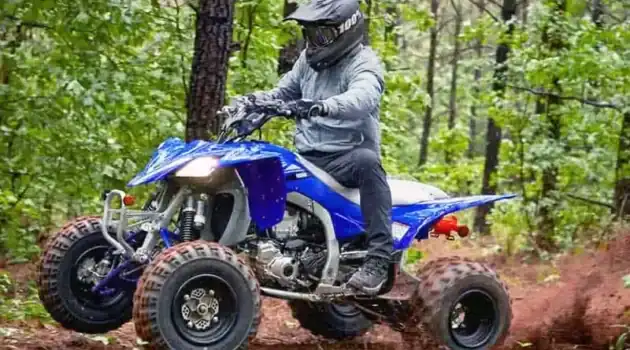
Tracker intentionally avoids competing in the high-performance, desert-racing segment. Instead, the product line targets the intersection of utility and recreational trail riding, the practical sweet spot of the market.
An objective analysis of a core model, such as the Tracker 600 EPS, reveals engineering choices tailored for practical work environments:
An 11.5-inch ground clearance is highly functional in real-world scenarios. It ensures that the underside of the chassis clears common trail obstacles like logs, rocks, and deep ruts. This minimizes the risk of high-centering, a frustrating scenario where the vehicle’s frame becomes wedged on an obstacle, lifting the tires and stripping them of traction.
Electronic Power Steering (EPS) serves a dual purpose. Beyond making the steering wheel or handlebars easy to turn at low speeds, the primary benefit of EPS is kickback reduction.
When a front tire strikes an immovable object, like a buried rock or tree root, the kinetic energy transfers back through the steering linkage. In a non-EPS machine, this can violently wrench the handlebars from the rider’s grip, potentially causing injury or loss of control. The EPS actuator absorbs this energy, stabilizing the steering geometry and preventing operator fatigue during long shifts in the field.
Furthermore, the inclusion of a standard 2-inch hitch receiver reflects a commitment to utility. Many entry-level ATVs utilize smaller 1.25-inch receivers or basic tongue plates, which limit towing options.
A standard 2-inch receiver allows the user to interchange ball mounts directly with their pickup truck, streamlining the process of hooking up utility trailers, log arch systems, or heavy pull-behind implements. With a towing capacity rated at 1,050 pounds, these machines function as genuine light tractors.
Major ATV Manufacturer Comparison
| Manufacturer | Core Value Proposition | Engineering Pedigree | Drivetrain Character | Pricing Strategy | Best For |
| Tracker Off Road | Direct value and transparent retail entry. | Built on Textron / Arctic Cat platforms. | Electronic Fuel Injection (EFI) paired with functional CVTs; built for utility. | Fixed “No-Haggle” national pricing via big-box retail. | Budget-conscious property owners and hunters needing baseline utility. |
| Honda (e.g., Foreman/Rubicon) | Unmatched mechanical durability and high resale value. | Proprietary, ultra-conservative Japanese engineering. | Geared transmissions (DCT/manual) over belts; highly stable low-end torque. | Traditional dealer network; frequent premium markups. | Riders prioritizing zero-fail reliability in remote or harsh conditions. |
| Yamaha (e.g., Kodiak/Grizzly) | Premium ride comfort and responsive trail performance. | Industry-leading Ultramatic CVT transmission and balanced chassis. | Exceptionally smooth power delivery with aggressive, reliable engine braking. | Traditional dealer network; mid-to-high market pricing. | Operators seeking the absolute best balance between tough daily work and fast trail riding. |
| Suzuki (e.g., KingQuad) | No-nonsense utility and highly predictable handling. | Legacy Japanese engineering with a focus on straightforward mechanics. | Smooth, low-maintenance Quadmatic CVT; tuned for technical stability. | Traditional dealer network; often features moderate factory rebates. | Farmers and trail riders wanting low-maintenance Japanese quality without paying top-tier prices. |
| Polaris (e.g., Sportsman) | Heavy-duty work capacities and plush independent suspension. | Pioneer of high-displacement, feature-rich North American ATVs. | High-horsepower twins, industry-leading towing capacities, but complex mechanicals. | Traditional dealer network; premium tiers with extensive accessory scaling. | Land managers are demanding maximum towing capacity and a highly comfortable ride over rough terrain. |
| Can-Am (e.g., Outlander) | Top-tier horsepower, high-tech features, and specialization. | High-performance Rotax engines and cutting-edge electronic suspension options. | High-revving, highly aggressive power delivery; advanced smart-lock differentials. | Traditional dealer network; highest price ceilings in the market. | Enthusiasts wanting maximum performance, electronic refinements, or specialized mud/trail configurations. |
How to Choose
-
Choose Tracker if you want to bypass the traditional dealership negotiation process and want a mid-to-large displacement workhorse backed by a nationwide retail service network, without paying a premium for a badge.
-
Choose Honda or Suzuki if your absolute top priority is a machine that will reliably crank in freezing weather ten years from now with minimal maintenance, and you prefer mechanical geared transmissions over belt-driven CVTs (in the case of Honda).
-
Choose Yamaha if you want the gold standard of belt-driven transmissions (the Ultramatic) and place a high premium on trail comfort, handling, and engine braking over steep descents.
-
Choose Polaris or Can-Am if your workload or riding style requires maximum horsepower, massive towing limits, high-end electronics, or specialized terrain packages, and you are comfortable managing slightly higher long-term maintenance needs.
Logistics of Support and Service Networks
A primary point of hesitation for consumers evaluating a newer brand is the long-term service outlook. If a machine breaks down three years after purchase, where does it go for diagnostic work?
The powersports graveyard is filled with orphan brands that offered excellent initial value but possessed zero service infrastructure. Once a proprietary component failed, the vehicle became an expensive piece of yard art.
Tracker mitigates this risk by utilizing the footprint of Bass Pro Shops, Cabela’s, and specialized Tracker Boating Centers. This gives them a built-in network of service bays across North America.
This arrangement provides two distinct operational benefits:
Warranty Portability: Because the service centers are tied to a national corporate infrastructure rather than a localized mom-and-pop dealership, your warranty and service history are fully portable. If you purchase a machine in Pennsylvania and subsequently move to Texas, or if your machine suffers a mechanical failure during an interstate hunting trip, any certified Tracker facility can access your vehicle’s digital service records and honor the factory warranty terms.
-
Standardized Technician Training: The mechanics working on these vehicles are trained on Textron powertrains. Because Textron engines and drivetrains follow consistent engineering principles across both the Arctic Cat and Tracker lines, the technicians are working with familiar mechanical systems rather than trying to reverse-engineer an undocumented import.
Real-World Reliability and Drivetrain Standards
When evaluating a Tracker ATV, it is common to benchmark it against legacy manufacturers. Is a Tracker as reliable as a Honda?
To answer objectively, one must recognize that Honda has spent decades earning a reputation for near-indestructible mechanical reliability, often achieved through conservative, time-tested engineering. Tracker does not possess forty years of standalone historical data, but its component selection aligns well with modern manufacturing standards.
The powertrains feature liquid cooling and Electronic Fuel Injection (EFI). Older generations of budget ATVs frequently relied on air-cooled engines and traditional carburetors. Carbureted engines are notoriously finicky; they are sensitive to changes in altitude, prone to gumming up when left sitting with modern ethanol-blended fuels, and difficult to start in sub-freezing temperatures.
An EFI system uses an Engine Control Unit (ECU) to constantly monitor ambient temperature, atmospheric pressure, and engine load, adjusting the fuel-to-air ratio in real time. This ensures clean throttle response, optimized fuel efficiency, and immediate starting performance, whether the machine has been sitting in a freezing garage all winter or is operating at a high mountain elevation.
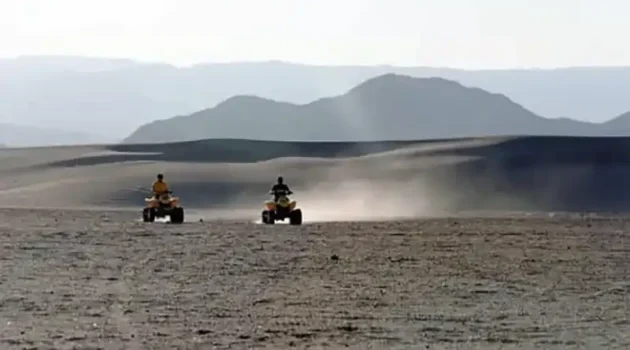
Additionally, Tracker does not cut corners on the factory rubber. Many models ship equipped with Kenda Pathfinder tires. Tires are the only contact point between the machine and the terrain, and standard equipment on lower-tier ATVs often consists of thin, 2-ply tires that are highly susceptible to punctures from sharp rocks, stubble, or thorns.
The use of heavy-duty 4-ply or 6-ply rated tires means the carcass possesses the structural rigidity to resist punctures and carry heavy loads without excessive sidewall flex. It is an intentional component choice that keeps the vehicle operational in environments where lesser tires would fail.
Ultimately, Tracker Off Road represents a calculated approach to the powersports market. By marrying the engineering capabilities of an established manufacturer like Textron with the immense buying power and retail footprint of a massive outdoor retailer, they have created an option that challenges the traditional pricing structure without sacrificing the structural integrity required for genuine utility work. It is an approach to off-roading designed for the pragmatist who demands predictable costs, verified lineage, and functional capability.
Given the technical advantages of utilizing established Arctic Cat platforms alongside a fixed-price retail strategy, what specific utility features or performance metrics are most critical for the tasks you plan to tackle with an ATV?
Final Thoughts
Tracker Off Road has successfully carved out a unique position in a highly competitive market by merging the engineering and design capabilities of an established manufacturer (Textron/Arctic Cat) with the massive distribution power of a retail giant.
While it lacks the decades of standalone historical data belonging to legacy Japanese brands like Honda or Yamaha, Tracker targets the pragmatic, working-class adventurer who views an ATV primarily as a tool for land management, hunting, and utility work.
By substituting high-pressure dealership negotiations with transparent pricing and pairing the machine with an ecosystem of ongoing retail discounts, Tracker presents a highly logical, cost-effective alternative to traditional powersports brands without sacrificing the mechanical integrity required for demanding outdoor tasks.