Thank you for reading our post, please rate this article at the end.
Reading Time: 3 minutesLast Updated on November 4, 2026 by Paul Clayton
To heat a 38 foot camper without electricity from shore power, use the RV’s propane furnace (it needs only a little 12-volt battery power to run its fan), add vented or indoor-rated catalytic propane heaters for quieter, battery-free warmth, and cut heat loss with insulation, window covers and skirting. A camper this size has a lot of space and glass to heat, so expect to combine methods. Always run a working carbon monoxide detector and keep some ventilation with any fuel-burning heater.
Heating options compared
| Heat source | Power needed | Typical output | Best for |
|---|---|---|---|
| Built-in propane furnace | 12V for the blower (about 4 to 8 amps) | About 30,000 to 40,000 BTU in large RVs | Whole-camper heat |
| Catalytic propane heater (wall or portable) | None | About 3,000 to 8,000 BTU each | Quiet, battery-free heat in one area |
| Indoor-rated portable propane heater | None (some have fans) | About 4,000 to 18,000 BTU | Spot heating with good ventilation |
| Small wood stove | None | Varies | Long stays; requires proper install |
| Diesel heater | Small 12V draw | Varies | Efficient off-grid heat; requires install |

Table of Contents
Key Takeaways
| Topic | Key takeaway |
|---|---|
| Options | Propane catalytic heaters, wood stoves and diesel heaters |
| Furnace | RV furnaces use propane but need 12V for the fan |
| Safety first | Ventilate and use CO and smoke alarms |
| Insulation | Cover windows and seal drafts |
| Layer up | Warm bedding and clothing reduce heating needs |
1. Use the Propane Furnace (Wisely)
Your RV furnace burns propane, but its blower runs on the 12-volt house batteries, so it works without shore power until the batteries run low. On cold nights the blower is often the biggest battery drain. To stretch your power:
- Set the thermostat lower at night and use warm bedding.
- Keep batteries charged with solar or a generator; see how long your battery lasts dry camping.
- Close off rooms you aren’t using.
Furnace not working? Try our RV furnace troubleshooting guide.
2. Add Catalytic Propane Heaters
Catalytic heaters produce flameless radiant heat with no electricity, and they’re nearly silent. In a 38-foot camper, one in the living area and one near the bedroom can carry most of the load on mild cold nights. Read our reviews of the Camco Olympian Wave 6 and the Coleman SportCat.
Safety: unvented heaters use oxygen and release moisture. Crack a window and roof vent, use only heaters rated for indoor use, and never sleep without a working CO detector.
3. Use Portable Indoor-Safe Propane Heaters
Portable heaters rated for indoor use, with low-oxygen and tip-over shutoffs, are good for quick spot heating. See our review of the Mr. Heater Big Buddy. Keep them away from bedding and curtains, and don’t run them while sleeping unless the manufacturer allows it.
4. Consider a Wood Stove or Diesel Heater for Long Stays
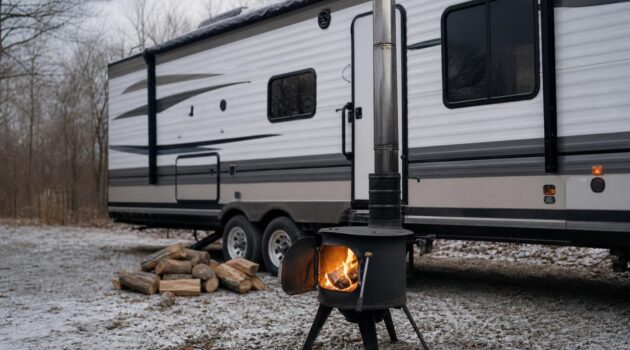
Small marine or RV wood stoves and diesel air heaters are popular with full-timers. Both must be properly installed with correct venting, clearances and a heat shield. They’re projects, not quick fixes.
5. Keep the Heat In
- Cover windows with insulated shades, reflective film or bubble insulation; RV windows lose a lot of heat.
- Block drafts around doors, slide-outs and vents with weatherstripping and vent pillows.
- Skirt the RV to stop wind under the floor; see the benefits of RV skirting.
- Use rugs on cold floors.
- Park smart: out of the wind and in winter sun.
Looking for a warmer rig? See the best insulated fifth wheels. Preparing for freezing temperatures? Our RV winterizing guide covers protecting your plumbing.
Emergency Warmth Tips
- Layer clothing and wear a hat to bed.
- Use a 0°F-rated sleeping bag or wool blankets.
- Fill a hard water bottle with hot water for your sleeping bag.
- Gather everyone in one small, closed-off area.
- Never use a gas stove or oven to heat the camper.
FAQ: How to Heat a 38 Foot Camper Without Electricity
Does an RV furnace need electricity?
It needs 12-volt power for the fan and controls, but no shore power. It burns propane for heat.
Are wood stoves safe in a camper?
They can be if installed correctly with proper venting, clearances and a CO detector. Check your insurance and campground rules.
How do I ventilate safely with a propane heater?
Open a window an inch or two and a roof vent on the opposite side for cross-ventilation. Keep CO and propane detectors working; see why RV CO detectors beep.
How can I heat my RV without propane?
Electric heaters on shore power, diesel heaters or wood stoves. See how to heat an RV without propane.
Final Thoughts
You can heat a camper without electricity, but safety comes first. Choose an appropriate heater, ventilate properly and always run a working CO detector.
Resources
- U.S. Consumer Product Safety Commission carbon monoxide guidance
- Heater manufacturers’ safety instructions