Thank you for reading our post, please rate this article at the end.
Reading Time: 8 minutesLast Updated on August 7, 2026 by Paul Clayton
Table of Contents
7 Reasons Your RV CO Detectors Beep
Key Takeaways
-
- Primary Causes of CO Detector Beeping:
- Actual Carbon Monoxide Leak: A continuous, high-volume alarm indicates dangerous levels of odorless, colorless CO gas. Immediate ventilation, appliance shutdown, and evacuation are required.
- Low Battery Indicator: Occasional, low-pitched chirping (every few minutes) signals a depleted battery rather than a gas leak.
- Unit Expiration or Failure: CO sensors have a strict lifespan of 5 to 7 years. Modern units issue a periodic chirp or display an “END” error code when the internal timer expires.
- Environmental False Alarms: Steam from showers, dust accumulation inside the sensor, cigarette smoke, or nearby external exhaust (generators, campfires, idling vehicles) can falsely trigger the alarm.
- Other Misidentified Appliances: High-pitched chirps from low-battery smoke detectors, UPS battery backups, or RV appliances are easily mistaken for CO detector alerts due to sound reflections.
- Testing and Preventative Maintenance:
- Regular Testing: Press and hold the integrated test button monthly to confirm electrical and sensor function.
- Proper Cleaning
- Correct Placement: Mount CO detectors at eye level (around 5 feet high) near sleeping quarters, as carbon monoxide mixes evenly with air rather than sinking to the floor like CO 2
- Proactive Prevention: Avoid using unvented portable gas stoves indoors, inspect furnace/water heater exhausts regularly, and keep generator fumes away from RV intake fans.
- Primary Causes of CO Detector Beeping:
CO detectors are lifesavers, and installing one in your RV (home) will give you peace of mind knowing your family’s safety and health are guaranteed.
Educating yourself on how carbon monoxide detectors work is important. In particular, it’s crucial to learn how CO detectors communicate and what each alarm beep means.
- Can You Rent an RV for a Year?
- New vs. Used RV: Navigating the Price Trends
- Today’s Best Pop Up Campers
And in this guide, I’ll share what it means when your CO detector goes off and what you need to do.
Why Is My Carbon Monoxide Detector Beeping
1. Carbon Monoxide
One of the primary reasons your RV CO detector beeps is if it detects CO. It’s  alerting you to high CO and quite possibly a low-volume leak. It’s particularly true if the CO detector gives a full-on sounding alert.
Understand that carbon monoxide is colorless, odorless, and lethal (sneaky). Therefore, if there’s any question about whether it’s a legitimate alarm, you need to assume it is.
The best thing to do if your CO alarm goes off is to ventilate the area. Open the windows, evacuate anyone inside, and check around for sources of gas leaks/exhausts. If you can’t identify the leakage and the detector keeps on beeping, ring the fire department’s non-emergency number and see if they’ll come to do a walk-through.
2. Detector Needs a Replacement
The other reason your CO detector beeps is if it’s old and needs a replacement. You see, most modern CO detectors have a built-in expiration timer that tells you when they’ve expired. The old detectors don’t have a timer, but generally, most detectors have a lifespan of five to seven years.
CO detectors aren’t like smoke detectors, where you’re supposed to replace them after every ten years, and no one does. They literally stop working after their lifespan.
Modern CO detectors usually display an END readout, which means the end of life and requires a replacement. Even without the digital readout, most detectors have a date of manufacture printed on the back.
Nevertheless, I’d still trust the unit’s mechanism is telling me when it’s not good and cannot detect CO anymore.
3. Low Battery
A low battery may also cause the CO detector to go off. If it’s just chirping, like one little beep every few minutes, then it’s definitely low battery. Some detectors may also display LED lights indicating the battery is running low.
But the key thing to remember with low battery alerts is that they differ from a CO leak. If your detector senses dangerous levels of CO, it emits loud beeping patterns. On the other hand, if it’s a low-pitched chirping sound, it indicates battery, and you need to replace it soon.
4. False Alarms
False alarms on a CO detector can be a nuisance. For example, ours would  go off whenever someone walked out of the bathroom door. The steam from the shower would set off the alarm.
Understanding the common reasons why your CO detector may go off is necessary so you can reduce false alarms. Some common reasons for a false trigger are:
- An idling vehicle near your campsite
- BBQ grill
- Lawn equipment
- High moisture from the RV bathroom/kitchen
- Generators
- Cigarette smoke
9 out of 10 times, the CO triggering false alarms is usually brought into your RV through the exhaust fan, HVAC system, or even the wind.
If you suspect a false alarm, turn off all the fuel-burning appliances and check for smoke.
Also, sometimes, if your CO detector gets dusty, it may trigger a false alarm. The dust particles may accumulate and cause a bad reading. So, if you can’t find a cause, consider cleaning the detector with a damp cloth or vacuum it with computer-pressurized air before putting it in its original position.
5. Broken CO Detector
I understand I mentioned that CO detectors have a lifespan of 5-10 years, but sometimes failure happens. The seven years is just an average case, but different conditions or randomness may shorten the lifespan of your CO sensor. CO detectors can go bad, especially with age, environmental conditions, or sensor malfunction.
And this is why I suggest that you rotate different brands in your RV so that if one brand fails, the others will cover for it.
6. Error Notification
Sometimes, your CO may beep simply because of different error notifications. For example, if there’s an issue with the placement or other things, the detector will let you know.
And fortunately, most modern detectors have a digital readout that displays the error, so it’s easy for you to fix the issue.
7. Other Devices
Surprisingly, the beep you think is coming from your CO detector may be from other RV devices.
The chirping sound is usually difficult to trace because of how it bounces and how short it is. And therefore, if you’ve different devices in your RV, it’s easy to confuse that with the CO detector.
Other devices I’ve found that chirp are:
- Smoke alarms
- UPS systems for low battery
- Routers
- Fridges or appliances using filter chirps
- Combustible gas detector
Therefore, if you’re unsure whether it’s the CO detector, isolate the different  devices by cutting power. I suggest that you remove the batteries from your detector and turn off the breakers for them. If the chirping persists, then it’s not the CO detector but something else.
It’s also important to understand that the beeping could be an issue with another CO detector, especially if the detectors align with wireless connectivity. Wireless interconnectivity means if the detector in your kitchen goes off, it triggers a chain reaction, and they all go off.
Consider the Manual
With everything said, I still recommend my readers familiarize themselves with the CO detectors before use. Check the label and read the manual, as there’s often a “beep” guide.
What to Do when CO Detector Goes Off?
When a CO detector goes off, the most important thing to do is ventilate your area. Start by opening the windows and doors and turning on the fans. Get fresh air immediately, and then evacuate anyone, including your pets.
Next, see if you have an obvious source of CO, like a kerosene heater, oven, or a blocked chimney. You also need to check what the beeping means. Some detectors have a display, and between the beeping and the beep pattern, you can identify the problem.
And depending on how things go so far, you may need to call a doctor or emergency services.
Where to Place a CO Detector
There’s incorrect knowledge that CO is heavier than air, so it should be placed on or near the floor. It’s incorrect, and that’s CO2.
CO is the same weight or slightly lighter than oxygen, so it mixes with air ( which is also why it’s dangerous). It doesn’t fall on the floor or rise to the ceiling. Therefore, regarding location, I suggest placing it 5 feet up or higher. EPA usually recommends 5 feet up or higher, the standard door size.
It’s also not wise to place the detector right next to appliances that burn gas; close to sleeping quarters is smart.
How to Test a Carbon Monoxide Detector
I always advise my fellow RVers to regularly test their CO detectors to see if they work properly. I usually test mine monthly.
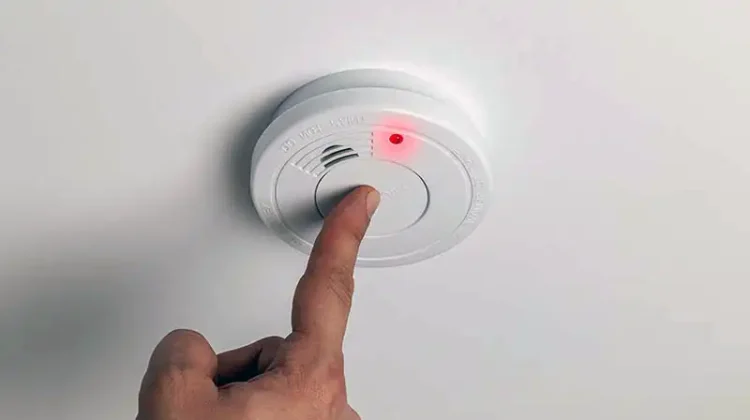
The good thing is it’s super easy to determine whether your CO detector works.  Most modern detectors I know of usually have a test button. All you need to test the functionality of your detector is to press and hold the test button. If it’s working properly, you should hear several beeps. Of course, you must refer to your user manual.
You can go old school if yours doesn’t have a test button. There’re several ways to go about it.
The first one is super easy and effective. Smoke a cigarette and blow the smoke toward the sensor. Cigarette smoke contains CO traces, which should help confirm whether it’s working.
Alternatively, mix lye and water in a steel container if you consider smoking gross. It gets hot and foamy. In addition, it generates hydrogen. Most CO detectors’ operating principles also detect hydrogen, so you could use this method to determine if your CO detector is working. Plus, hydrogen is much safer than CO because if you inhale it, nothing happens.
The other plus with the hydrogen method is that it works better with domestic CO detectors, such as that one on your RV. It’s not so good for industrial/laboratory analytical sensors because they’re built to ignore hydrogen.
Tips to Prevent Carbon Monoxide in an RV
The most important thing in learning to manage CO in an RV is knowing the common CO triggers.
Gas Stoves/ Grills
Portable gas stoves are convenient but should not be used in an RV or a poorly ventilated area. Even small amounts of residual CO emanating from these stoves could build up to lethal levels.
Ventilation is Key
A properly functioning RV gas system isn’t a CO risk. When using gas inside your rig, you must always ensure proper ventilation.
Ideally, appliances like generators, water heaters, and furnaces should have a dedicated venting system.
Frequently Asked Questions
What should I do if my carbon monoxide detector is beeping?
Always treat every CO detector beep as a legitimate CO leak. Therefore, the first step should be ventilating your area. Next, try to establish the cause of the alarm. Most modern CO detectors have digital displays and can show the error codes triggering the alarm.
Why is my carbon monoxide detector randomly beeping?
There are different causes of random beeps in a CO detector, ranging from a legitimate CO leak, low battery, or broken detector to a dusty detector.
How do I reset my carbon monoxide detector?
Resetting a CO detector depends on the individual model, so look up its manual. However, most detectors have a “silence” or “rest” button. To reset the detector, hold this button down for 10 seconds and then release it. You should see LED lights blink. Your unit may also beep.
This video has been included for its clarification of the topic matter. Credit goes to Downsizing Makes Cents
Final Thoughts
Having a working CO detector is important to the health and safety of your motorhome or home. And this is a reminder that you should take the CO with all the seriousness they deserve. In any case, I always tell my readers to treat every alarm like a legitimate CO leak.
-
An RV carbon monoxide detector is a critical safety device that requires quick identification of its alerting patterns: loud, continuous alarms indicate immediate danger, while intermittent single chirps point to low power or sensor expiration.
-
Because CO detectors permanently fail after 5 to 7 years, routine monthly testing, sensor cleaning, and timely replacement are essential to prevent dangerous failures.
-
Maintaining proper ventilation while cooking, keeping external exhaust away from air intakes, and mounting detectors at proper heights ensure reliable, life-saving protection on the road.