
Thank you for reading our post, please rate this article at the end.
Reading Time: 5 minutesLast Updated on November 16, 2026 by Paul Clayton
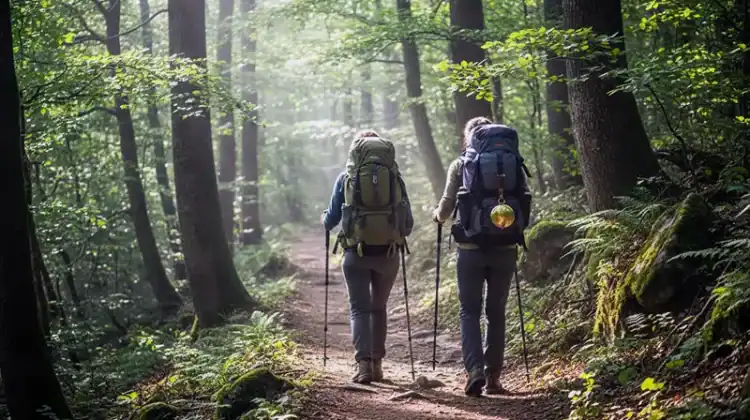
Hikers wear cowbells, often called bear bells, to make steady noise on the trail so bears and other wildlife hear them coming and move away instead of being surprised. Bells can help, but many wildlife experts and park agencies say they aren’t enough on their own: a human voice carries better and is clearly recognized as people. The smartest hikers combine talking or calling out, hiking in groups and carrying bear spray, and use bells as a backup.

Table of Contents
Key Takeaways
| Question | Short answer |
|---|---|
| Why wear a bell? | To alert wildlife and avoid surprise encounters |
| Do they work? | Somewhat; voices are usually more effective |
| Best noise | Talking, clapping and calling out, especially at blind corners |
| Best defense | EPA-registered bear spray carried where you can reach it in seconds |
| Group size | Groups of three or more are involved in far fewer serious bear incidents |
| Mountain lions | Bells won’t reliably deter them; stay alert and in groups |
Why Hikers Wear Cowbells
Most bear attacks happen when a bear is surprised at close range, often a mother with cubs or a bear guarding a carcass. A bear that hears people early usually leaves before you ever see it. Bells add constant sound, especially when hikers are quiet, tired or alone and stop talking. They’re popular in bear country and in places like the Alps where cowbells are traditional on grazing cattle, which is where the “cowbell” name comes from.
Bells also have a few side benefits. They help a group keep track of a child or a slower hiker, and they can alert mountain bikers and trail runners coming around a corner. Most bear bells cost about $5 to $20 and weigh only an ounce or two, which is why so many hikers clip one to a pack strap.

Are Bear Bells Effective?
Studies and park staff observations suggest bells are often too quiet to carry far, especially near streams or in wind, and bears may not link the sound with people. Your voice is louder and unmistakably human. In practice, a small bell may only be heard a few dozen feet away in thick brush, while a loud “hey bear!” can travel much farther.
| Noise method | How well it carries | Pros | Cons |
|---|---|---|---|
| Bear bell | Short range, weak in wind or near water | Constant, hands-free, cheap | Easy to tune out; can annoy other hikers |
| Talking or calling out | Good, and clearly human | Free, signals people to wildlife | People stop talking when tired |
| Clapping | Moderate, sharp sound | Works at blind corners | Not continuous |
| Whistle | Very loud, long range | Great for emergency signaling | Not for routine use; can confuse others |
The bottom line: a bell is fine as a backup, but you should still call out at bends, ridgelines, berry patches and noisy creeks, where a bear is least likely to hear or see you.
The Best Ways to Alert Wildlife
- Talk, sing or call out “hey bear” at curves and dense brush.
- Hike in groups of three or more and stay together, especially with kids.
- Avoid hiking at dawn, dusk and night in bear country, when bears are most active.
- Watch for tracks, scat, overturned rocks, fresh digging and torn-up logs.
- Stay away from animal carcasses and leave the area if you smell one or see scavenging birds.
- Keep dogs leashed; an off-leash dog can bring an angry bear back to you.
- Don’t use earbuds on the trail so you can hear what’s around you.

Bear Spray: The Tool That Matters Most
If you only carry one thing for bears, make it bear spray. The National Park Service recommends choosing an EPA-registered product labeled for deterring attacks by bears, with 1% to 2% capsaicin and related capsaicinoids, at least 7.6 ounces of content, a spray time of at least 6 seconds and a range of at least 25 feet. Check the expiration date before each season.
- Carry it on your hip or chest strap, not inside your pack, so you can draw it in a couple of seconds.
- Practice removing the safety clip with an inert training can.
- Use it only on an aggressive or charging bear, aiming slightly down so the cloud forms between you and the bear, then leave the area.
- Don’t store it in a hot car; heat can make canisters fail or burst.
Bear spray typically costs about $40 to $60 a can, and some parks rent it near trailheads. You can’t take it on commercial flights, so plan to buy or rent it at your destination.
What to Do If You See a Bear
Stay calm, don’t run, speak in a firm voice, give it space and back away slowly. Have bear spray ready. Whistles and yelling are better for alerting before an encounter than for scaring a bear that’s already close. Never get between a mother and her cubs, and never approach a bear for a photo.
- If a bear charges: stand your ground and use bear spray. Many charges are bluffs that stop short.
- If a grizzly or brown bear makes contact after a surprise encounter: keep your pack on, lie flat on your stomach, protect the back of your neck with your hands and stay still until it leaves.
- If a black bear attacks, or any bear attacks you in your tent or seems to be stalking you: fight back hard, aiming at the face and nose.
Camping in bear country adds food storage to the list. See how to keep bears away when camping and how to protect yourself from wildlife while camping.
Do Bells Deter Mountain Lions?
Not reliably. Mountain lions are ambush hunters and attacks on people are rare. Stay alert, keep kids close and in the middle of the group, and if you see a lion, make yourself big, maintain eye contact and back away. Don’t run or crouch down. If it attacks, fight back with rocks, sticks or trekking poles.
Bell Etiquette on Busy Trails
On popular, crowded trails where bears rarely appear, a constantly ringing bell can bother other hikers and scare off the wildlife they came to see. Many bells have a magnetic silencer or a rubber stopper, so you can mute it in campgrounds, on crowded paths and in town, then turn it back on in thick brush or quiet backcountry. For more on trail manners and preparation, read our top safety tips for hikers and life-saving hiking tips. Heading to grizzly country? Our guide to camping in Yellowstone National Park covers park-specific rules.
Why Hikers Wear Cowbells FAQ
Do bear bells really work?
They help a little, but voices and bear spray are more reliable. Think of a bell as a backup for the moments you stop talking.
Should you yell at a bear?
Speak firmly and calmly; don’t scream or run. Shouting is useful before an encounter to announce yourself and if a black bear approaches your camp.
Do bear whistles work?
They’re loud and useful for signaling, but not a substitute for bear spray. Three short blasts is a widely recognized distress signal.
Do bells scare away prey animals?
They can reduce wildlife sightings, which some hikers dislike. Silence the bell in open terrain where you can see far ahead.
Where should I attach a bear bell?
Clip it low on a pack strap, hip belt or boot lace where it swings with every step. Higher spots move less and ring less.
Final Thoughts
Smart hikers wear cowbells as one layer of protection, but talking, hiking in groups and carrying bear spray matter more. Call out at blind spots, carry spray where you can reach it, know how to respond to each kind of bear and silence the bell when it isn’t needed. Make noise, stay alert and enjoy the trail.
Resources
- National Park Service, bear safety and bear spray guidance
- Grand Teton National Park, safety in bear country
- Parks Canada, bear safety guidance
- Interagency Grizzly Bear Committee, Be Bear Aware



