
Thank you for reading our post, please rate this article at the end.
Reading Time: 14 minutesLast Updated on February 9, 2026 by Paul Clayton
Table of Contents
RV Plugged In But No Power: Troubleshooting Tips
Key Takeaways
-
- Understand the Two Power Systems: RVs use a dual power system. AC (Alternating Current) powers large appliances like air conditioners via shore power or generators, while DC (Direct Current) powers lights and logic circuits via batteries.
- Identify Problem Types: * Primary problems involve major electrical failures and should be handled by professionals.
- Secondary problems are simpler issues, such as blown fuses or tripped GFCIs, that owners can often fix themselves.
- Start with the Basics: The most common culprits are tripped circuit breakers or blown fuses. Always replace a fuse with one of the exact same electrical rating to avoid fire hazards.
- Check the GFCI Outlets: If power is out in specific areas, such as the kitchen or bathroom, a tripped Ground-Fault Circuit Interrupter (GFCI) is often the cause.
- Inspect the 12V DC System: Even AC-powered appliances (like an AC unit) may require DC power for their control boards. Issues here often stem from loose battery connections, low battery water, or a faulty converter.
- Test External Sources: Sometimes the problem isn’t the RV, but the campground power pedestal or a faulty surge protector. Check with neighbors to see if they are experiencing similar outages.
- Safety First: Troubleshooting electrical systems carries a risk of fatal shock. Always wear protective gear and use tools like multimeters only if you have proper training.
Navigating the complexities of your recreational vehicle (RV) can be challenging, especially when it comes to power issues.
“RV Plugged In But No Power: Troubleshooting Tips” is an essential guide to diagnosing and resolving these issues. This guide provides detailed, step-by-step instructions for troubleshooting common reasons your RV might be plugged in but not receiving power.
It covers everything from checking the circuit breakers and power cords to assessing the converter and inverter. Using this guide, you’ll be equipped with the knowledge and skills necessary to ensure your RV’s electrical system is functioning correctly, ensuring a smooth and enjoyable travel experience.
It wouldn’t be a stretch to say that your RV is nothing without electricity. It is a must that you pay special attention to your RV’s electrical system, but no matter how careful you are, problems may arise at the least convenient time.
If you’ve run into some issues in your RV’s power system or just want to arm yourself with knowledge before your trip, let us provide you with some general guidelines on troubleshooting power issues in your RV.
RV Electrical issues for beginners
Electrical dilemmas in an RV are quite common, and often RVers find  themselves unsure of the right thing to do, where to start, or how to handle the issue.
As a novice camper or RV owner, the first thing you need to understand and distinguish is the difference between primary and secondary electrical problems.
If you have an RV, the first thing you need to do before you even hit the road is to take a good look at it and, in particular, the electrical system. You should be able to understand how to examine these problems and assess their importance.
For example, a primary problem with the electrical system is when your big gadgets stop working. In this context, you are probably wondering whether it is appropriate for you to inspect the circuit.
We recommend that you avoid handling such issues yourself, as they are too risky and can put you in real danger. That said, it is essential that you call a professional or expert to get it fixed.
A secondary issue, on the other hand, can be handled by you. For example, checking and resetting the GCI, changing a fuse, or something simple you can learn by reading about it online or in your RV manual.
Yet, before you commence anything on your own, wear your protections. Electricity can lead to fatal consequences. Your safety should always come first.
Some Fundamental Electrical Knowledge for an RV Owner
The recently made RVs are equipped with many electrical gadgets and devices. Each of them brings a complex electrical power and protection system designed to protect the RV and its owner.
Here is what you need to know about power and electricity supplies. Your gadgets and appliances are powered by various methods. They can receive, independently or mixture, power supplies either by using:
- The alternating current electrical system, also known as AC, can operate devices like air conditioners and more, and usually generates 115 V. It usually comes from your power generator or the campground power supplies simply by plugging it into an electrical outlet (range between 20 amp and 50 amp)
- The direct current system, also known as DC, supplies power to operate lights and other devices. It usually measures 12v. It usually comes from batteries. The converter can charge the batteries whenever the stored power gets low, simply by using the AC Voltage and converting it into a usable 12-volt direct current. The device that converts AC voltage to 12 volts to charge your batteries is called an inverter.
- Other appliances and devices can run on propane fuel.
RV Plugged In But No Power: Troubleshooting Tips
Fuses and breakers
The first step when troubleshooting your RV’s power system is to check your breakers and fuses. This is relatively easy to do, and often your troubleshooting will stop here, since most problems are caused by a tripped breaker or a blown fuse.
Now, even if you restore power in the RV, you aren’t quite done yet. The purpose of  fuses and breakers is to protect the RV and its occupants from harm if an appliance or electrical line draws too much current.
A fuse blowing or a breaker tripping is a sign that something else is wrong with your RV’s power system. Problems may either be in the external power source – e.g., a generator delivering too low or too high current – or within the RV if, say, a faulty device starts to draw excessive current.
Because of this, tripped breakers or blown fuses are just signs of a problem, not the cause. And while replacing a fuse or resetting the breaker may do the trick, you should investigate further to find the source of the problem.
Keep in mind that breakers can be worn out from tripping. A worn-down breaker may be unable to stay closed even if the current flowing through is within the correct range.
GFCI
GFCIs (Ground-Fault Circuit Interrupters) are specialty breakers required in areas where a 110V appliance could be physically touching the ground through flooring, metal, or plumbing. Areas where GFCIs are commonly used are kitchens, garages, or bathrooms.
If several appliances stop working at once, or only 110V appliances, check the GFCI in that area. Reset the GFCI and see if that resolves the problem.
If things don’t work, the problem may be a single faulty appliance or something beyond the GFCI. Disconnect all your appliances, then plug them in one by one, checking the power after each device. Aside from that, the GFCI itself may be bad, though it’s unlikely.
Main circuit breakers
The next step would be to try to reset the RV’s main circuit breakers. The circuit breakers are located at the RV’s power pedestal. The location of the power pedestal varies by RV, so consult your vehicle’s manual to find its exact location.
Another simple thing you can do is reset your main circuit breakers. They are usually located at the power pedestal. Usually, the power pedestal is located differently from one RV to another; make sure you know the exact location to avoid further problems.
However, if you are not sure how to do this, please always refer to our RV manual to see how things are done the proper way. If you feel risky to do it yourself, don’t proceed with it and call a licensed RV professional consultant to help you do it
Fuses
If you discover a blown fuse, you will need to replace it with one of the same electrical rating. If possible, find the same type of fuse. Do not attempt to replace the bad fuse with a higher-rated fuse – the fuse is there for your safety, and if you use a higher-rated fuse, it will allow a higher current, which is dangerous to your RV and its appliances.
12V system
If the previous steps have no effect, you will need to check your RV’s 12V system. A single bad connection in the 12V system can cause other appliances to fail. Certain appliances like air conditioners – even if running on AC power or propane – require DC for their logic circuits, so they aren’t safeguarded from issues in the 12V system either.
DC power comes from your RV batteries. In turn, the batteries are charged by the RV converter, which takes 110V AC and converts it into 12V DC for the RV batteries. Some portable AC generators also have DC outlets, so if you are using one, the problem may lie with it.
DC goes to your RV’s lights, slides, switches, and controls of many appliances that are running on AC. This means issues in your DC system may be caused by either your appliances or a component in the DC system itself.
There are a few simple steps that you could take to troubleshoot your 12V system:
- Check for any tripped breakers or blown fuses.
- Check if the fuses or their connections are loose.
- Check if the connections to the DC batteries are loose.
- Check if the connections or fuses in the converter are loose.
- Check if the batteries have enough water.
- Check the batteries’ charge with a multimeter.
- Check the condition of the batteries. Do the batteries appear damaged in any way? Are there signs of leaks?
Checking battery charge
To check the battery charge, use a tool called a multimeter. It should show a DC voltage between 13.4 and 14.5. If the readings are low, a range of issues may be at play, including a worn-out battery, insufficient water, or a faulty converter that isn’t delivering power.
Be mindful that a multimeter is useful only with training, and if you are inexperienced with electricity, you won’t understand what you are measuring, not to mention that you will be exposing yourself to the dangers of testing electrical equipment. If you are a novice, have a professional do all the testing.
Checking the converter
Disconnect the batteries from the current power source and reconnect them to an alternative power source. If the batteries work as they should, then the issue probably lies somewhere in the initial power supply.
If the batteries do not work, then the issue is in the power source. Disconnect the batteries and check the converter’s fuses and connections. If the converter seems okay, then you can be sure that your RV batteries have gone bad. If the converter doesn’t work, then it may be an issue in your RV’s power system.
Replacing a converter isn’t an easy job, and you may need to involve a service center. Do not attempt to replace a converter if you don’t know what you are doing.
AC system
Another place where power issues could manifest themselves is your RV’s AC system. Since the AC system ultimately powers your RV’s DC system, the lack of power in the latter could be caused by a faulty AC power supply. If everything appears to be alright in the DC system, but you don’t have power, the AC system may be at fault.
RV AC systems are tested in much the same way as DC systems, but there is one thing to keep in mind.
Do not attempt to do any maintenance in your RV’s AC system if you don’t know what you are doing. AC is deadly, and a wrong move could be lethal for you. If you have no experience with AC, have a professional handle the testing and repair for you.
AC power comes into your RV from your portable generator. At a campground, you can receive AC from the site’s electrical system. Most of the larger appliances in your RV use AC, such as your refrigerator, microwave, stove (if electric), coffee maker, and desktop PC.
Your RV’s AC system has its own circuit breakers, just like the DC system. These breakers work in the same way – they trip and block the flow of current if it exceeds a certain threshold.
The steps you need to take are likewise the same – you should check whether there are any tripped breakers, as well as check all the connections in your AC system. Again, it’s possible that the breaker itself is faulty, so make sure to test its power outlet as well.
Exterior power supply
If everything in your RV’s AC system seems to be okay – you have no bad fuses, the converter is alright, and your appliances are all working as they should – then the source of the issue probably lies in the exterior power supply.
Supplying the AC system, the exterior power source ultimately powers your DC system as well. As you remember, the DC system is powered by batteries, which are charged by the AC converter, so your power supply chain starts with the external power source, goes through the AC system, and ultimately ends in the DC system. Thus, an issue with the RV park grid or your generator could prevent your DC devices from working.
RV parks’ power grid
The power supply in RV parks can cause problems in your RV if it supplies too much/too little power, isn’t grounded correctly, has a corroded connector, or fluctuates. Too much current will cause your fuses to blow, circuits to trip, or even melt wires or burn appliances. Too little current will not power your appliances properly.
If you have any power problems, you may ask the campground management to investigate them so that you know whether the problem lies in their power system or not. Besides, you may ask your campground neighbors whether they are experiencing similar problems – if they do, the campground’s power supply is at fault.
If the problem lies in the park’s power system, then you can’t do anything – it is up to the campground administration to have their issues resolved. If you can’t wait while power is being restored, you may move to another campground or use your portable generator.
RV generator
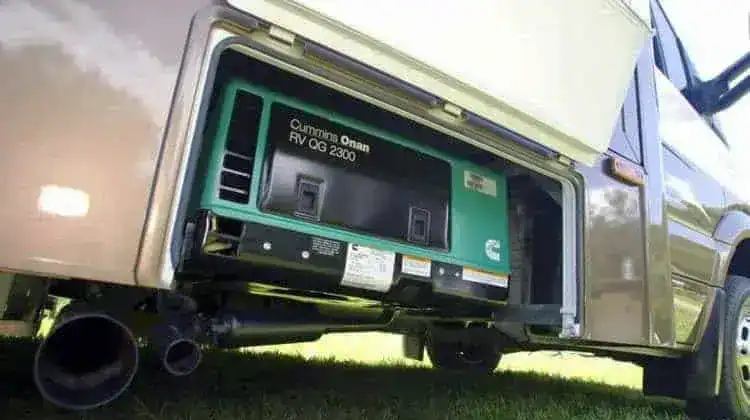
If you aren’t staying at any campgrounds and are relying on a power generator, then that is most likely the source of the issues. It may have simply gone bad, or it may have stopped running due to a fuel shortage.
Check your RV’s master switch as well. It is a small switch usually located near the entrance door from the inside. This switch must be on for the RV to receive power.
Surge protector
Many RVers are using their own surge protectors at campgrounds. While RVs already have surge protection devices – its breakers – surge protectors have certain benefits that make them a good investment.
Good surge protectors react faster than circuit breakers. Not only that, but most surge breakers will also block off the electricity if the current is too low – a low current can also damage electrical devices.
However, if you have a surge protector in your RV, you will need to deal with an additional link that may have failed. Testing a surge protector is easy, though – you just need a voltmeter to see whether current goes through it. If not, the surge protector may be the issue, though don’t forget there may be other problems with your power system.
If nothing helps
If you went through the entire list of options above and still can’t figure out the source of your power problem, your best option is to bring your car to an RV repair service near you and get it fixed. At the repair shop, they will have more experience and tools to examine the source of your issue without hassle and get it fixed for you quickly.
Lastly, one important thing to remember is your own SAFETY. Yes, your safety comes before anything else. If you choose to repair and fix the issue yourself, wear your protective gear and be cautious when handling electrical outlets. If it looks too risky to you, let the experts handle it.
How To Prevent Power Issues In Your RV
Charge Your Batteries
It is always a good idea to check on your RV batteries and charge them. You have to  realize that your RV batteries aren’t built the same way automotive batteries are. That’s why they are more likely to discharge instantaneously.
The RV batteries require much more power, regular checkups, and maintenance. You only need to connect your RV to an AC outlet until it is fully charged. This might take a few hours or an entire day, depending on your RV.
Keeping An RV Plugged In
You might notice yourself as an RVer: you keep your electronic gear running constantly. Not only that, but their batteries are also plugged in even when their cars are inactive for a long time. Nevertheless, keeping your RV plugged in can cause the battery to discharge. This latter, on the other hand, can drain electrolytes from the battery cells over time.
FAQ
Q. Do RV batteries charge when plugged into shore power?
This is one of the most asked questions regarding battery charging, and the answer is yes. With many options for charging your RV batteries, one well-known method is simply plugging it into a 110V shore power outlet.
This can be either at the campground or at your house. If you are looking for alternatives, you can use a solar panel. However, this method might be time-consuming. Or, you can use a power generator
Q. How do you restore electricity?
When there is an electrical system issue, especially when none of the gadgets or appliances function, then the above-mentioned tips can help you restore the electricity:
Here we can sum them up in points:
- Check your Ground Fault Circuit Indicator
- Reboot the main circuit breaker. The circuit breaker can be located at the level of the power pedestal. Check your RV manual if you don’t know where it’s located.
- Reset it at 110v
- Make sure that the batteries are in good condition and not damaged. If damaged, remove them.
- Check the inverter reactor when you detach it from the batteries.
- disconnect the power pedestal and shore power, and then
- Reboot the breakers
- Monitor the inverter again and see if it is working
Q. What is shore power?
When plugged into an AC outlet, your RV is more likely to receive power. Usually, vehicles draw up to 50 amps from 110 V shore power.
Nevertheless, you should always be careful not to damage your electrical system.
Q. What do we mean by shoreline power?
This term is usually used when major electrical components of an RV are powered off. In this case, the power source is supplied by an external generator, which will eventually help you store fuel and power.
How to approach this information?
Many things could have gone wrong in your RV’s electrical system, and we haven’t covered every reason for power failures in RVs. Rather than trying to provide you with in-depth guidelines on what to do to resolve your power issues, we’ve given more general tips to help you get going.
The simpler issues – like a tripped breaker – require no tools or special skills and thus could be performed by anyone. It is also easy to identify issues that manifest as blown fuses, melted wires, or burned appliances.
But when it comes to more complex issues in your RV’s electrical system, we think you shouldn’t try to fix them yourself if you aren’t experienced with electricity. If you are experienced, then you most likely don’t need any guides.
Above, we’ve provided information that should be sufficient to resolve simpler issues on your own. Besides, it should help you get a good idea of what you should be doing upon discovering a weak link in your RV’s electrical system.
Electricity is dangerous, and you shouldn’t attempt to fix something that you have no idea of. Go as far as your skills and tools allow, and upon coming across anything beyond your reach, address a professional.
Final Thoughts
RV Power Troubleshooting Checklist
Keep this handy guide in your glove box or electrical cabinet for quick reference when the lights go out.
1. The “Quick Fix” Scan
-
Check the Master Switch: Ensure the main battery disconnect switch (usually near the entrance) is set to ON.
-
Check the Shore Power Pedestal: Is the breaker at the campground post flipped on?
-
Inspect the Surge Protector: If using one, check for error lights or use a voltmeter to ensure power is passing through it.
2. Interior AC Power (110V/120V)
-
Main Breaker Panel: Look for any tripped breakers. Flip them fully “OFF” and then back “ON.”
-
GFCI Outlets: Press the “Reset” button on outlets in the kitchen, bathroom, and exterior.
-
Power Cord: Ensure the heavy shore power cord is twisted securely into the RV inlet.
3. Battery & DC Power (12V)
-
Check Fuses: Look for a break in the metal wire inside the plastic fuses. Replace only with the same amp rating.
-
Battery Terminals: Check for corrosion or loose wires on the house batteries.
-
Converter Check: Ensure the converter is receiving AC power to charge the batteries.
-
Battery Health: If you have a multimeter, check the voltage between 13.4V and 14.5V when plugged in.
4. External & Mechanical
-
Generator: If off-grid, check fuel levels and the generator’s own internal circuit breaker.
-
Neighbor Check: Ask a neighbor if their power is out; the park grid might be down.
SAFETY REMINDER: If you smell burning plastic, see smoke, or are unsure about using a multimeter, STOP and call a professional. Never replace a fuse with a higher-rated one.