Thank you for reading our post, please rate this article at the end.
Reading Time: 5 minutesLast Updated on November 13, 2026 by Paul Clayton
Are pop up campers warm in the winter? Not on their own, because the canvas walls and bunk ends have little insulation. They can be comfortable in cool weather and light frost if you run the furnace, add insulated bunk-end covers, use heated mattress pads on hookups and cut drafts, but they are a poor choice for camping in deep cold or snow.
Part of our guide: Today’s Best Pop Up Campers
Safety warning: Every heater burns fuel or electricity in a small space. Use a working carbon monoxide alarm and propane detector, keep a vent cracked for fresh air, and never use a grill, camp stove or outdoor-only heater to warm the camper.
Table of Contents
Key Takeaways
| Question | Short Answer |
|---|---|
| Are pop up campers warm in winter? | Not by themselves; canvas loses heat quickly |
| Do pop ups have heat? | Many have a ducted propane furnace; check your model |
| Best ways to stay warm | Furnace, bunk-end covers, heated mattress pads, draft sealing, warm bedding |
| Biggest risks | Carbon monoxide, condensation and frozen water lines |
| Practical limit | Cool weather and light frost; not deep cold or heavy snow |

Are Pop Up Campers Warm In The Winter?
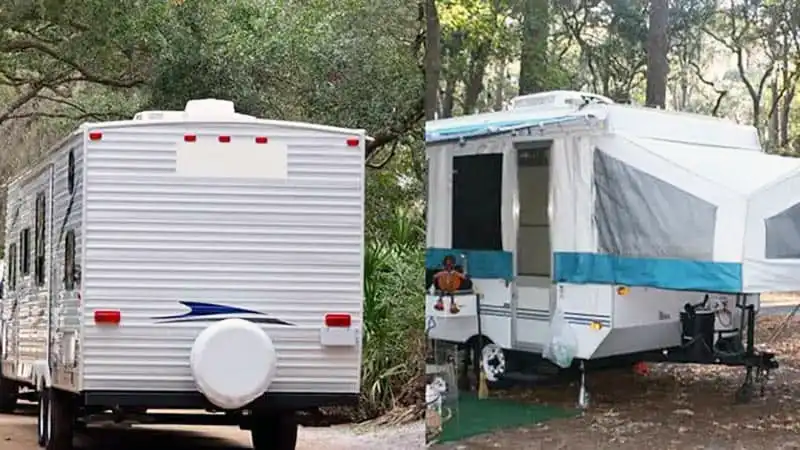
A pop up camper, also called a tent trailer or folding camper, has a hard floor and roof but canvas or vinyl walls and bunk ends. Canvas lets heat escape quickly and lets cold air and wind in, so the inside cools down fast once the heat source stops. Moisture from breathing and cooking also condenses on cold canvas.
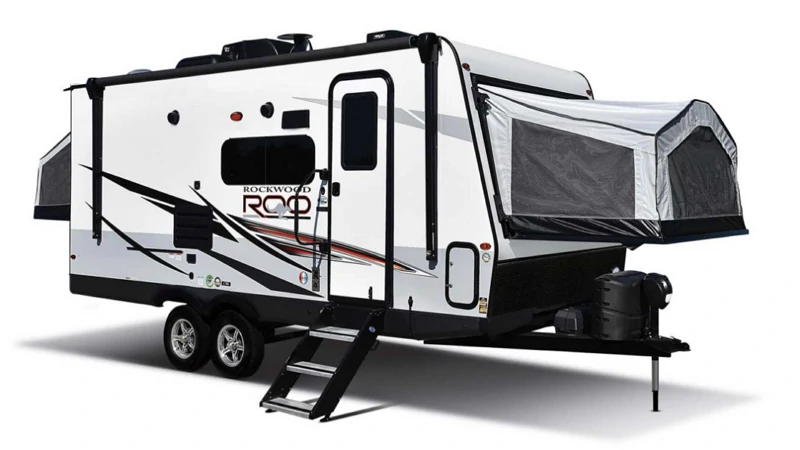
That does not mean you cannot use a pop up in cold weather. Many models have a propane furnace that works well in spring and fall, and with a few upgrades you can stretch your camping season. For model ideas, see our guide to today’s best pop up campers and our list of off-road pop up campers.

How To Keep A Pop Up Camper Warm In Winter
Use The Built-In Furnace
A vented propane furnace is the safest and most effective heat source because it vents combustion gases outside. Make sure it is serviced and that you have enough propane. Furnaces use fuel quickly in cold weather, so carry a full tank or two. Our guide to RV propane tank sizes helps you plan.
Add An Electric Heater On Hookups
When you have shore power, a small electric space heater with tip-over and overheat protection saves propane. Keep it away from bedding and canvas, and plug it directly into an outlet rather than an extension cord.
Insulate The Bunk Ends And Canvas
Insulated bunk-end covers, reflective insulation panels and heavy thermal curtains make a big difference because the bunk ends lose the most heat. Some owners also use an outer bunk-end cover to block wind and rain.
Stop Drafts From Below
Cold air comes up through the floor and gaps around the door. Put rugs or foam mats on the floor and consider skirting around the base to block wind. Our guide to RV underbelly insulation covers ideas that also work on small trailers.
Sleep Warm
Heated mattress pads or electric blankets on hookups, cold-rated sleeping bags, wool blankets and warm layers keep you comfortable even after the furnace cycles off.

How Can I Heat My Pop Up Camper Without Electricity?
Most pop up furnaces still need 12-volt power for the blower, so a charged battery is important. Without power, some campers use a portable propane heater that is rated by the manufacturer for indoor use and has a low-oxygen shutoff and tip-over switch. Even then, follow the instructions, keep ventilation open, keep the heater well away from canvas and bedding and use a CO alarm. Our guide on how to heat a camper without electricity covers more options.
Controlling Condensation In A Pop Up
Condensation is a big problem in cold weather because the canvas is colder than the air inside. Crack a vent or window, run the vent fan while cooking, avoid drying wet clothes inside and wipe moisture off the canvas in the morning. Moisture absorber tubs help in small spaces. Always dry the canvas fully before storing the camper to prevent mold.
Preparing For Cold Weather Camping In A Pop Up
- Check the forecast and choose campgrounds with electric hookups when possible.
- Test the furnace, CO alarm and propane detector before leaving home.
- Bring extra propane, a charged battery and warm clothing and bedding.
- Drain the water system or use only jugs of water if temperatures will drop below freezing, and use RV antifreeze to winterize the lines afterward.
- Vinyl windows can become stiff in the cold, so warm the camper before folding it down to reduce the risk of cracking.
- Clear snow off the roof before closing the camper.
Pop Up Campers Warm In The Winter FAQ
How cold is too cold for a pop up camper?
It depends on your heat source and gear, but most owners find pop ups uncomfortable once nights drop well below freezing. With a good furnace, bunk-end covers and warm bedding, many people camp comfortably down to around freezing.
Do pop up campers have heaters?
Many do. Mid-size and larger pop ups often have a ducted propane furnace, while smaller models may not. Check the spec sheet for your camper.
Can you use a Mr. Heater Buddy in a pop up camper?
Some portable propane heaters are rated by their makers for indoor use with ventilation. If you use one, follow the manufacturer’s instructions exactly, keep a vent open, keep it away from canvas and run a CO alarm.
How do I keep the bunk ends of my pop up warm?
Use insulated bunk-end covers or reflective panels, add thermal curtains, and sleep on a heated mattress pad when you have power.
Can I use the water system in winter?
Only when temperatures stay above freezing. Exposed pop up plumbing freezes quickly, so use water jugs in cold weather and winterize the system for storage.
Final Thoughts
Pop up campers are not naturally warm in the winter, but they can be comfortable in cool and frosty conditions with a working furnace, extra insulation on the bunk ends, draft control and warm bedding. Treat heat safety seriously with a CO alarm, a propane detector and fresh air, and save deep-winter trips for a hard-sided, insulated RV.
Resources
- U.S. Consumer Product Safety Commission, carbon monoxide safety guidance
- Pop up camper manufacturer owner’s manuals (Coachmen Clipper, Forest River Rockwood)
- RV furnace manufacturer owner’s manuals (Atwood, Suburban)