
Thank you for reading our post, please rate this article at the end.
Reading Time: 4 minutesLast Updated on November 10, 2026 by Paul Clayton
Part of our guide: RV Water and Waste: Complete Guide to Tanks, Toilets and Plumbing
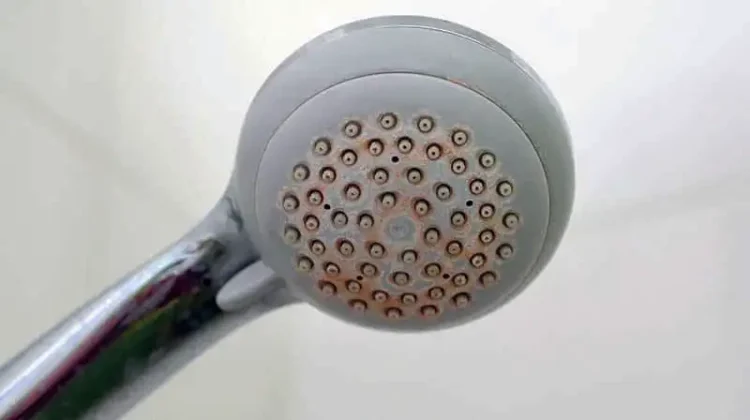
When it comes to hard water and RV plumbing, the problem starts with water high in dissolved calcium and magnesium, and it’s common at campgrounds across much of the U.S., especially the Southwest. In an RV, it leaves mineral scale that clogs faucet aerators and shower heads, coats the water heater and its heating element, reduces water flow, and shortens the life of pumps, valves and fixtures. The four truths: it’s common, it builds up fast in small RV plumbing, it costs you in efficiency and repairs, and a softener plus regular flushing prevents most of the damage.
The 4 truths at a glance
| Truth | What it means for your RV |
|---|---|
| 1. Hard water is common at campgrounds | You’ll hook up to it often, especially in the West and Southwest |
| 2. Scale builds up quickly in RV plumbing | Small lines, aerators and heater tanks clog faster than in a house |
| 3. It costs money | Lower water heater efficiency, more repairs, shorter fixture life |
| 4. It’s preventable | A portable softener, filtration and regular flushing stop most damage |
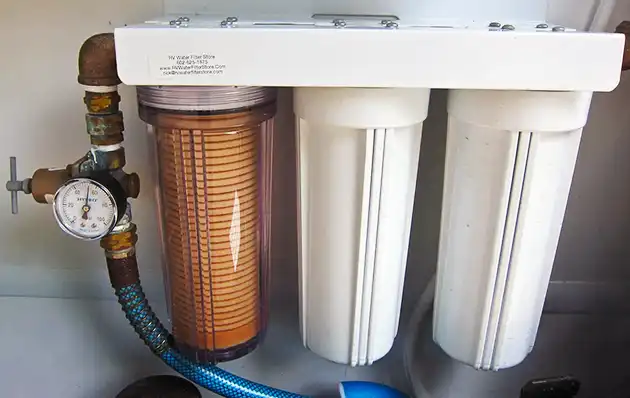
Table of Contents
Key Takeaways
| Topic | Key takeaway |
|---|---|
| What hard water does | Builds scale in pipes, fixtures and the water heater |
| Signs | White crust, low pressure and spotty dishes |
| Prevention | Use a water softener or filter |
| Water heater | Flush and descale regularly |
| Anode rod | Check it on Suburban-style heaters |
How Hard Is Hard Water?
Water hardness is usually measured in milligrams per liter (mg/L) or grains per gallon (gpg). One grain per gallon equals about 17.1 mg/L.
| Classification (USGS) | mg/L as calcium carbonate | Grains per gallon |
|---|---|---|
| Soft | 0 to 60 | 0 to 3.5 |
| Moderately hard | 61 to 120 | 3.5 to 7 |
| Hard | 121 to 180 | 7 to 10.5 |
| Very hard | Over 180 | Over 10.5 |
Inexpensive test strips let you check each campground’s water in seconds.
Signs Hard Water Is Affecting Your RV
- White, chalky buildup on faucets, shower heads and glass
- Weak flow from aerators and shower heads
- Rumbling or popping from the water heater
- Hot water runs out faster or takes longer to heat
- Soap that won’t lather and spots on dishes
- Flakes of scale when you drain the water heater
Truth 1: It’s Common at Campgrounds
Much of the western and central U.S. has hard or very hard groundwater, and many campgrounds use wells. Full-timers and snowbirds in Arizona, Nevada, Texas, Utah and Southern California deal with it constantly.
Truth 2: Scale Builds Up Fast in RV Plumbing
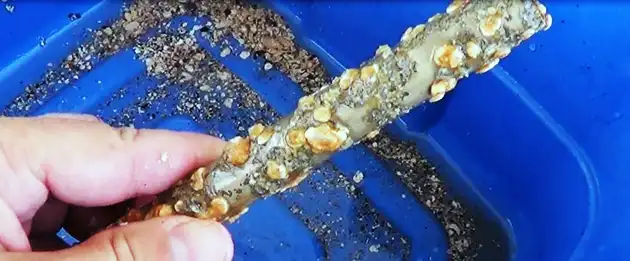
RV plumbing uses small-diameter lines, compact water heaters and fine aerators. Heat makes minerals drop out of solution, so the water heater is usually hit hardest. Tankless heaters can scale up internally too.
Truth 3: It Costs You
- Scale insulates the heating element and burner area, so the heater works harder and wastes propane or electricity.
- Valves, toilet seals, pumps and faucet cartridges wear out sooner.
- Clogged aerators and shower heads need cleaning or replacement.
Truth 4: It’s Preventable
| Solution | How it works | Notes |
|---|---|---|
| Portable water softener | Ion exchange swaps calcium and magnesium for sodium | Most effective; regenerate with table salt |
| Inline filter | Removes sediment, chlorine taste and odor | Doesn’t soften water; use alongside a softener |
| Scale-inhibiting cartridges | Polyphosphate or similar treatment slows scale | Helps, but less effective than softening |
| Magnetic conditioners | Claim to change how minerals behave | Little independent evidence; results vary |
Compare options in our guides to RV water softeners and the best RV water filters.
Maintenance Tips
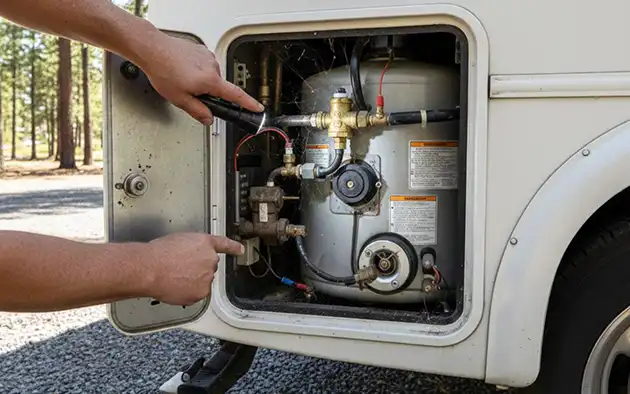
- Flush the water heater at least once a year, more often with hard water, using a tank rinser.
- Descale with vinegar; see how to clean an RV water system with vinegar.
- Soak aerators and shower heads in vinegar to dissolve scale. Upgrading? See the best RV shower heads.
- Check the anode rod if your water heater has one. A worn anode is also a common reason RV water smells like rotten eggs.
- Use a pressure regulator and drinking-water-safe hose at every hookup.
Common Myths
- “Hard water is unsafe to drink.” Hardness itself isn’t considered a health risk; the problem is scale and taste.
- “It doesn’t affect appliances.” It does, especially water heaters.
- “All softeners are the same.” Capacity and design vary widely; size yours for your water use and local hardness.
Hard Water and RV Plumbing FAQ
How do I know if campground water is hard?
Use a hardness test strip, look for white buildup, or ask the campground. Many local water reports list hardness.
Do I need a water softener for my RV?
If you camp often in hard-water areas or live full-time in your RV, a softener is one of the best plumbing investments you can make.
Can hard water damage my tankless water heater?
Yes. Scale builds up inside the heat exchanger, so periodic descaling is important.
Does hard water affect my holding tanks?
It can leave mineral deposits and make sensors less accurate. See RV tank sensor cleaning.
Final Thoughts
Hard water slowly damages RV plumbing and appliances. A softener, regular flushing and simple maintenance go a long way toward protecting your system.
Resources
- U.S. Geological Survey, water hardness classifications
- Water softener manufacturers’ guidance
- RV water heater manufacturers’ maintenance guides




