
Thank you for reading our post, please rate this article at the end.
Reading Time: 3 minutesLast Updated on November 2, 2026 by Paul Clayton
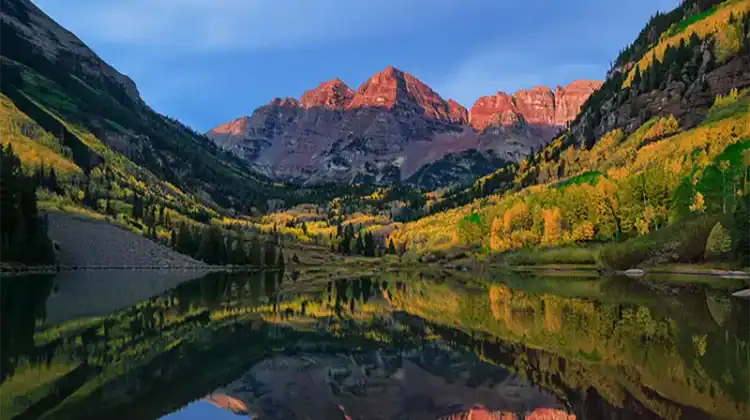
The Maroon Bells near Aspen, Colorado, are twin 14,000-foot peaks, Maroon Peak and North Maroon Peak, famous as some of the most photographed mountains in North America, rising above Maroon Lake in the Maroon Bells-Snowmass Wilderness. Most visitors enjoy them on easy trails like the Maroon Lake Scenic Trail or the hike to Crater Lake. Actually summiting the Bells is a dangerous technical climb on loose rock, suited only to experienced mountaineers. In summer, plan on the shuttle bus or a reservation to drive the access road.

Table of Contents
Key Takeaways
| Topic | Quick answer |
|---|---|
| Location | Near Aspen, Colorado, in White River National Forest |
| Peaks | Maroon Peak and North Maroon Peak, both over 14,000 ft |
| Best easy hike | Maroon Lake Scenic Trail |
| Popular day hike | Crater Lake, a few miles round trip |
| Summer access | Shuttle bus or advance reservation |
| Best time | Summer for wildflowers, late September for golden aspens |
When to Go
Summer brings wildflowers and open trails, and mid to late September is famous for golden aspens. Sunrise offers the classic reflection shot at Maroon Lake. Expect crowds at peak times.
How to Get There
Maroon Creek Road is about 10 miles from Aspen. In the main season, most visitors ride the shuttle bus from Aspen Highlands or reserve parking in advance. In winter, the road closes to cars and is used for skiing, snowshoeing and snowmobile tours.

The Hikes
1. Maroon Lake Scenic Trail
An easy loop around the lake with the iconic view.
2. Maroon Creek Trail
A gentle trail following the creek downhill toward the road.
3. Crater Lake Trail
A moderate, rocky climb to an alpine lake beneath the peaks.
4. Maroon Bells Camping
Small Forest Service campgrounds along Maroon Creek Road fill fast; wilderness camping has strict rules, including bear-resistant food storage.
Climbing the Maroon Bells
The “Deadly Bells” earned their nickname from crumbly rock and complex route-finding. Only experienced climbers with helmets, solid scrambling skills and an early start should attempt them.

Visiting in Winter
Snowshoe or ski up the closed road or join a guided tour for a quiet, snowy view of the peaks.
What to Bring
- Sturdy shoes; see Nortiv8 hiking boots and our Loom footwear review.
- Layered hiking shirts and pants
- A daypack with water, snacks, sunscreen and rain gear
- Bug spray and a camera

Check the Weather and Watch for Altitude Sickness
Afternoon thunderstorms are common in summer, so start early. Maroon Lake sits above 9,500 feet; headache, nausea and dizziness can signal altitude sickness, so drink water and descend if symptoms worsen. Read life-saving hiking tips.
Why Are the Maroon Bells So Famous?
Their striped maroon mudstone, symmetrical shape and mirror-like reflection in Maroon Lake make them a classic Colorado image. Explore more in Rocky Mountain adventures and Colorado’s rich heritage.
FAQ: Maroon Bells
Do you need a reservation for the Maroon Bells?
In the main season, yes, for the shuttle or parking.
How long is the hike to Crater Lake?
A few miles round trip with moderate elevation gain.
Can beginners climb the Maroon Bells?
No; enjoy the lake and Crater Lake trails instead.
Are dogs allowed?
Leashed dogs are allowed on many trails, but not on the shuttle except service animals; check current rules.
Final Thoughts
The Maroon Bells are a must-see in Colorado. Book your shuttle or parking, start early and enjoy the easy trails, leaving summit climbs to experienced mountaineers.
Resources
- USDA Forest Service, White River National Forest
- Aspen visitor and shuttle information



