
Thank you for reading our post, please rate this article at the end.
Reading Time: 5 minutesLast Updated on November 10, 2026 by Paul Clayton
Part of our guide: How to Charge Your RV Battery: Complete Guide to RV Batteries and Power
If your RV is plugged in but no power reaches the outlets, start outside and work in: confirm the campground pedestal breaker is on and working, check your power cord, adapters and surge protector or EMS (many shut off power when they detect a fault), then check the RV’s main breaker, individual breakers and any GFCI outlets. If only 12-volt items are dead, look at the battery disconnect switch, fuses and the converter. If nothing works, test the pedestal with a multimeter or try another site, and call an RV electrician for anything beyond basic checks.
Table of Contents
Key Takeaways
| Check | What to look for |
|---|---|
| Pedestal | Breaker on, correct amp outlet, voltage present |
| Cord and adapters | Damage, loose connections, burned or melted plugs |
| Surge protector or EMS | Error codes, delay timers or tripped protection |
| Main and branch breakers | Tripped breakers in the RV’s distribution panel |
| GFCI outlets | A tripped GFCI can kill several outlets |
| 12V system | Battery disconnect, fuses, converter and battery charge |
| Transfer switch | Can fail and block shore power from reaching the panel |
RV Electrical Basics
Your RV has two electrical systems:
- 120-volt AC: powers outlets, the microwave, air conditioner and other household-style appliances. It comes from shore power, a generator or an inverter.
- 12-volt DC: powers lights, water pump, fans, slide motors, furnace controls and more. It runs from the house batteries, which the converter charges when you’re plugged in.
Knowing which items aren’t working tells you which system to troubleshoot.

Step-by-Step Troubleshooting
1. Check the Campground Pedestal
- Make sure the pedestal breaker is switched on.
- Confirm you’re plugged into the right outlet (30 amp or 50 amp).
- Reset the breaker by switching it fully off, then on.
- Test voltage with a multimeter or plug-in tester if you have one.
- Ask neighbors if they have power, or try another pedestal.
2. Inspect Your Cord, Adapters and Surge Protector
- Look for cuts, burn marks or melted prongs on the cord and adapters.
- Make sure connections are fully seated.
- Check your surge protector or EMS display for error codes. Many have a startup delay of a minute or more.
- Some protectors permanently cut power after a big surge and need replacement.
Learn more about RV surge protectors.

3. Check the RV’s Breakers
Open your power distribution panel and look for tripped breakers, including the main breaker. Reset any that are tripped by switching them fully off and back on. If a breaker trips again right away, there may be a short or overloaded circuit. Unplug appliances and call a technician.
4. Reset GFCI Outlets
One GFCI outlet, often in the bathroom, kitchen or outside, can protect several other outlets. Press the reset button on each GFCI. Moisture, a bad outdoor outlet or a faulty appliance can make it trip repeatedly.
5. Check the Transfer Switch
RVs with generators have an automatic transfer switch that chooses between shore and generator power. If it fails, shore power may not reach your panel. Listen for a click when you plug in. Transfer switch repairs are usually best left to a pro.
Troubleshooting the 12-Volt System

- Battery disconnect switch: make sure it’s on. Learn more in our guide to the RV battery disconnect switch.
- Fuses: check the 12V fuse panel for blown fuses and replace them with the same rating.
- Converter: if the batteries aren’t charging on shore power, the converter may be bad. See how to tell if your RV converter is bad.
- Batteries: deeply discharged or failing batteries can make 12V items act up even on shore power.
- Connections: look for loose or corroded battery terminals.

Try a Generator to Narrow It Down
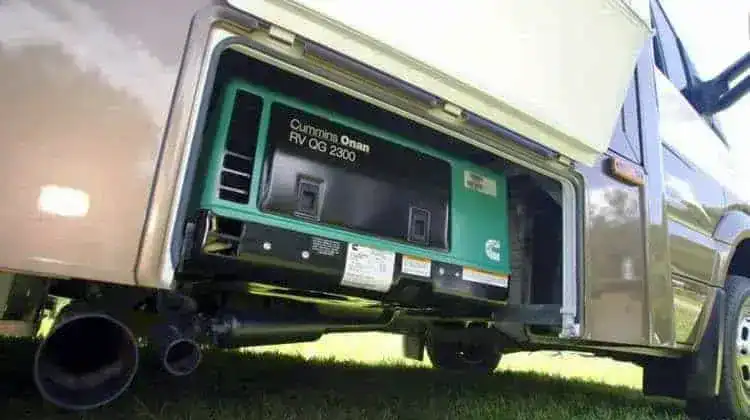
If you have a generator, start it. If everything works on the generator but not on shore power, the problem is likely the pedestal, cord, surge protector or transfer switch. If nothing works on either, the issue is probably inside the RV.

When to Call a Professional
- Breakers trip repeatedly.
- You smell burning or see scorched outlets.
- The transfer switch, converter or inverter appears to have failed.
- You aren’t comfortable working with 120-volt power.
Electricity can be dangerous. Always unplug from shore power and turn off the generator and inverter before working on wiring.
How to Prevent RV Power Problems
- Use a quality surge protector or EMS every time you plug in.
- Turn off the pedestal breaker before plugging in or unplugging.
- Keep cords and adapters clean, dry and undamaged.
- Don’t run too many high-draw appliances at once on 30 amp service.
- Maintain your batteries and check connections regularly.

Quick Troubleshooting Checklist
- Pedestal breaker on and outlet working
- Cord, adapters and surge protector OK
- RV main and branch breakers reset
- GFCI outlets reset
- Generator test to isolate the problem
- Battery disconnect on, fuses good, converter charging
- Call a pro if the issue persists
RV Plugged in But No Power FAQ
Do RV batteries charge when plugged into shore power?
Yes. The converter or charger charges the house batteries when the RV is plugged in, as long as it’s working and the battery disconnect allows it.
Why do my outlets not work but my lights do?
Your 12V system is working but 120V isn’t reaching the outlets. Check the pedestal, cord, breakers, GFCI outlets and transfer switch.
Why do my lights not work while plugged in?
Check the battery disconnect, 12V fuses, battery condition and converter.
What is shore power?
Shore power is the external electrical connection at a campground pedestal or home outlet that supplies 120V power to your RV. Learn how to safely plug a 30 amp RV into your house.
Can a bad surge protector cause no power?
Yes. A protector that has detected a fault or been damaged by a surge can block power to the RV.
Final Thoughts
Most “plugged in but no power” problems come down to a tripped breaker, a GFCI, a surge protector fault or a bad pedestal. Work through the checks from the pedestal inward, use your generator to isolate the problem and call an RV electrician for anything that involves repeated trips, burning smells or major components.
Resources
- RV manufacturer owner manuals and electrical diagrams
- Surge protector and EMS manufacturers’ troubleshooting guides
- OSHA electrical safety guidance




