
Thank you for reading our post, please rate this article at the end.
Reading Time: 10 minutesLast Updated on February 5, 2026 by Paul Clayton
Table of Contents
Is It Legal To Ride In A Travel Trailer?
Key Takeaways
-
- Legality Varies by State: There is no universal law; permission to ride in a towable RV depends entirely on the state and the type of RV (Travel Trailer, 5th Wheel, or Truck Camper).
- Restricted States: Arkansas, Maine, and New Hampshire prohibit passengers in all types of moving towable RVs.
- Travel Trailers vs. Motorhomes: It is generally legal to ride in the back of a motorhome because it is a single vehicle, whereas riding in a towed travel trailer is illegal in most states.
- Standard Conditions for Legality: In states where it is permitted, typical requirements include:
- Communication: A way for the driver and passengers to talk (radio or phone).
- Age Limits: Minimum age requirements (often 13 or 14).
- Safety Features: Working exit doors from the inside and safety glass windows.
- The “Safety Gap”: RVs are not built to the same safety standards as cars; they often lack airbags, shatterproof glass, and reinforced frames, which can increase the risk of injury in a crash.
- Behavioral Risks: Even if legal, the article strongly advises against cooking, sleeping in a bed, or using the bathroom while the vehicle is in motion due to the risk of injury from movement or falling objects.
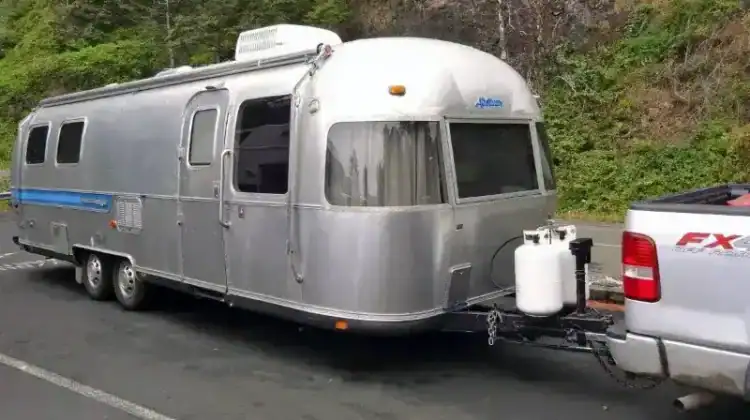
The query, “Is It Legal To Ride In A Travel Trailer?” resonates with many travel enthusiasts. The legality of riding in a travel trailer varies by jurisdiction. In some states and countries, it is legal to ride in a travel trailer while it is in motion, provided specific safety measures are followed.
However, this practice is prohibited elsewhere due to safety concerns. Before deciding to ride in a travel trailer, individuals must understand the specific laws and regulations in their area.
Well, things aren’t as simple as you may think.
Since rules vary by state, there is no clear answer on the legality of riding in a moving travel trailer or other RV types. In some states, it is illegal to transport passengers in any RV (excluding motorhomes), while in others, it is allowed but with restrictions.
- Today’s Best Pop-Up Campers
- New vs. Used RV: Navigating the Price Trends
- Can You Rent an RV for a Year?
In this post, we will find out in which states riding in the back of an RV is allowed and address safety precautions you should follow.
Is It Legal To Ride In A Travel Trailer? State-by-state guide by RV types
Below is a state-by-state list of general regulations for RV types: travel trailers, fifth wheels, and truck campers. This list indicates whether passengers are allowed in the RV while driving.
| State | Travel Trailer | 5th Wheel | Truck Camper |
| Alabama | No | No | Yes |
| Alaska | No | No | Yes |
| Arizona | Yes | Yes | Yes |
| Arkansas | No | No | No |
| California | No | Yes* | Yes* |
| Colorado | No | No | Yes |
| Connecticut | No | No | Yes |
| Delaware | No | No | Yes |
| Florida | No | No | Yes |
| Georgia | No | No | Yes |
| Hawaii | No | No | Yes** |
| Idaho | No | No | Yes |
| Illinois | No | No | Yes |
| Indiana | Yes | Yes | Yes |
| Iowa | Yes | Yes | Yes |
| Kansas | Yes*** | Yes*** | Yes*** |
| Kentucky | No | No | Yes |
| Louisiana | No | No | Yes |
| Maine | No | No | No |
| Maryland | Yes | Yes | Yes |
| Massachusetts | No | No | Yes |
| Michigan | Yes | Yes | Yes |
| Minnesota | Yes | Yes | Yes |
| Mississippi | Yes | Yes | Yes |
| Missouri | Yes | Yes | Yes |
| Montana | No | Yes | Yes |
| Nebraska | Yes | Yes | Yes |
| Nevada | No | No | Yes |
| New Hampshire | No | No | No |
| New Jersey | No | Yes | Yes |
| New Mexico | No | No | Yes |
| New York | No | Yes | Yes |
| North Carolina | Yes | Yes | Yes |
| North Dakota | No | Yes | Yes |
| Ohio | No | No | Yes |
| Oklahoma | No | No | Yes |
| Oregon | No | Yes* | Yes |
| Pennsylvania | No | Yes* | No |
| Rhode Island | No | No | Yes |
| South Carolina | No | Yes* | No |
| South Dakota | No | Yes* | Yes |
| Tennessee | No | Yes | Yes |
| Texas | No | No | Yes |
| Utah | No | No | Yes |
| Vermont | No | No | Yes |
| Virginia | No | No | Yes |
| Washington | No | No | Yes |
| West Virginia | No | Yes | Yes |
| Wisconsin | No | Yes* | No |
| Wyoming | No | No | Yes |
* Communication between the driver and passengers in the RV is required.
** Only passengers older than 13 are allowed.
*** Only passengers older than 14 are allowed.
As you can see, there are huge differences regarding the legality of riding in a moving travel trailer from state to state. Some states allow riding in any moving RV; others allow it only in certain types; a few place restrictions on RV riding; and three states, Arkansas, Maine, and New Hampshire, don’t allow riding in a moving RV at all.
Aside from age, some states may impose other requirements that you must follow when having passengers in a moving RV. For example, passengers must be seated in appropriate seats equipped with seat belts, while children must ride in a federally approved child safety seat.
There may also be rules regarding the RV’s weight, size, brakes, turn signals, speed, lighting, mirrors, or hitch type. Again, these may vary by state, so consult local authorities to determine any specifics applicable to your state.
Remember that regulations can change at any time, and we cannot guarantee the accuracy of the information provided above. To receive up-to-date information on rules in your state, consult the local Department of Motor Vehicles or the Department of Transportation.
Frequently Asked Questions
1. Is it legal to ride in a travel trailer across the entire United States? No. There is no universal federal law. Legality varies significantly by state: while some allow it under specific conditions, many others prohibit it. Three states, Arkansas, Maine, and New Hampshire, do not allow passengers to ride in any moving towable RV.
2. How do the rules differ between a travel trailer and a motorhome? It is generally legal to ride in the back of a motorhome because it is a single, self-propelled vehicle. However, travel trailers are towed units, and most states prohibit passengers from riding in them because they lack safety features such as airbags and reinforced frames.
3. What are the standard requirements in states where riding in an RV is legal? In states where it is permitted, there are often strict “stipulations,” such as:
-
Communication: A required electronic or visual link between the driver and passengers.
-
Age Limits: Some states require passengers to be at least 13 or 14 years old.
-
Safety Glass: Windows must be made of shatterproof material to prevent injury during a collision.
-
Exits: At least one unobstructed exit that can be opened from the inside.
4. Can I sleep or use the bathroom while the RV is in motion? The article strongly advises against this. Sleeping in a bed or using the bathroom means you are not buckled into a seatbelt. In the event of a sudden stop or accident, a person who is not seated and buckled is at a much higher risk of severe injury.
5. Is it safe to leave pets or children alone in a towed trailer? No. You should never leave children or pets unattended in a moving trailer. Objects and appliances can come loose and become dangerous projectiles, and pets may panic or become destructive when left alone in a moving, noisy environment.
What about motorhomes?
Unlike towable RVs, where the legality of riding in it while moving varies across the US, it is legal to ride in the back of a motorhome. A motorhome is a single vehicle, so many requirements for towable RVs do not apply to it.
However, there may still be some restrictions on passenger seating in a motorhome. Each state has different laws regarding RV seat belts. Usually, motorhomes (and essentially all other RV types) must have seat belts in the front passenger seats but not in the back seats.
In the end, while there are fewer restrictions imposed on motorhomes, there still are specific rules that you may have to follow in your state.
Safety precautions when transporting passengers in an RV
There are certain safety precautions that you need to follow, even if they  aren’t required in your state. For example, if passengers in the RV aren’t required to wear seatbelts, they should do so to stay safe.
Below is a list of essential safety precautions for transporting anyone in your RV, whether a towable or a motorhome.
Have seat belts
Living-area furniture in towable RVs isn’t always equipped with seatbelts, and you may want to install them yourself if you don’t intend to have anyone seated in the sofas. Even if you don’t intend to have anyone sitting in the sofas, you should still equip them with seatbelts just in case.
It is best to identify the safest seats and prioritize them when installing seatbelts and transporting passengers.
Ideally, your RV should have as many seats with seatbelts as passengers. This will ensure everyone is safe and no one is left out. Rear passenger seats aren’t always required to have seatbelts, but you should install them anyway to ensure your passengers’ safety.
Maintain communication
The driver and passengers must maintain communication while the RV is in motion. Again, you should do this even if it isn’t required in your state.
For example, the driver may alert passengers to an upcoming bumpy section, allowing them to take their seats and buckle up. Likewise, the passengers should be able to alert the driver if there is a problem, and the driver must pull over.
You may use a cell phone with reception in your area or a two-way radio to communicate with the passengers. Since reception can be unreliable in some places, consider providing a visual communication method for passengers.
Install safety glass
Many RVs do not come with shatterproof glass preinstalled. If you determine that the windows in your RV aren’t shatterproof, then you should install safety glass to ensure the safety of the RV passengers.
Safety glass is designed not to shatter into the RV’s interior when a branch or another object hits the window. Glass can easily cause cuts on the skin or damage to the eyes, so you should not carry passengers in your RV if it doesn’t have shatterproof windows.
Do Not Allow Children To Stay Alone
It is best not to allow children to ride in a towed RV without adult supervision. RVs aren’t built as safely as automobiles, and appliances and other items inside can easily come loose and fall while you are driving. Children could be injured by objects flying around. Not only that, but they likely will be careless when riding in the RV alone.
Secure all objects in the RV
They are referring to loose items; securing all items that may come loose or fall off while in motion is a good idea. Adults can, to some extent, ensure the safety of children, but they aren’t immune to items flying around the RV.
Keep all portable appliances in cabinets and ensure the cabinets are tightly closed. If you have any carts or appliances with wheels, lock the wheels and, if necessary, strap the appliance to prevent rolling during transit.
Do not leave pets in the RV
As with children, you should not leave your pets unattended in the RV while it is in motion. They will have no idea what’s happening, and they may panic and become destructive. Even if you have your pet in a crate, do not leave them alone in the back of the RV.
Leave An Emergency Way Out
Unfortunately, accidents do happen, and to ensure the RV’s passengers can exit safely, consider leaving a couple of emergency exits.
For example, RV doors should be unlocked while driving so passengers can exit quickly in an emergency. While leaving the doors open may seem counterintuitive to safety, cutting the passengers’ way to safety by locking the doors can be disastrous.
In addition to leaving the doors open, consider equipping passengers with glass breakers to exit the RV if the doors are blocked. Make sure to get a good and reliable glass breaker that can easily break tempered glass. Some glass breakers can also slice through seatbelts, which is also something to look for.
Minimize movement in the RV
The freedom of movement in the RV may be tempting, but passengers shouldn’t give themselves too much freedom. The safest place in a moving RV is a passenger seat equipped with seatbelts, so passengers shouldn’t leave their seats unless it’s necessary.
This isn’t only a safety precaution – remember, in some states, passengers must wear seatbelts at all times while the RV is in motion, and not doing so would violate state laws.
Do not sleep in the RV
It would be best not to sleep in the RV while it is in motion. If you must nap, at least do so in a passenger seat while buckled.
First, sleeping in bed does not involve seatbelts, which would secure you in place as they would in a safe passenger seat.
Secondly, as mentioned above, it would violate the law requiring seatbelts in a moving RV.
Thirdly, a sleeping person will not be able to react quickly to falling objects or avoid possible injury in the event of an accident or if the RV hits a bumpy road. Sleeping in a moving RV greatly compromises your safety.
Do Not Use The Bathroom While In Motion
Likewise, using the bathroom while the RV is in motion is unwise. While nothing prevents you from doing so, the bathroom is probably the worst place to be in an accident. If you need to use the bathroom, have the RV pull over so you can do so safely. Additionally, the driver will have a short break.
Do not cook in a moving RV
Cooking in a moving RV is perhaps the most dangerous activity while on the road. Cooking in a confined area is risky, and even more so when the RV is in motion. Plus, it’s inconvenient, so why even bother?
Should you even be in a moving RV
That said, should you even be in a moving RV in the first place?
We recommend that you do not carry passengers in a towable RV unless necessary. If your tow vehicle has enough passenger seats, all your companions should be in the car.
Aside from that, there is no point in having people in an RV, as it is unsafe to sleep, cook, or do anything in there except be safely seated and buckled in a passenger seat. You may only watch TV or play video games in an RV if you are safely seated. You could also install a TV in your car if you have space.
Things are a bit easier in motorhomes, but the same rules apply.
If riding in an RV is illegal in your state, do not attempt to circumvent the law. You should follow the safety precautions listed above if no safety rules apply.
The legality of riding in a travel trailer while it’s in motion varies substantially by jurisdiction. As such, the question, “Is it legal to ride in a travel trailer?” doesn’t have a universal answer. In many jurisdictions, it is strictly prohibited due to safety concerns.
Travel trailers are not equipped with the same safety features as passenger vehicles, such as airbags and seat belts, which increases the risk of injury in an accident.
However, in some U.S. states, it is legally permissible to ride in a travel trailer while it’s being towed, but specific stipulations and requirements must be met. These may include communication devices between the driver and passengers, readily available exit mechanisms, or age restrictions.
Anyone considering riding in a travel trailer must thoroughly research the laws specific to their location.
In conclusion, while riding in a travel trailer may be legal in some places, it is generally considered unsafe and is prohibited in many areas. For safety and legal compliance, it’s advisable to consult local laws and regulations before riding in a travel trailer.
Final Thoughts
While riding in a travel trailer is technically legal in a small number of states, it is widely discouraged for safety reasons. Because travel trailers lack the structural integrity and safety features of standard passenger vehicles, the risk of injury in an accident or during sudden maneuvers is significantly higher.
The safest practice is for all passengers to remain buckled in the tow vehicle and to use the RV’s amenities only when the vehicle is safely parked. If you must carry passengers in the RV, consult the local DMV or DOT for the most current regulations and ensure the unit is equipped with aftermarket safety belts and communication devices.
Home page
Back to the top of the page