
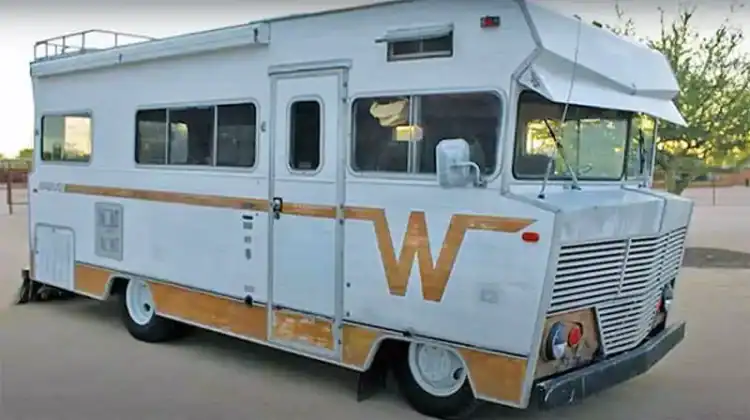
Thank you for reading our post, please rate this article at the end.
Reading Time: 8 minutesLast Updated on February 16, 2026 by Paul Clayton
Table of Contents
Should I Buy a 10 Plus Year Old Used Motorcoach?
Key Takeaways
-
- The “10-Year Rule” Reality: Some upscale RV “resorts” may deny entry to rigs older than a decade. However, this is often a subjective judgment call; if your older coach is well-maintained and not an “eyesore,” many parks will waive the rule.
- Maintenance over Age: The mechanical condition and service history are more critical than the actual year of manufacture. A scrupulous maintenance record is the best indicator of a “worthy purchase.”
- The Mileage Paradox: * Extremely low mileage can be a red flag for neglect, as seals dry out and systems fail when left idle.
- High mileage indicates significant wear and tear.
- The “Sweet Spot” is a rig with average, consistent use, suggesting the previous owner kept systems active and addressed issues as they arose.
- Storage is Crucial: An RV’s lifespan is heavily dictated by how it is stored. Exposure to sun and rain causes delamination, tire rot, and water intrusion (mildew/mold), which can compromise structural integrity.
- Inspection Essentials: Buyers should look for “band-aid” repairs and water damage (spongy floors or soft spots). Hiring a professional inspector is highly recommended to find hidden defects.
- Vintage vs. “Fossil”: Be cautious of brands that are no longer in business, as finding Original Equipment Manufacturer (OEM) parts can be nearly impossible.
- Research “Lemon” Years: Investigate the specific brand’s history. Models produced during a manufacturer’s financial crisis or immediately after the launch of a new, unproven technology often have more defects.
Buying a used motorhome makes more financial sense than a new coach, but it also comes with some hiccups, which you need to investigate before making a purchase.
The biggest one is the condition of the motorhome, which in most cases relates to age.
So, the first question to ask yourself when purchasing a used motorhome is, “How old is too old” for a used RV? Of course, if age is just a number for you, the real question should be how used is too used for a used trailer?
- Today’s Best Pop-Up Campers
- New vs. Used RV: Navigating the Price Trends
- Can You Rent an RV for a Year?
Let’s jump in and discuss everything you need to know about selecting a used RV and the “right” age to go for.
10-Year Rule
If you have a used motorhome that is more than 10 years old, you’ve probably found yourself running into the “10-year rule” in some of the upscale campgrounds.
The 10-year rule is a policy in some campgrounds that bans travel trailers older than 10 years. It’s a discriminatory rule that denies motorcoaches access based on their age limit.
It’s a rare occurrence, though, and something most RVers like debating about. In my opinion, the 10-year rule for RVs is mainly about classism, but it’s legal.
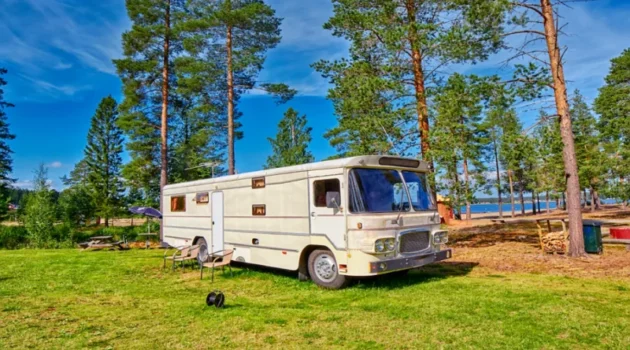
However, there are also usually valid reasons for implementing this rule, and a camp will deny your 10-year-old rig access mainly because of the following:
- Class
- Safety
- Legal reasons
Of course, most national, state, and Army Corps of Engineers parks, normal KOAs, or random locally owned campgrounds don’t have the 10-year rule. You can always tell which campgrounds have this rule by how “resort” they look.
Generally, any place with “resort” in its name could be snobby.
But from experience, most parks with this rule will make a “judgment call” about your older RV, and if it’s well-kept and maintained, they’ll be fine with you accessing the park.
Generally, your rig shouldn’t be an eyesore; it depends on how it’s presented.
But in some instances, you might not be lucky, and you won’t gain access no matter how nice your old RV looks. So, you must stay tuned, especially if your idea of RVing is camping in high-traffic, deluxe resort parks.
Maintenance Records
Beyond actual usage, another important factor that makes a used RV too old is its condition, which is often more important than its age. How well-maintained an RV is determined by whether it’s a worthy purchase, age notwithstanding. See, every piece of equipment in your RV has a maintenance schedule based on time, operating hours, and other factors.
For example, in my Winnebago Class B, there are different critical pieces of equipment such as propane generators, water heaters, furnaces, and fridges. These components require periodic maintenance, even when my RV is idle. The generator manual, for example, requires that I run it for at least 30 minutes under load every minute.
Now, if I skip maintenance records for a long time, shit will go down and may break at the worst possible time. When buying a used trailer, you can’t always assume the previous owner maintained the RV. So, the first step is to request maintenance records.
If they have a scrupulous maintenance record, that’s a plus for you. It indicates the previous owners have been responsible for maintaining the RV. However, if they have no maintenance records to show for it, be prepared to inspect and probably replace everything.
The inspection isn’t easy, especially if you’re new to an RV, because you need to locate the manual for each piece of equipment and determine which inspections to perform or how to troubleshoot issues. One of the key things to watch for when inspecting a used RV is water damage.
Saggy or spongy floors and soft spots in the walls and ceiling may indicate water intrusion. It’s usually sneaky and difficult to manage. Also, check for recent repairs and patches. It may be a sign of a band-aid project to cover up for extensive damage.
Even then, I’d recommend hiring a professional to inspect. Professional inspectors are a tad expensive, but they’re worth it. They have a keen eye and will easily spot damage on a used RV in places you wouldn’t have imagined or thought about.
Consider Mileage
From experience, I don’t think mileage is a strong indicator of how much a travel trailer has been used.
For example, some folks I know use an RV trailer for commuting to work. Their RVs have a lot of mileage but little actual use. On the other hand, if you park and live in your RV, it’ll have low mileage but a lot of use.
My previous examples may be extreme, but they’re meant to clarify that there are several ways to assess the worth of a used RV, beyond mileage.
But the thing is, RVs aren’t designed for frequent use. For example, typical RVers travel only 3 to 4 times a year, so it’s not unusual to find older, used RVs with a modest annual mileage of 4,500 miles.
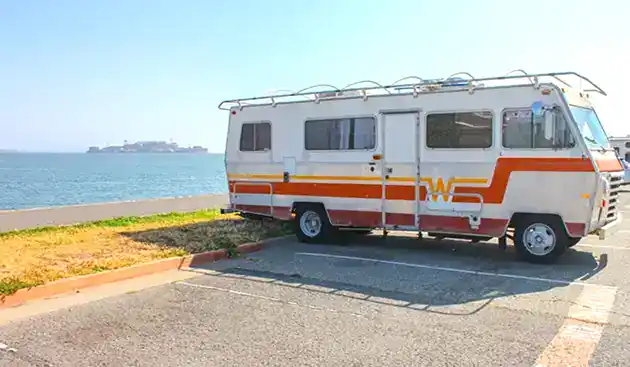
However, as I explained, it doesn’t mean the RV isn’t getting used because of the low mileage.
On the other hand, be wary of RVs with high mileage. The higher the mileage, the longer the distance covered, and the more wear and tear. In my opinion, you’d want a rig for average use.
The ideal rig should have racked up some miles, and the previous owner should have lived or used it consistently. It may indicate they’ve probably kept all systems up and probably noticed any potential issues.
Keep away from used rigs with extremely low mileage, as they might indicate idleness. Several factors, such as inclement weather, can be hard on RVs sitting unused for extended periods.
Knowing the exact mileage of an RV is as simple as checking the odometer unless it has been tampered with. The problem comes from telling the mileage on a travel trailer.
There are, however, several ways to deduce the mileage of a travel trailer. For example, asking the previous owner how often they used it and what their favorite camping location was may help you estimate a more accurate mileage.
You should also ask how often they’ve changed the wheels on the travel trailer, as this usually correlates with the distance traveled.
RV Storage
Most RVs will probably spend a considerable chunk of their life idle, parking, and less on the road. Depending on storage conditions, your RV may wear out much faster in storage than on the road.
How well your potential used RV was stored will determine whether it’s a worthy purchase.
Ideally, you should store an RV in a shelter at a covered facility. But we all know this rarely happens. If you come across an RV that was exposed to inclement weather during storage, it’s likely to look beaten up.
Extended exposure to sunlight, for example, takes a huge toll on the RV decal, fades the paint, damages the curtains, and dries out the tires, causing rot.
Exposing it to rain will cause damage, including leaks, mildew and mold growth, and algae growth.
Combined, these external factors can make the RV look older than it is. Even worse, they may damage the RV’s structural integrity.
So, before purchasing a used motorhome, be sure to ask the previous owners whether they stored their RV under a shade. Also, confirm whether they regularly wash and wax the RV. It helps to keep your RV looking new.
Beware of Vintage RVs
Sometimes, you need to differentiate between an “old” RV, which looks like it’s fresh from the grave, and a ‘fossil” RV.
An old RV is fine, but an antiquated model is not. Also known as vintage RVs, these are extremely old models. These are the models you find sitting in salvage or scrap yards.
The problem with the RVs in junkyards is that it can be hard to find the OEM parts. Some manufacturers of these RVs are no longer in the market and no longer produce them.
However, this doesn’t mean you should always walk away from all vintage models. Go for it if you find one that has been renovated with new safety equipment, including new propane lines.
Classic vintage RVs also offer better opportunities, and finding replacement parts on Craigslist or in RV forums might be somewhat easier.
Brand-Specific Age
If you’re planning to invest in a specific used RV brand, understand that there are “sweet” years and not-so-“hot” years for different RV models. 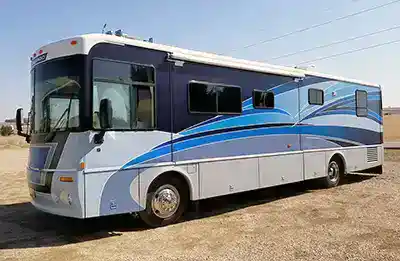
There’s no cutoff date as such, but for example, when a manufacturer introduced a new technology, the brands that followed a few years later probably had issues.
Ditto for the years when the manufacturer was on the verge of bankruptcy and closing its doors; most of its products were shoddy and of poor quality.
It’s not always true, but if you research and find a persistent manufacturing defect across different models of the same year and brand, it’s best to avoid the RV.
FAQs
Q: How Old Of A Used Motorhome Should I Buy?
A: There’s no age limit to buying a motorhome. The most important thing is to check the RV’s condition.
Q: How long do motorhomes last?
A: The useful life of an RV is up to 20 years or 200,000 miles. However, you can greatly extend your RV’s lifespan with proper maintenance and care.
Q: What is considered high mileage on a motorhome?
A: Roughly speaking, used motorhomes with anywhere between 100,000 and 200,000 miles could be considered high mileage. But depending on how well they’re taken care of, they might be worth it.
Final Thoughts
When searching for the best-used RV, it’s usually more than the actual age. Yes, age may play a role in determining a motorhome’s worth, but it’s mainly about the condition. I’ve come across 10-year-old used RVs that are worth dying for. And then there are 2-year-old RVs that are a complete wreck.
Buying a 10-plus-year-old motorcoach is a financially savvy move that avoids the steep depreciation of new models, but it requires diligent “detective work.” Success depends less on the number of registrations and more on the documented maintenance history, quality of storage, and physical presentation.
As long as the rig is well maintained and you avoid “fossil” brands with hard-to-find parts, an older coach can provide a high-end experience at a fraction of the cost.