Thank you for reading our post, please rate this article at the end.
Reading Time: 5 minutesLast Updated on November 18, 2026 by Paul Clayton
Choosing a pontoon boat or fishing boat comes down to how you will spend most of your time on the water: a pontoon is built for relaxed cruising, swimming and carrying a crowd, while a dedicated fishing boat is built to get anglers to the fish quickly and give them the gear to catch them.
Both can catch fish and both can carry family, so the real question is which job matters most to you. This guide compares space, speed, rough-water handling, maintenance and storage so you can make the right call before you buy.
Table of Contents
Key Takeaways
| Factor | Pontoon Boat | Fishing Boat |
|---|---|---|
| Best for | Cruising, swimming, entertaining, casual fishing | Serious angling, covering water fast |
| Passengers | Large groups (check the capacity plate) | Usually 2–6 people |
| Rough water | Best on lakes, rivers and calm bays | V-hull models handle chop better |
| Speed | Moderate; tritoons with big motors go faster | Generally quicker and more agile |
| Fishing features | Can be added (rod holders, livewell) | Built in: casting decks, livewells, rod storage |
| Trailering | Wide and heavy; needs a bunk trailer | Usually lighter and easier to tow and store |
What Makes a Pontoon Boat Different

A pontoon boat is a flat deck sitting on two or three aluminum tubes (a three-tube boat is often called a tritoon). That layout gives you a wide, stable platform with lounge seating, shade tops and plenty of room to move around. Most family pontoons run roughly 18 to 28 feet, with larger luxury models beyond that. Older tri-hull fishing boats offer a similarly steady platform at rest; see are tri-hull boats stable.
Pontoon Strengths
- Comfort: sofa-style seating, Bimini tops and room for coolers, grills and swim gear.
- Stability: the wide beam and flat deck make it easy for kids, older passengers and pets to move around safely.
- Capacity: pontoons typically carry more people than a fishing boat of the same length.
- Versatility: add rod holders, a livewell or a trolling motor and a pontoon becomes a comfortable fishing platform. See are pontoon boats good for fishing for setup ideas.
Pontoon Limitations
- Rough water: pontoons are happiest on lakes, rivers and protected bays. Strong wind and big waves can push water over the front deck. Read can you have a pontoon in the ocean before heading offshore.
- Speed and handling: most are not built for speed and have a wide turning radius, although tritoons with large outboards can run surprisingly fast.
- Size: the wide deck makes towing, launching and storage more demanding.
What Makes a Fishing Boat Different

Fishing boats cover a big family: bass boats, bay boats, center consoles, jon boats and deep-V aluminum boats. What they share is a layout built around angling, with casting decks, livewells, rod lockers, tackle storage and mounting points for electronics and trolling motors. Budget center consoles such as used Trophy models are popular; see who makes Trophy boats.
Fishing Boat Strengths
- Speed and agility: planing hulls get you from spot to spot quickly, so you spend more time fishing.
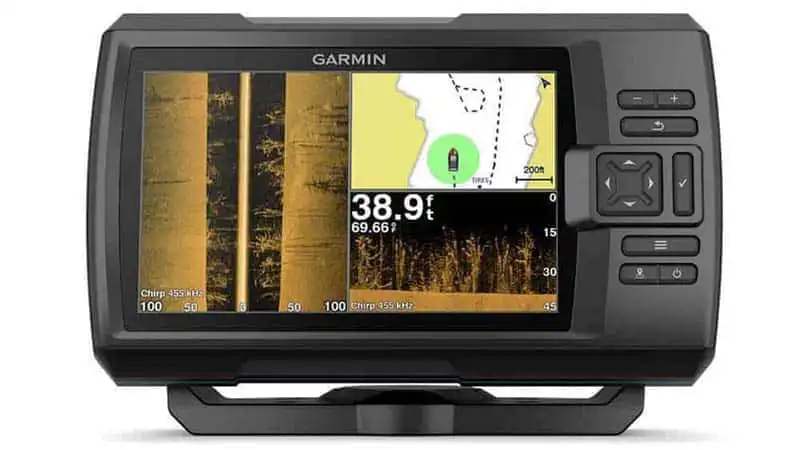
- Purpose-built features: raised casting decks, livewells and room for fish finders and GPS.
- Better in chop: V-hull and bay boat designs handle wind and waves better than a flat pontoon deck.
- Access: smaller boats can reach shallow flats, creeks and coves that bigger boats cannot.
Fishing Boat Limitations
- Less space: with more than a few people aboard, most fishing boats feel cramped.
- Less comfort: seating is functional, and there is little shade or room to relax.
- Single purpose: non-anglers in the family may get bored quickly.
Pontoon Boat or Fishing Boat: Factors to Compare

Purpose
Be honest about how you will use the boat most weekends. If you mainly cruise, swim and host friends with some casual fishing, a pontoon wins. If most trips start before sunrise with a cooler full of bait, a fishing boat is the better tool.
Space and Passengers
Pontoons are hard to beat for groups. Always stay within the maximum persons and weight listed on the boat’s capacity plate, whichever boat you choose.
Water Conditions
Calm lakes and rivers suit pontoons. Large lakes that get rough, coastal bays and big rivers with heavy boat traffic favor a deeper V-hull or a bay boat.
Maintenance
Aluminum pontoons are relatively simple to care for: rinse the tubes, protect the upholstery and service the outboard. Fishing boats used in saltwater need extra freshwater flushing, corrosion checks and attention to pumps, livewells and wiring.
Storage and Towing
A pontoon’s wide deck needs a dedicated pontoon trailer, a capable tow vehicle and more storage space. Many fishing boats fit in a standard garage and are easier to launch single-handed.
Budget
Prices overlap widely. A basic used pontoon or aluminum fishing boat can cost a few thousand dollars, while new, well-equipped models of either type commonly reach the tens of thousands. Factor in the motor, trailer, insurance, storage and fuel, not just the boat.
Which Should You Choose?
Choose a pontoon if you want a family boat for cruising, swimming and entertaining, with fishing as a bonus. Adding a trolling motor on a pontoon boat makes it a capable fishing platform.
Choose a fishing boat if you are a dedicated angler who wants speed, rough-water ability and built-in fishing features. A fishing boat from a dealer lets you compare layouts side by side before you buy.
Still undecided? Compare the alternatives in pontoon boat or kayak for fishing and pontoon boat or speedboat.
Pontoon Boat or Fishing Boat FAQ

Can a pontoon boat be used for fishing?
Yes. Many pontoons come with fishing packages or can be fitted with rod holders, a livewell, fish finder and trolling motor. They make a stable, comfortable fishing platform on calm water, although they lack the casting decks and speed of a dedicated fishing boat.
Is a pontoon boat safer than a fishing boat?
Pontoons are very stable on calm water, and their railings help keep passengers aboard. In rough water a V-hull fishing boat is usually the safer choice. On either boat, carry a properly fitting life jacket for everyone and follow your state’s boating safety rules.
What is the best boat for fishing on the coast?
Many anglers favor bay boats for coastal fishing. They have raised casting decks, a shallow draft for flats and enough hull to handle moderate chop, and most are trailerable.
Are fishing boats good for family outings?
Dual-console and fish-and-ski models work well for families who want both fishing and watersports. Pure fishing boats such as bass boats have limited seating and shade, so they are less suited to long family days.
Which is easier to tow, a pontoon or a fishing boat?
A fishing boat is usually easier. Pontoons are wide and need a specific trailer with bunks that support the tubes, plus a tow vehicle rated for the combined weight.
Final Thoughts
The right choice between a pontoon boat or fishing boat depends on who is coming along and what they want to do. Families and social boaters get more out of a pontoon, while serious anglers who need speed and rough-water ability get more out of a fishing boat. Match the boat to your typical day on the water and you will be happy with your choice.
Resources
- U.S. Coast Guard Boating Safety Division
- National Marine Manufacturers Association (NMMA)
- BoatUS Foundation