
Thank you for reading our post, please rate this article at the end.
Reading Time: 7 minutesLast Updated on August 24, 2026 by Paul Clayton
Table of Contents
How High Is A Pontoon Boat?
Key Takeaways
-
- Overall Height Profile: A pontoon boat typically measures between 90 inches and 140 inches (7.5 feet to 11.6 feet) tall from the bottom of the pontoons to the peak of the Bimini top.
- Component Height Breakdown:
- Fence/Railings: Add 2 to 3 feet above the flat deck for safety.
- Bimini Tops & Canopies: Add 7 to 10 feet of vertical profile above the deck structure.
- Trailers: Increase total transport height by an additional 2 to 3 feet when hitched.
- Upper Decks: Double-decker pontoon models easily exceed 10 feet in boat height alone, requiring extra overhead clearance.
- Trailer Sizing & Sizing Ratios: Pontoons ranging from 18 to 25 feet require trailers that are 3 feet longer than the hull (e.g., an 18-ft pontoon needs a 21-ft trailer; a 22-ft pontoon needs a 25-ft trailer) to account for motor length and weight balance.
- Garage & Storage Requirements: For garage storage, a clearance door of at least 10 feet wide and 20+ feet deep is recommended, with foldable Bimini tops providing necessary vertical clearance for low-overhead entries.
- Critical Logistics: Measuring total height including the trailer is essential to ensure safe road transport under low-clearance bridges, highway underpasses, and boathouses.
Understanding the dimensions of a pontoon boat is essential for various logistical and operational reasons. When asking, “How High Is A Pontoon Boat?” multiple factors must be considered.
Can your truck tow it? Free check — payload, tongue weight and GVWR in about a minute Open calculator ↓ Close calculator ↑
Crow Survival · Free Tool
Can your truck tow it?
Most people check the tow rating and stop there. Payload is usually what actually runs out first — and it's the number that gets folks in trouble. This checks all three limits and tells you which one is really holding you back.
1. Your tow vehicle
Find these on the sticker inside your driver's door and in your owner's manual. Don't use the numbers from a brochure or an ad — they're for a different trim than yours.
2. What's riding with you
Everything inside the truck counts against payload — people, dogs, coolers, firewood, tools, water jugs. Be honest here. This is where most people go over.
3. The trailer
Use the trailer's GVWR, not its dry weight. Dry weight is what it left the factory at — before water, propane, dishes, and everything else you put in it.
Read this before you hook up. This tool does the math, but it can't know your exact truck. Published ratings change with cab size, engine, axle ratio, and options, so two trucks that look identical can have very different limits. Always go by the sticker inside your driver's door and your owner's manual, and weigh your real setup at a certified scale before a long trip. Being over these limits can affect braking, steering, warranty coverage, and your insurance after a crash.
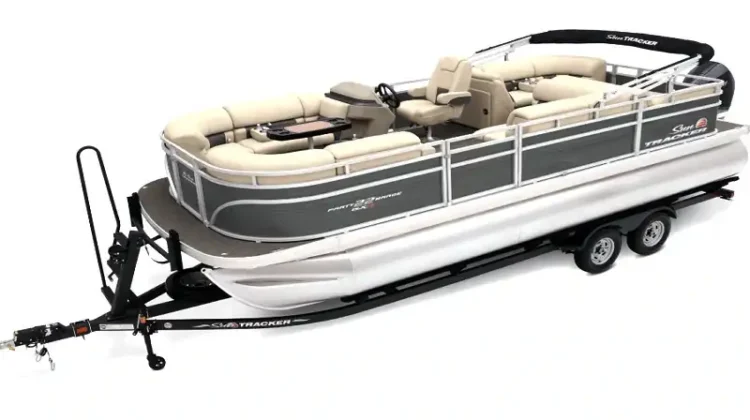
Pontoons are surprisingly tall from the keel up to the peak of the bimini, averaging between 90 inches and 140 inches, or 7.5 feet and 11.6 feet.
Pontoons between 17 and 19 feet long are excellent for small, calm water bodies. If you plan to ship on a river or pond with little waves, a 20 to 22-foot-long ship will suffice.
If, on the other hand, you will use it in rough waters, then you should search for a larger boat, preferably one that is 23 to 28 feet long.
What is a Pontoon Boat?

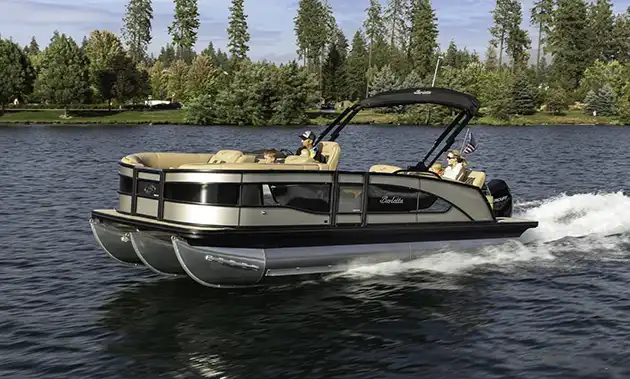
A pontoon boat is a flat-decked vessel that floats with two or more buoyant tubes (pontoons). These boats are highly stable and versatile, making them popular for recreational activities.
Pontoon boats typically feature a spacious, open deck with comfortable seating and canopies for shade. They often have amenities like fishing stations, coolers, and sometimes even small kitchens and bathrooms.
Pontoon boats are primarily used for leisure cruising, fishing, water sports, and hosting gatherings. Their stability and spaciousness make them ideal for families and groups.
The flat deck allows for easy movement and socializing, while the boat’s shallow draft enables it to navigate relatively shallow waters, unlike many other boats.
Pontoon boats have advantages, including stability, which reduces the likelihood of tipping, making them safer for inexperienced boaters and children. They also offer ample space and comfort, accommodating more passengers and gear than many traditional boats.
The versatility in design means pontoon boats can be customized for various activities, from luxury lounging to serious fishing. Additionally, their generally lower speed and higher buoyancy make them fuel-efficient, reducing operational costs.
Pontoon Boat Dimensions on a Trailer
The trailer’s dimensions are crucial for safe and efficient towing when transporting a pontoon boat.
The average pontoon boat is 18 to 25 feet long, but the trailers designed for them typically extend beyond the boat’s length to ensure secure transport.
For instance, an 18-foot pontoon boat ideally requires a 21-foot trailer, while a 22-foot pontoon boat needs a 25-foot trailer. This extra length accommodates the boat’s motor and ensures proper balance on the trailer.
The width of modern pontoon boats can vary, but they generally do not exceed 10 feet, allowing them to fit within standard roadway regulations for towing.
Understanding these dimensions helps select the right trailer, ensure safe and legal transportation, and prevent potential damage during transit.
Proper trailer sizing is essential for maintaining the boat’s integrity and ensuring a smooth towing experience.
Factors Affecting Pontoon Boat Height
Several factors can influence the height of a pontoon boat:
- Design and Model: Different manufacturers and models will have varying heights. High-performance or luxury models may have additional features that increase the height.
- Bimini Tops and Canopies: The inclusion and type of a Bimini top or canopy significantly affect the overall height. These structures provide shade and protection but add to the boat’s height.
- Upper Decks: Some pontoon boats come with upper decks or double-decker designs. These can significantly increase the overall height, often exceeding 10 feet.
- Motor and Accessories: Accessories such as fishing towers, radar arches, and motor mounts can increase the boat’s height.
Measuring Pontoon Boat Height
To measure the height of your pontoon boat accurately, follow these steps:
- Measure from the Waterline: Start from the waterline to the deck to get the base height.
- Include Structures: Measure from the deck to the top of the highest structure, such as a Bimini top or any accessories.
- Consider the Trailer: If you are measuring for transportation purposes, include the boat’s height on the trailer.
Importance of Knowing Pontoon Boat Height
Understanding the height of your pontoon boat is crucial for several reasons:
- Bridge Clearance: Knowing the height ensures you can safely navigate under bridges without causing damage.
- Storage: Ensures the boat can fit into storage facilities, garages, or boathouses.
- Transportation: Helps determine if the boat can be transported on roads without exceeding height restrictions.
Related Questions

How much horsepower does a boat have?
If you are looking for a boat with a lot of speed, you need a boat with a lot of horsepower on its stern. Some of the boats you can find have as much as 900 horsepower.
If you pair this horsepower with a performance package for your pontoons, you can reach some serious speed while making tight turns.
What is a pleasure boat?
A pleasure boat with two lengthwise pontoons. A pontoon boat is a flattish boat that relies on pontoons to float.
These pontoons (also called tubes) contain a lot of reserve buoyancy and allow designers to create massive deck plans fitted with accommodations such as expansive lounge areas, stand-up bars, and sun pads.
What is a three-hull boat?
Boats with three hulls are sometimes called tri-toons. Small inflatable pontoon boats are catamaran-type, one- or two-person boats designed for leisure and fishing.
Their pontoons are made of abrasion-resistant PVC and nylon with aluminum, steel, and plastic frames for support.
Will a pontoon fit in a garage?
As a rule of thumb, you should have at least a foot of clearance for safe movement and storage when you back the trailer and boat back into the garage.
Regarding width (here are example pontoon widths), ideally, you need a couple of feet of clearance on either side of the pontoon and trailer to the door entry.
How much does a 24-foot boat and trailer weigh?
Before hitching up, it is essential to calculate the combined weight of a boat and trailer. For example, a 24-foot-long deck boat may weigh 4,150 pounds, but it will probably exceed 5,500 pounds when paired with the trailer.
Do new boats come with trailers?
With smaller boats, trailers will often be included in a boat-motor-trailer “package” price.
But forget about money for just one second. With a trailer, you can head off to new ports and experience different adventures on various waterways, an ability many consider priceless.
Will my bass boat fit in my garage?
To safely store a bass boat, you’ll need a garage that is 2-4 feet wider than the boat’s trailer, 1-3 feet longer than the length of the boat with the trailer, and a door that is at least 1.5 feet taller than the height of the bass boat on the trailer.
Are pontoon boats easy to trailer?
While the bunk trailer can be more challenging to load onto, driving on the road is more accessible. However, scissor trailers have been designed specifically for pontoon boats. Because of this, they are much easier to use to trailer your pontoon boat.
Will a boat fit in my garage?
The size of garages will vary depending on where you are in the country or the world, but in general, most boats will fit inside a garage without too much difficulty.
The only boats that have problems fitting are pontoons, houseboats, or others designed to be taller or considerably larger.
What size garage door do you need for a pontoon boat?
Given the dimensions of a typical pontoon boat, which range from 18 to 25 feet in length and 8 to 10 feet in width, it is advisable to opt for a garage door that provides ample space for maneuverability.
Therefore, the garage door needed for a pontoon boat should be at least 20 feet long and 10 feet wide.
This dimension accommodates the boat and allows for ease of access and additional storage room for boating accessories.
Ensuring the garage door meets these specifications will protect your investment and facilitate convenient storage solutions.
Can the height of a pontoon boat be adjusted?
Yes, the height can be adjusted by removing or folding down the Bimini top or other structures. Some models have collapsible canopies to facilitate more accessible storage and transportation.
Do all pontoon boats have the same height?
No, the height varies depending on the boat’s design, model, and additional features. Luxury models or those with upper decks will have greater heights than basic models.
How do I find the exact height of my pontoon boat?
Refer to the manufacturer’s specifications or measure the boat from the waterline to the top of the highest structure. If you plan to transport the boat, including the trailer in your measurements is also crucial.

Additionally, accessories such as canopies or Bimini tops can extend the height by another 7 to 10 feet, offering protection and comfort while increasing the vertical clearance needed.
Rails and fences around the deck typically increase the height by 2 to 3 feet, enhancing safety and increasing the boat’s overall dimensions.
The trailer, which can add 2 to 3 feet to the height, must be factored in when considering transportation or storage. This aspect is crucial for understanding how to navigate the boat on public roads and underpasses.
Final Thoughts
-
Accurately measuring total height requires accounting for the base hull, upright railings, Bimini structures, outboard motors, and trailer axle height.
-
Retractable Bimini tops and folding arches provide crucial vertical flexibility for low bridges, highway transit, and indoor storage entry.
-
Selecting proper trailer dimensions and understanding bridge clearance limits prevents expensive structural damage and ensures safe transportation.