Thank you for reading our post, please rate this article at the end.
Reading Time: 4 minutesLast Updated on October 29, 2026 by Paul Clayton
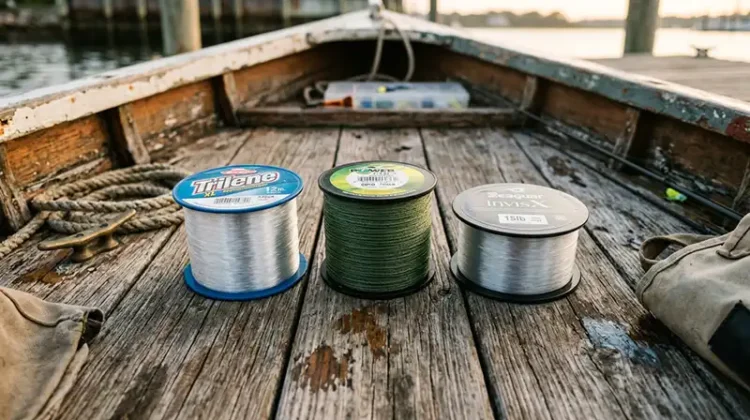
The main types of fishing lines are monofilament, fluorocarbon and braided line, with specialty options like copolymer, fly line and wire leader. Monofilament is cheap, stretchy and easy to handle. Fluorocarbon is nearly invisible underwater and resists abrasion. Braid is very strong for its thin diameter and has almost no stretch. Most anglers pick a line based on water clarity, cover, target fish and the reel they use.

Table of Contents
Key Takeaways
| Line type | Best for | Main trade-off |
|---|---|---|
| Monofilament | Beginners, topwater, general fishing | Stretches and weakens with UV over time |
| Fluorocarbon | Clear water, leaders, finesse fishing | Stiffer, costs more |
| Braided | Heavy cover, deep water, long casts | Highly visible, can cut fingers and guides |
| Copolymer | All-around use with less stretch than mono | Fewer choices in stores |
| Fly line | Fly fishing | Only works with fly gear |
| Wire | Toothy fish such as pike and sharks | Visible and kinks easily |
The Main Types of Fishing Lines
Monofilament
Monofilament, or mono, is a single strand of nylon. It’s affordable, ties easy knots, floats and has plenty of stretch, which acts like a shock absorber when a fish strikes. That stretch also reduces sensitivity at long distances. Mono breaks down with sunlight and age, so it needs replacing more often. See whether old fishing line goes bad.
Fluorocarbon
Fluorocarbon bends light much like water does, so it’s hard for fish to see. It sinks, resists abrasion and stretches less than mono, which makes it great for clear water, leaders and bottom presentations. It’s stiffer, can be harder to cast on light spinning gear and costs more per spool.

Braided Line
Braid is woven from synthetic fibers such as Spectra or Dyneema. It has a very thin diameter for its strength, almost no stretch and excellent sensitivity, so you feel light bites and get strong hook sets. It’s ideal for thick weeds, heavy cover and deep water. Braid is easy for fish to see, so many anglers add a fluorocarbon leader. Learn more about when to use braided line.

Copolymer, Fly Line and Wire
Copolymer blends two types of nylon for less stretch and better abrasion resistance than standard mono. Fly line is a thick, weighted line built for casting flies. Wire line and wire leaders stop sharp-toothed fish like pike, muskie, bluefish and sharks from biting through.
How to Choose the Right Type of Fishing Line
- Clear water: Fluorocarbon or a fluorocarbon leader.
- Heavy cover and weeds: Braid.
- Topwater lures: Mono or braid, since both float.
- Beginners: Mono, because it’s forgiving and cheap.
- Saltwater: Abrasion-resistant mono, braid or fluorocarbon leaders.
Match the pound test to your target fish and rod rating. Our guides on line size for bass and pound test for saltwater go deeper.
Fishing Line Colors
Clear and low-vis green are the safest all-around colors. High-visibility yellow or orange braid helps you watch for subtle bites, and brown or green shades blend into stained water. See the best line color for saltwater.
Using a Leader
A leader is a short length of different line tied to the end of your main line. A braid main line with a fluorocarbon leader gives you strength and sensitivity plus low visibility near the lure. Use a strong line-to-line knot such as the double uni or FG knot.

Storing Fishing Line
Keep spools out of direct sunlight and heat, which weaken nylon and fluorocarbon. Store them in a cool, dry place, check line for nicks and fraying before each trip, and recycle old line instead of throwing it away.
FAQ: Types of Fishing Lines
What is the strongest type of fishing line?
Braided line has the highest strength for its diameter. See the strongest fishing line.
Which fishing line is best for beginners?
Monofilament, because it’s affordable, forgiving and easy to tie.
Does fishing line stretch?
Mono stretches the most, fluorocarbon less and braid barely at all. Read does fishing line stretch.
Can fish see braided line?
Yes, especially in clear water, which is why anglers often add a fluorocarbon leader.
How often should I replace fishing line?
Replace mono often, and fluorocarbon and braid less often, or any time you see fraying, nicks or memory coils.
More Fishing Line Guides
- Beginners Guide to the Top 3 Types of Fishing Line
- Best Monofilament Fishing Line for Saltwater
- Best Lines for Surf Fishing
- Does Walmart Put Fishing Line on Reels?
- Do Fishing Rods Come With Line?
Final Thoughts
Knowing the types of fishing lines makes choosing easy: mono for value and forgiveness, fluorocarbon for stealth and abrasion resistance, and braid for strength and sensitivity. Many anglers combine them, using braid as the main line with a fluorocarbon leader.
Resources
- Manufacturer line specifications for monofilament, fluorocarbon and braid
- State fish and wildlife agency guidance on fishing line recycling