

Thank you for reading our post, please rate this article at the end.
Reading Time: 4 minutesLast Updated on November 19, 2026 by Paul Clayton
Pontoon boat camping means spending the night on your pontoon, usually anchored in a quiet cove or beached on an island, and it’s easier than most people expect. The keys are choosing a spot where overnight stays are allowed, adding a camper enclosure or tent for shelter, setting a secure anchor with an anchor light on, and planning your sleeping, power, food and bathroom setup before you leave the dock. For hot meals, learn how to safely put a grill on a pontoon boat. For overnight trips, plan ahead by learning whether pontoon boats have toilets.
Table of Contents
Key Takeaways
| Tip | Why it matters |
|---|---|
| Check the rules | Not every lake allows overnight anchoring or shoreline camping |
| Add an enclosure | Keeps out rain, wind, dew and bugs |
| Plan your beds | Lounges, air mattresses or cots for a good night’s sleep |
| Anchor securely | Bow and stern anchors or a beached setup; anchor light on |
| Manage power | Protect your starting battery; bring a portable power station |
| Food, water and waste | Cooler, safe cooking setup, and a portable toilet |
| Safety first | Life jackets, weather checks and a float plan |
9 Tips for Pontoon Boat Camping
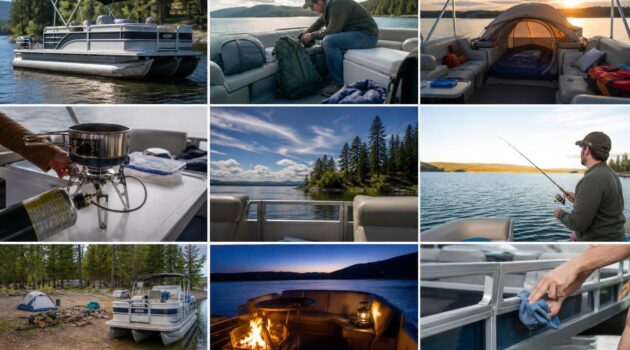
1. Know where you can camp
Rules vary by lake. Some state parks and Corps of Engineers lakes allow overnight anchoring or beach camping, sometimes with a permit or time limit, while others ban it near swim areas, marinas or private shorelines. Check with the lake office or marina before you go, and pick a protected cove out of main channels and wind.
2. Add a camper enclosure or tent
A pontoon camper enclosure attaches to your bimini or a frame and turns the deck into a covered room with screened windows. It’s the single biggest upgrade for comfort. Budget-minded campers use tarps or a freestanding tent on a clear section of deck, but secure it well against wind.
3. Set up comfortable beds
Many pontoon lounges fold flat or can be pushed together. Add an air mattress, sleeping pads or folding cots, and bring blankets even in summer, since it gets cool and damp on the water at night.
4. Anchor for the night
Use a bow and a stern anchor so the boat doesn’t swing, or beach the bow and set lines to stakes or trees on shore. Leave room for wind shifts and dropping water levels. Turn on your all-around white anchor light between sunset and sunrise. See what anchor size you need for a pontoon.
5. Protect your battery
Lights, fans and phone chargers can drain a single battery overnight and leave you unable to start the motor. A dual-battery setup with a switch, or a portable power station for your camp gear, keeps your starting battery safe.
6. Plan food and water
Bring a well-iced cooler, plenty of drinking water and easy meals. If you cook, use a rail-mounted marine grill or a stove on shore, never an open flame inside an enclosure, and keep a fire extinguisher handy.
7. Handle the bathroom
Some pontoons have a changing room with a portable toilet. If yours doesn’t, bring a porta-potty and pack out all waste. Never discharge sewage into the lake.
8. Prepare for bugs and weather
Screens, bug spray and citronella help with mosquitoes. Check the forecast, and have a plan to get to shore if storms build. Read what to do in a lightning storm on the water.
9. Pack safety gear and leave a float plan
Carry a life jacket for everyone, a flashlight, first aid kit, charged phone in a waterproof case and, ideally, a VHF radio. Tell someone where you’re going and when you’ll be back. Respect the pontoon capacity limits, and leave your campsite cleaner than you found it.
Why a Camper Enclosure Is Worth It
An enclosure protects against dew, rain and wind, keeps bugs out, adds privacy and keeps gear dry. It also extends your season into cooler spring and fall nights. Look for marine-grade canvas, mesh windows and a design made for your boat’s length and bimini.
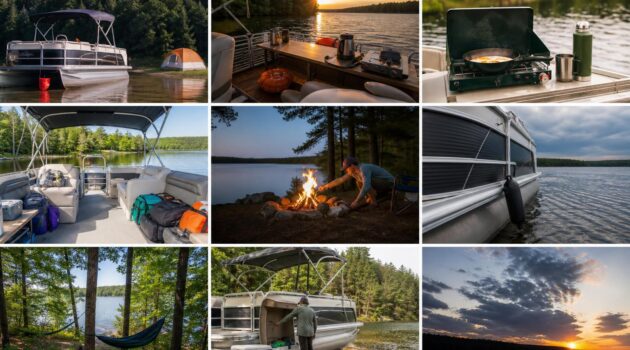
Pontoon Boat Camping Checklist
- Enclosure or tent, bedding and pillows
- Bow and stern anchors with plenty of line
- Anchor light, flashlights and lanterns
- Portable power station or second battery
- Cooler, water, food, marine grill and fire extinguisher
- Portable toilet, trash bags and wipes
- Bug spray, sunscreen, rain gear and warm layers
- Life jackets, first aid kit, VHF or phone in a dry case
For more packing ideas, see fun things to bring camping, and check how safe pontoon boats are before your first overnight.
Pontoon Boat Camping FAQ
Can you sleep on a pontoon boat overnight?
Yes, where overnight anchoring is allowed. Use an anchor light and secure anchors.
How many people can sleep on a pontoon?
Usually two to four comfortably on a 20- to 24-foot boat with an enclosure, depending on layout.
Do you need an anchor light when camping on a pontoon?
Yes. Boats at anchor at night generally must show an all-around white light, except in designated anchorages.
Is it safe to camp on a pontoon boat?
It’s very safe in calm, protected water with good weather planning and proper anchoring.
Can you camp on a pontoon in the ocean?
It’s not recommended outside calm, protected bays. See pontoons in the ocean.
Final Thoughts
Pontoon boat camping is a simple way to wake up on the water. Confirm the rules, add an enclosure, anchor well and plan your power, food and bathroom needs, and you’ll have a comfortable, memorable night on the lake.
Resources
- U.S. Coast Guard Navigation Rules, anchor lights
- U.S. Army Corps of Engineers, lake recreation rules
- Leave No Trace Center for Outdoor Ethics



