
Thank you for reading our post, please rate this article at the end.
Reading Time: 9 minutesLast Updated on January 26, 2026 by Paul Clayton
Table of Contents
RV Water Smells Like Rotten Eggs: What to Do?
Key Takeaways
-
- The Culprit: The smell is caused by hydrogen sulfide gas, produced when sulfur-based bacteria react with sulfates in the water or with the metal anode rods in your water heater.
- Identify the Source: * If the smell is everywhere, the freshwater tank is likely the source.
- If it’s only in the hot water, the water heater (specifically the magnesium/aluminum anode rod) is the problem.
- If it’s coming from the drains: The grey or black tanks need cleaning.
- The “Big Gun” Fixes: * Hydrogen Peroxide: Use 20 ounces per half-tank of water, let sit for 3 hours, and drain.
- Bleach Method: Use 1 cup of bleach per 40 gallons of water to sanitize the system; let it sit for 12 hours before a thorough triple-rinse.
- Vinegar/Baking Soda: Safer, natural alternatives for milder odors in sinks and tanks.
- Preventative Hardware: * Switch to an aluminum-zinc anode rod in the water heater to inhibit bacterial growth.
- Use activated carbon filters or aeration systems to remove sulfur particles before they reach your taps.
- Routine Maintenance: Sanitizing should happen at least once a year (during de-winterization), but heavy users should do it more frequently.
If you are an RV owner or frequent user, you may have encountered this unpleasant odor. Does the water from your taps and showers smell like rotten eggs whenever you open the faucet? However, there are several steps you can take to eliminate this odor and keep your RV water clean and fresh.
This can be alarming and off-putting, but it is important to address the problem promptly. The foul odor is usually caused by sulfur in the water supply. Sulfur is a natural element found in various water sources and can react with certain bacteria, resulting in the distinct smell of rotten eggs.
- Today’s Best Pop Up Campers
- New vs. Used RV: Navigating the Price Trends
- Can You Rent an RV for a Year?
Frequently Asked Questions
Q: Is it dangerous to drink RV water that smells like rotten eggs?
Generally, no. The hydrogen sulfide gas causing the smell is harmless when consumed in water. However, the odor is usually strong enough to discourage drinking it, and high levels of sulfur can cause metal pipes to corrode, potentially releasing heavy metals into your water supply.
Q: Why does the smell only happen when I turn on the hot water?
This is likely a reaction occurring inside your water heater. Sulfur-based bacteria react with the magnesium or aluminum anode rod inside the tank to produce hydrogen sulfide gas. To fix this, you can replace the standard rod with an aluminum-zinc anode rod, which inhibits this bacterial activity.
Q: Can I use household items to get rid of the odor?
Yes. For the freshwater system, hydrogen peroxide or household vinegar is an effective alternative for disinfecting the tanks. For grey and black tanks, baking soda mixed with water is a great way to neutralize odors naturally before dumping your waste.
Q: How much bleach do I need to sanitize my freshwater tank?
The recommended ratio is 1 cup of bleach for every 40 gallons of water. Mix the bleach with about four cups of water first, pour it into an empty tank, and then fill the rest of the tank with fresh water. Let it sit for at least 12 hours before rinsing thoroughly.
Q: How often should I perform this maintenance?
At a minimum, you should sanitize your water system once a year, typically in the spring when you are getting the RV ready for the season. However, if you use your RV frequently or notice odors returning, you should sanitize it more often to ensure water quality.
Recreational vehicles come with holding tanks for freshwater, greywater, and blackwater. You will notice a rotten-egg smell in your freshwater tanks, especially if you have stored them for some time. The reason behind this is the increase in Sulphur bacteria in the holding tanks.
RV Water Smells Like Rotten Eggs
If your water smells like rotten eggs, the odor is usually due to high Sulphur microbes and hydrogen sulfide gas in the water tanks. Hydrogen sulfide gas produces a strong and unpleasant “rotten egg” odor and taste. If the smell is in hot water, this could be metals in the water heater reacting with the water.
Types of Sulphur Found in Water
Did you know that drinking water across the US contains over 300 chemicals? Now you know. Many people will tell you that strange odors from their taps are common, especially when the supply comes from a holding tank. There are two forms of Sulphur in water: sulfate and hydrogen sulfide.
Sulfate is a result of Sulphur combining with Oxygen. Sulfates occur naturally in soil and rocks. Over time, these minerals are released into the water. Hydrogen sulfide, on the other hand, forms when organic matter decomposes underground.
These bacteria chemically convert the naturally occurring sulfates in water into hydrogen sulfide. Sulfur-based bacteria thrive in oxygen-deprived water found in tanks and wells.
An elevated concentration of hydrogen sulfide in water can alter its taste and produce an unpleasant egg-like odor. Sulfates have no smell but leave a build-up in water that can make it taste bitter.
Hydrogen sulfide in water damages pipes by destroying numerous types of metals, causing stains on plumbing fixtures and silverware.
How to Get Rid of Sulphur Dioxide in Your RV Water
Undoubtedly, the smell of the rotten egg is not only a nuisance but also embarrassing. With this, you must find a way of getting rid of it. But how? Well, the first thing you need to do is identify the source of the smell. If you open the taps and the water stinks, the problem lies in the freshwater tank.
Note where the odor is coming from; it may indicate that all your holding tanks need a thorough cleaning. Gray and black water tanks sometimes emit unpleasant odors, especially when they are almost full and not well cleaned. In water heaters, bacteria react with magnesium or aluminum anode rods, producing a rotten egg smell.
The second step is to open all the taps for 5 minutes to clear any sulfate buildup that may be causing the smell. If this doesn’t work, it is time to bring in the big guns in the form of peroxide.
We recommend leaving the tank half-empty, adding about 20 ounces of hydrogen peroxide to the water, letting it sit for 3 hours, and then dumping all the water. Do the same for the water heater.
After this, you must thoroughly clean the holding tank, as hydrogen peroxide is toxic if swallowed. You can substitute hydrogen peroxide for household vinegar.
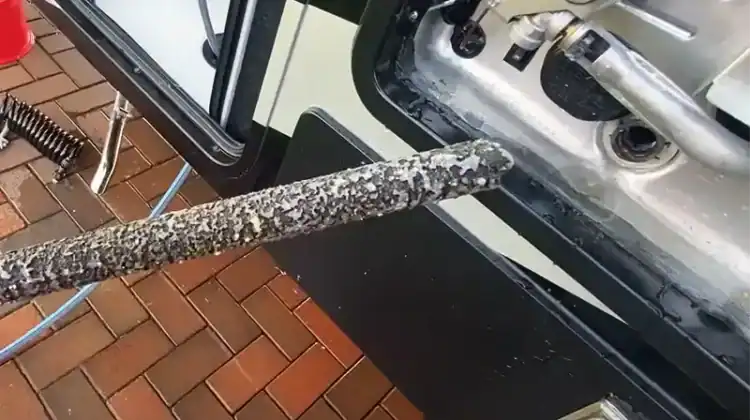
To eliminate this odor in your water heater, go for an aluminum-zinc anode. This anode helps eliminate bacterial activity that produces the dreaded smell.
Unclogging Water Pipes in the RV
At least once a year, take time to maintain all water pipes in the trailer. Take your camper for yearly maintenance at the RV center, where all worn pipes will be replaced. You can cut costs if you can do all the maintenance yourself. Regular unclogging will keep your pipes free of clogs.
We recommend flushing your water heaters and pipes with bleach. Flushing helps remove calcium deposits and sediment that accumulate in heaters and water pipes over time.
We highly recommend using flushing wands, which help increase the freshwater pressure. The wands are directed deep into the pipe and the part below the drain. A lot of pressure is exerted, which helps loosen calcium inside the tank.
Click here to read how to sanitize an RV freshwater system without bleach
Here is how to flush
For a 40-gallon tank, use one cup of bleach to four cups of water. If your tanks are bigger, add more bleach accordingly. Add this mixture to an empty holding tank and fill it with fresh water. Then, run all taps in the RV, including the shower, until the tank is empty.
Once empty, fill the tank with water and let it sit for at least 12 hours. Repeat the draining through the faucets three times, or until you can’t smell bleach.
Cleaning Grey and Black Tanks
Sometimes smells and fumes can come from the camper’s waste tanks. You need to clean all tanks to eliminate all odor from the trailer. Make it a habit to dump waste when the camper is stored away. If you don’t do this, the residue will harden in the pipes and tanks, causing the stink.
Before dumping greywater -water from the sink and shower, add a cup of baking soda to a gallon of water, pour it into the sink, and drain it. This will help with keeping bad odors at bay.
My chemical products are specifically made to handle the black tank waste odors. After draining the tanks, rinse with clean water and add treatment.
This will prevent bacterial growth in the containers. Start by dumping black waste first, followed by greywater. The greywater will help flush out anything stuck in the black tank.
Is Sulphur Harmful?
Despite the awful smell that tingles your nose, hydrogen sulfide is harmless when consumed in water. The choking smell of the water will deter many from drinking it. High levels of Sulphur in water can cause corrosion in some types of metal. Consuming heavy metals could cause health risks.
Ways to Get Sulphur Out of Drinking Water
Adding Chlorine
As you travel across the country, you will collect water with varying levels of minerals and contaminants. This is where chlorine comes into play. Adding chlorine to your water will kill some of the bacteria. Chlorine reacts with hydrogen sulfide to form tasteless, odorless particles.
The particles then form a yellow film left in the tank and can leave stains on clothing and plumbing fixtures. They can be filtered using an aggregate filter.
Carbon Filters
Tiny amounts of Hydrogen Sulfide can be removed from water with activated carbon filters. The filters work by adsorbing hydrogen sulfide onto the surface of the carbon particles. You will need to replace the activated carbon filters periodically to keep them working effectively.
Aeration
Aeration uses Oxygen in the air to react with hydrogen sulfide, forming an odorless, dissolved form of Sulfur called sulfate. Some yellow Sulphur particles may also form after the water is aerated.
Aeration systems also remove high levels of iron and manganese if a sediment filtration system is added to filter out the solids formed after the aeration process.
Installing a filtration system in your RV will ensure safe drinking, cooking, and showering water.
How often should I sanitize my RV water tank?
The frequency of sanitizing your RV water tank can vary based on usage and  manufacturer’s recommendations. Some manufacturers suggest sanitizing “after each use.”
This could mean after every trip, or it could be interpreted as once a year, typically during spring when most RV owners de-winterize their vehicles for spring camping.
Therefore, “How often should I sanitize my RV water tank?” does not have a one-size-fits-all answer. As a rule of thumb, annual sanitization is common among most RVers. However, if you use your RV frequently, it may be beneficial to sanitize more regularly to ensure optimal water quality.
How to Maintain A Stink-Free Camper
A motorhome can quickly start smelling bad because it’s an enclosed, small space. Here are tips to help you keep your camper smelling clean all the time.
Don’t wait until the waste tanks are full before emptying. Wait until your black and grey tanks are two-thirds full, and then dump the waste. Always give your containers a good rinse every time you empty them.
When you cook indoors, open a window and crank the fan to draw in fresh air. Strong foods can leave your camper smelling fishy for days.
Get a fan for your bathroom to keep the space dry after showering. Wet enclosed spaces tend to develop a musty smell when not completely dried. Fighting humidity in the camper will also prevent the growth of toxic mold.
Use baking soda to fight smells. Pour baking soda into the sink and flush with hot water. Baking soda is very effective in fighting odor.
Like you would conduct spring cleaning in your home, give your home on the road a good cleaning once in a while. You will likely accumulate a lot of dirt on the road from the living space, kitchen, and toilet.
This video has been included to clarify the topic. Credit goes to the National RV Training Academy.
Final Thoughts
The issue of RV water smelling like rotten eggs can be quite a nuisance for RV owners. The offensive odor is primarily due to sulfur or hydrogen sulfide gas within the water system.
The first step in addressing this issue is to accurately identify the source of the smell,  which could be the campground supply, the RV tank, or the plumbing. If the RV tank is the culprit, thorough flushing with a bleach-water mixture per instructions can effectively neutralize the smell.
Using a water filter specifically designed for sulfur compound removal is advisable for a system-wide odor. Regular maintenance of the RV water system is crucial to prevent this issue from recurring.
This includes routine cleaning of all faucets and hoses. Therefore, if your ‘RV Water Smells Like Rotten Eggs: What to Do?’ question often bothers you, these practical solutions can offer substantial relief.