
Thank you for reading our post, please rate this article at the end.
Reading Time: 15 minutesLast Updated on November 6, 2025 by Paul Clayton
Table of Contents
Do You Need A Special License To Drive An RV?
Key Takeaways
-
- No Universal Answer: Whether a special license is needed to drive an RV depends entirely on state laws.
- General Thresholds: In most U.S. states, a standard, non-commercial driver’s license is sufficient if the RV weighs less than 26,000 pounds or is less than 40 feet in length.
- Special Licenses May Be Required: Some states (including California, Texas, and Wyoming) may require a non-commercial special license or even a Commercial Driver’s License (CDL) for RVs exceeding specific weight or length thresholds.
- Weight is Key: License requirements are determined by the Gross Vehicle Weight Rating (GVWR) of the RV itself and the Gross Combined Weight Rating (GCWR) if towing a trailer or other vehicle, not by the RV type (e.g., Class A vs. Class C).
- License Types: Special licenses can be non-commercial (like a special Class E or an endorsement like the “R” in New York) or a full CDL, depending on the state’s rules for heavy vehicles.
- Best Practice: It is crucial for RV owners to check the current regulations specific to their local Department of Motor Vehicles (DMV) before driving. Professional training is recommended even if a special license isn’t required.
Frequently Asked Questions
RV Driving License FAQ
Q. In most states, when is a special driver’s license typically required for driving an RV?
A. In most U.S. states, a special license (either non-commercial or a CDL) is typically required if the RV’s Gross Vehicle Weight Rating (GVWR) or Gross Combined Weight Rating (GCWR) exceeds 26,000 pounds, or if the vehicle is over 40 feet in length.
Q. Does the type of RV (e.g., Class A, Class C, travel trailer) determine the license requirements?
A. No, the article states that the type of RV does not matter. License requirements are determined solely by the vehicle’s weight (GVWR/GCWR) and, in some states, by the vehicle’s length or that of the vehicle combination.
Q. Are there different types of “special licenses” I might need to drive a large RV?
A. Yes. Depending on the state and the vehicle’s weight, you might need a non-commercial special license (often a specific class, such as Class A or B, for non-commercial use) or a full Commercial Driver’s License (CDL). You may also need a specific endorsement (like the “R” in New York).
Q. Which states are specifically mentioned as requiring a special non-commercial license for certain heavy RVs?
A. States that require a non-commercial special license for certain heavy RVs include California, Maryland, Michigan, North Carolina, Nevada, New Mexico, New York, Pennsylvania, South Carolina, Texas, and Wyoming.
Q. If I want to avoid the hassle of getting a special license, what should I look for when purchasing an RV?
A. As a rule of thumb, you should aim for a motorhome with a GVWR under 26,000 pounds. If you plan to tow, ensure the total GCWR of the power unit and trailer is also under 26,000 pounds.
- Can You Rent an RV for a Year?
- New vs. Used RV: Navigating the Price Trends
- Today’s Best Pop-Up Campers
Special Licenses May Be Required
Driving a Recreational Vehicle (RV) can be an exciting experience, offering the freedom to explore the open roads and scenic landscapes at your leisure. However, many people often ask, “Do You Need A Special License To Drive An RV?”
The answer primarily depends on the state laws governing RV operations. In most U.S. states, a special license is not required to drive an RV if it weighs less than 26,000 pounds or is less than 40 feet in length. However, certain states may require a commercial driver’s license (CDL) or a non-commercial special license for RVs that exceed these measurements.
This includes states like California, Maryland, North Carolina, Nevada, Texas, and Wyoming.
It is therefore crucial for prospective and current RV owners to familiarize themselves with their state’s specific laws and regulations regarding RV driving to avoid potential legal issues. It’s also worth noting that even if your state does not require a special license to drive an RV, having professional training can still be beneficial. It can provide you with the skills and confidence necessary to handle such large vehicles safely.
RVs are big vehicles, and naturally, when considering buying an RV, you may be wondering whether you need a special driver’s license to operate an RV in your area. Well, you may find the answer to your questions below.
The goal of our material is to provide you with comprehensive information on state regulations regarding RVs, provide information on class-specific regulations, if any, as well as explain a couple of commonly misunderstood points, and help you better understand what to pay attention to.
So, the question “Do You Need A Special License To Drive An RV?” may not have a universal answer, but it does underline the importance of being aware of local laws and seeking appropriate training. Let’s get going without further ado.
Do you need any special licenses to drive an RV?
Unfortunately, there are no simple answers to this question because regulations vary from state to state. In some states, the most basic driver’s license is going to be enough, while in others, you may need to obtain a special kind of license.
There are two types of special licenses you may need: a non-commercial special license and a commercial driver’s license (CDL). Which one you need, and whether you need a special license in the first place, again depends on the state you are in.
Regular, non-commercial driver’s licenses usually have several classes—A, B, C, and D —though the lettering may differ in some states. The basic driver’s licenses most people hold are non-commercial. The letter designation for this basic license varies from state to state. Any regular license other than the basic license is considered a non-commercial special license.
In some states, you will need to go a step further and obtain a CDL to operate large and heavy vehicles. If not permitted by non-commercial driver’s licenses, RV operation will most likely require you to obtain a CDL. To obtain this license, you will need to meet certain requirements and pass a test, but the exact procedure varies by state.
In some states, you are required to obtain endorsements rather than special driver’s licenses to drive an RV. However, drivers are mostly required to hold special licenses rather than endorsements.
Are there any special requirements for RV types?
A question many new RVers wonder about is whether there are any special requirements for specific RV types. Fortunately, there is a single answer to this question that applies to all states – it doesn’t matter what kind of RV you are operating.
Instead, what matters is the weight of the RV and the combined weight of your vehicle and the RV that is towed behind.
In most states, the basic driver’s license is going to allow you to drive any kind of RV. But in other states – whether those requiring a CDL or a non-commercial driver’s license for RV operation – GVWR and GCWR come into play to determine if you need a new driver’s license.
GVWR, standing for gross vehicle weight rating, is the maximum operating weight of a vehicle, including the vehicle itself and onboard cargo, fuel, engine fluids, accessories, appliances, passengers, etc. The GVWR doesn’t include the weight of trailers that may be towed behind the vehicle.
GCWR, standing for gross combined weight rating, is the total weight of a vehicle, including all trailers or other towed vehicles.
If towing a trailer, the GVWR designates the maximum weight of the power unit (pickup truck or motorhome) and the towed vehicle (travel trailer, camper, toy hauler, or 5th wheel) separately. The GCWR refers to the total weight of the power unit and all towed vehicles.

In some states, the length of the vehicle also matters. For example, in Wisconsin, you are only required to obtain a CDL if the RV is longer than 45 feet. However, in most states, weight is the primary criterion.
At the moment of this material’s writing, these were the three primary parameters that determined whether a special license was required or not. At least, these are the criteria applicable to RVs, since there are other factors, like transporting hazardous materials, which probably no RVer does.
Now that we understand what matters in RVs when it comes to driver’s licenses, let’s review driver’s license requirements across the United States.
Requirements by state
As we mentioned above, most states do not require a special license to operate any type of RV. A few, however, require you to obtain a non-commercial driver’s license, and some go as far as requiring you to acquire a CDL, regardless of whether you are driving an RV for commercial purposes or not.
Below is the list of states with their requirements for CDL and non-commercial special licenses.
| State | CDL | Non-Commercial Special License |
| Alabama | No | No |
| Alaska | No | No |
| Arizona | No | No |
| Arkansas | Yes | No |
| California | No | Yes |
| Colorado | No | No |
| Connecticut | Yes | No |
| Delaware | No | No |
| Florida | No | No |
| Georgia | No | No |
| Hawaii | Yes | No |
| Idaho | No | No |
| Illinois | No | No |
| Indiana | No | No |
| Iowa | No | No |
| Kansas | Yes | No |
| Kentucky | No | No |
| Louisiana | No | No |
| Maine | No | No |
| Maryland | No | Yes |
| Massachusetts | No | No |
| Michigan | No | Yes |
| Minnesota | No | No |
| Mississippi | No | No |
| Missouri | No | No |
| Montana | No | No |
| Nebraska | No | No |
| Nevada | No | Yes |
| New Hampshire | No | No |
| New Jersey | No | No |
| New Mexico | No | Yes |
| New York | No | Yes |
| North Carolina | No | Yes |
| North Dakota | No | No |
| Ohio | No | No |
| Oklahoma | No | No |
| Oregon | No | No |
| Pennsylvania | No | Yes |
| Rhode Island | No | No |
| South Carolina | No | Yes |
| South Dakota | No | No |
| Tennessee | No | No |
| Texas | No | Yes |
| Utah | No | No |
| Vermont | No | No |
| Virginia | No | No |
| Washington | No | No |
| Washington D.C. | Yes | No |
| West Virginia | No | No |
| Wisconsin | Yes | No |
| Wyoming | No | Yes |
States that require a non-commercial special license
California
A Class B license is required for single vehicles over 40 feet or over 26,001 pounds. A Class A license is required for towing over 10,000 pounds.
Maryland
A Class B license is required for motor vehicles with a GVWR of 26,001 pounds or more, or if towing 10,000 pounds or less. A Class A license is required for any other combination of vehicles.
Michigan
The state of Michigan issues two types of driver’s licenses – operator and chauffeur.
An operator’s driver’s license is the regular license used by most residents. This license allows holders to drive passenger vehicles or light-duty trucks with a GVWR of less than 26,000 pounds. Needless to say, if you have an RV that is lighter than 26,000 pounds, an operator’s driver’s license will be enough.
The chauffeur driver’s license is required (in the context of RVs) for people hired to operate motor vehicles with a GVWR of over 10,000 pounds.
In the state of Michigan, you will be required to have a commercial driver’s license for driving a single vehicle with a GVWR of 26,001 pounds or more, as well as towing trailers or other vehicles with a GVWR of 10,001 pounds or more and a GCWR of 26,001 pounds or more. However, for operating an RV for non-commercial purposes, no CDL is required.
RV owners are also required to have a Recreational Double “R” Endorsement for towing a fifth wheel plus a trailer. This is a very specific requirement, and most people out there won’t need to worry about it.
North Carolina
A Class B license is required for single vehicles with a GVWR of 26,001 pounds or more, and if towing another vehicle with a GVWR of 10,000 pounds or less. A Class A license is required for any combination of vehicles that has a GVWR of 26,001 pounds or more, provided that the GVWR of the towed vehicle is over 10,000 pounds.
Nevada
A Class B license is required for single vehicles with a GVWR of 26,001 pounds or more. This license also allows towing vehicles with a GVWR of 10,000 pounds or less.
A Class A license allows the operation of any combination of vehicles with a GCWR of 26,001 pounds or more, with the towed vehicle having a GVWR of 10,001 pounds or more.
For towing a vehicle with a GVWR of over 10,000 pounds, an Endorsement J is also needed.
New Mexico
In New Mexico, individuals need to obtain a CDL-exempt Class E license in order to operate any vehicle or vehicle combination, including recreational vehicles.
New York
In the state of New York, a Class D driver’s license allows you to drive a vehicle with a GVWR of 26,000 pounds or less and to tow a vehicle with a GVWR of 10,000 pounds or less, or to tow an over 10,000 vehicle, given that the GCWR of the vehicle combination is no more than 26,000 pounds.
For the operation of recreational vehicles with a GVWR of over 26,000 pounds or 40 feet in length or more, an “R” endorsement is required. You need to hold a Class D license in order to obtain this endorsement.
Pennsylvania
A Class B driver’s license is required for operating single vehicles with a GVWR of over 26,000 pounds.
A Class A driver’s license is required for operating a combination of vehicles rated over 26,000 pounds, given that the vehicle(s) towed are rated over 10,000 pounds.
South Carolina
A Class E license is required for single vehicles rated over 26,000 pounds. A Class F license is required for a combination of vehicles with a GCWR of over 26,000 pounds.
Texas
A Class B driver’s license authorizes one to drive a single vehicle with a GVWR of over 26,000 pounds that is towing another vehicle with a GVWR of 10,000 pounds or less.
A Class A license allows you to drive a single vehicle with a GVWR of over 26,000 pounds, as well as to tow a combination of vehicles, given that they are rated over 10,000 pounds.
Wyoming
A Class B license is required for single vehicles with a GVWR of over 26,000 pounds that tow another vehicle rated 10,000 pounds or less.
A Class A license is required for any combination of vehicles with a GCWR over 26,000 pounds, with the towed vehicles rated over 10,000 pounds.
States that require a commercial driver’s license
Arkansas
A CDL is required for vehicles rated at 26,001 pounds or more.
Connecticut
Class B CDL holders are authorized to drive a single vehicle rated over 26,000 pounds that is towing another vehicle rated not in excess of 10,000 pounds.
Class A CDL holders may drive any combination of vehicles with a GCWR of over 26,000 pounds, with the GVWR of the vehicle(s) towed being rated in excess of 10,000 pounds.
Hawaii
In Hawaii, a Class B CDL is required for single vehicles rated over 26,000 pounds. A Class A CDL is required for a combination of vehicles with a GCWR of over 26,000 pounds, provided that the towed unit is rated in excess of 10,000 pounds.
Kansas
A Class B CDL is required for single vehicles rated over 26,000 pounds that are towing another single vehicle rated 10,000 pounds or less.
A Class A CDL is required for a vehicle combination with a GCWR over 26,000 pounds when the towed vehicle is rated over 10,000 pounds.
Washington, D.C.
A Class B CDL is required to drive a single vehicle with a GVWR of over 26,000 pounds, as well as any vehicle towing another vehicle rated 10,000 pounds or less.
A Class A CDL is required to drive any combination of vehicles with a GCWR that is greater than 26,000 pounds, given that the GVWR of the towed vehicle is greater than 10,000 pounds.
Wisconsin
Owners of recreational vehicles that are longer than 45 feet and that are used in commercial activity are required to hold a CDL.

How to find out whether you need a special license?
Things can get pretty complicated for RV owners, especially since regulations can change at any time. As a result, we’d advise you to consult your local Department of Motor Vehicles for relevant, up-to-date information.
No matter how complicated things may seem to you, it is actually quite easy to find out whether you need a CDL or any other special kind of non-commercial driver’s license. To do this, follow these steps:
- First, check out the regular driver’s licenses in your state. What kind of vehicles do they authorize you to drive? If you see that your vehicle falls under the criteria of regular driver’s license classes, then you don’t need a CDL.
In some states, the most basic driver’s license for personal vehicle drivers will be enough. In others, you may need to obtain another class of a regular driver’s license.
- If regular driver’s license classes in your state do not authorize you to drive your RV, then you may need a CDL. If so, check the criteria for CDL classes in your state.
- Make sure that there aren’t any kind of exemptions for CDLs in the state that you are in. For example, in Wisconsin, drivers are generally required to hold a Class B CDL if their vehicle is rated at over 26,000 pounds. However, if you have an RV rated over 26,000 pounds but shorter than 45 feet, you don’t need to hold a CDL.
- Furthermore, check whether you need any special endorsements to operate an RV. For example, in New York, aside from a Class D license, you are required to obtain an RV “R” endorsement in order to operate a recreational vehicle.
The steps above should allow you to fairly quickly determine what kind of a license you need.
Class B vs Class A licenses
A thing that often confuses people is the differences between Class A and  Class B licenses (both commercial and non-commercial). The wording in the vehicle criteria of the classes may seem similar to most people, but there are some intricacies that make them completely different.
The Commercial Driver License Manual of the state of Hawaii features a diagram that quite clearly demonstrates the differences between Class A and B licenses. Let us explain it to you now:
- If the GCWR exceeds 26,000 pounds and if the GVWR of the towed unit(s) is greater than 10,000 pounds, then you are required to have a Class A license.
- If the GCWR exceeds 26,000 and the power unit is rated over 26,000, but the towed vehicle weighs 10,000 pounds or less, you are required to have a Class B license.
The main difference between these license classes is that you are required to have a Class A license if you tow a vehicle with a GVWR of over 10,000 pounds. If the GVWR of the vehicle towed is 10,000 pounds or less, you need a Class B license.
Aside from that, note that Class B licenses allow a single power unit and a single towed vehicle, while Class A licenses allow any combination of vehicles, e.g., one power unit and two towed vehicles (for example, a travel trailer + toy hauler).
One thing to keep in mind is that some states’ descriptions of driver’s license requirements are very ambiguous, so we’d advise you to contact your local Department of Motor Vehicles to ensure there are no uncertainties regarding the regulations.
What if you don’t want to get any special licenses?
Most people probably wouldn’t want to go through the hassle of obtaining a new driver’s license class. You may simply not have time for it before your trip.
Well, if you’re getting a motorhome, make sure its GVWR is less than 26,000 pounds. If you will be towing an RV, make sure that the GCWR of your power unit and the trailer is less than 26,000 pounds. As a rule of thumb, simply go less than 26,000 pounds, and you should be okay.
One thing to consider is that while local DMVs do not put restrictions or requirements for separate RV types, some RV types are more likely to require a special driver’s license than others.
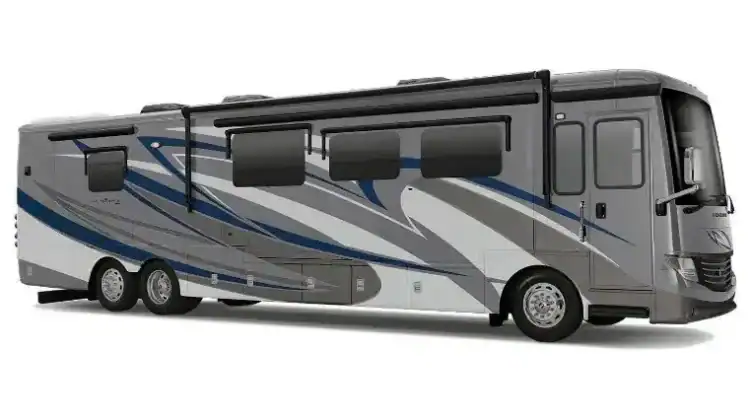
Many class A motorhomes out there have GVWRs well over 26,000 pounds, so if you are going to buy such a motorhome, check whether you will need to obtain a special driver’s license to operate it.
Class C and B motorhomes weigh much less than class A motorhomes, and you probably won’t be able to find one that has a GVWR greater than 26,000 pounds. With these smaller motorhomes, you are on the safer side, but you still need to be careful.
As for other RV types like travel trailers, fifth wheels, or toy haulers, they mostly weigh no more than 10,000 pounds, so you shouldn’t even worry about a travel trailer exceeding the 26,000-pound limit. Your towing vehicle is also unlikely to weigh close to 16,000 pounds, so you should be safe if towing only one RV.
If towing one RV. If towing more than just one RV, you may need a Class A license (CDL or non-commercial) to operate your vehicle if your GCWR is over 26,000 pounds and if the vehicles towed are rated more than 10,000 pounds.
What is the largest RV without a special license?
The largest RV you can operate without a special license varies by jurisdiction. However, in most areas, an RV can be up to 40 feet long without requiring a special driver’s license as long as it weighs less than 26,000 lbs. This typically includes Class A motorhomes, which are built on a commercial bus or truck chassis and provide the most living space of any RV.
Despite their size, these vehicles can generally be operated with a standard driver’s license. However, it’s crucial to check local regulations before purchasing or driving a large RV, as requirements can differ. So, when asked “What is the largest RV without a special license?”, the answer is usually a Class A motorhome up to 40 feet long.
Is driving an RV difficult?
Driving an RV can seem daunting to the uninitiated due to its larger size and different handling compared to conventional vehicles. The answer to the question “Is driving an RV difficult?” is subjective and depends largely on the individual’s driving skills and experience.
While it does require certain adjustments, particularly in understanding the vehicle’s dimensions, turning radius, and braking distance, proper training and practice make it more manageable. Moreover, modern RVs often come with advanced driving aids that make the experience less difficult. Hence, while initially challenging, driving an RV is not inherently difficult if approached with patience and careful learning.
What about traveling to Canada?
Canadian laws are completely different, but if you are planning to head north, you  shouldn’t worry about anything, unless you are a resident of Canada. If you have a valid US driver’s license, then you will have no problems in Canada.
Final Thoughts
Determining whether you need a special license to drive a Recreational Vehicle (RV) can be a complex matter, as it primarily depends on the state laws where you reside or where you’re traveling. In most US states, a standard driver’s license is sufficient to operate an RV. However, certain states require a special license if the RV exceeds a specific weight or length.
For instance, states like California and Maryland mandate a commercial driver’s license for RVs that weigh over 26,000 pounds or are longer than 40 feet.
So, the question “Do You Need A Special License To Drive An RV?” does not have a universal yes-or-no answer. It’s essential to research and understand the specific state laws related to RV licensing before hitting the road. If necessary, acquiring a special license usually involves passing written and practical tests that assess your ability to safely operate an oversized vehicle.
While a special license may not always be required to drive an RV, being aware of and complying with your state’s regulations is crucial for legal and safe travels.
Make sure to do in-depth research on the state of your residence. Regulations can change quickly, and whatever you find online may be obsolete. Thus, make sure to consult your local DMV, no matter what information you find online. Plus, there may be case-specific factors that only your local DMV can note.
Most importantly, if possible, get yourself an RV that won’t require you to acquire any special kinds of licenses. But if you do need a motorhome with a GVWR of more than 26,000 pounds, we guess its benefits are worth the time spent obtaining a special license, of course, if applicable in your state.
Home page
Back to the top of the page