
Thank you for reading our post, please rate this article at the end.
Reading Time: 22 minutesLast Updated on April 7, 2026 by Paul Clayton
Table of Contents
Beginners Guide to Bass Fishing
We love to fish! We believe it’s one of the most satisfying hobbies a man (or woman) can have.
Bass fishing is one of North America’s most popular pastimes, blending the physical benefits of the outdoors with the technical challenge of outsmarting a predatory fish.
Key Takeaways
-
- Health and Wellness: Beyond the sport, fishing provides significant Vitamin D exposure and mental health benefits. It is even used therapeutically in some regions to treat depression and anxiety.
- The “Big Three” Bass Categories:
- Serranidae: Sea bass and groupers (approx. 400 species).
- Moronidae: Striped and European basses.
- Centrarchidae: Sunfishes, which include the highly prized Largemouth and Smallmouth bass.
- Largemouth Characteristics: These are top predators that never stop growing. They are known as “tough fighters” because they frequently jump out of the water to throw the hook.
- Ideal Habitats: Bass prefer clear, calm, slow-moving water with temperatures between 80°F and 90°F. They are “structure-oriented,” meaning they hide near sunken logs, rocks, or lily pads to ambush prey.
- Dietary Opportunism: While they primarily eat smaller fish, frogs, and crayfish, larger bass are known to eat almost anything that fits in their mouths, including snakes and small birds.
- Essential Gear & Lures:
- Crankbaits: Mimic baitfish/crayfish; great for covering large areas.
- Spinnerbaits: Create vibrations that attract bass in deeper or murkier water.
- Jig and Pig: Heavy lures that drag along the bottom to entice the largest, “laziest” bass.
- Plastic Worms: Extremely versatile; can be fished at any depth.
- Strategic Techniques:
- Walk the Dog: A surface retrieval method involving rhythmic rod twitches.
- Pitching & Flipping: Specialized underhand casts used to place lures quietly into thick, shallow cover.
- Drop-shotting: A finesse rig where the weight is at the bottom and the hook is tied above it, making the bait hover.
Professional Tips for Success
-
-
Watch the Weather: Bass are most active just before a storm front or during cloudy weather. In bright sunlight, they retreat deep into the shadows of “cover.”
-
Think Red: Bass are naturally attracted to the color red, as it mimics the appearance of an injured, bleeding prey animal.
-
Fish with the Wind: Positioning yourself with the wind at your back allows the wind to carry away boat noise and ensures the fish see your bait before they see you.
-
Sharpen Your Hooks: Because bass have very bony jaws, a dull hook will often fail to penetrate. Use a small file to keep your equipment needle-sharp.
-
It can be enjoyed by people of all ages and fitness levels. You don’t have to be super fit or overly active to be good at fishing. There are so many benefits of fishing that those who have ever enjoyed fishing will most likely continue to fish in the future! It’s a hobby that you can hold onto your whole life.
However, as with all hobbies, a passionate person will always look for ways to improve and expand their knowledge.
This article will give you some interesting tips and guidance on fishing for Bass specifically. It will outline some pointers that will take the guesswork out of your fishing trips and hopefully allow you to derive even more pleasure from this age-old pastime.
Benefits of Bass Fishing
Even experienced bass anglers can find bass fishing challenging. However, bass fishing, like most fishing, offers many benefits. Read on for some interesting facts on the benefits of fishing!
One of the major reasons people love to fish is the time spent in the great outdoors! Being outside under the sun and breathing in fresh air works wonders for our health and mind.
Science has backed this up with studies on the benefits of vitamin D from sun exposure. This vitamin helps keep our teeth and bones healthy, boosts our immune system, and helps fight depression!
Fishing really should be prescribed by doctors to patients instead of Prozac! (This is a joke -we are not medically qualified to prescribe fishing to anyone with health issues)
In fact, in Scotland, some hospitals use fishing to treat their mental health patients. This practice is yielding such positive results that they plan to implement it in more hospitals across the country.
Fishing taps into our instinct to seek food, giving us a different kind of satisfaction than fishing for sport.
Bass can be tasty when caught early in the season and from clean, clear water. It is a rare treat to catch bass skillfully and patiently, and some people may never get to experience this.
Related content you may be interested in reviewing.
The thrill and challenge of fishing are feelings one doesn’t find in doing many other things. Nothing can give you the same rush as when you have waited for hours and finally feel the distinct tug on the end of your rod!
Fishing is great for your physical fitness, too. Scientists estimate that the average fishing trip burns about 200 calories per hour. The movements required to prepare and set up your equipment, standing, sitting, and balancing, all use different muscles. They are better for your fitness than watching TV for an hour.
Reeling in your line or simply standing in a boat will help you develop your balance. This is especially beneficial for people with back pain.
Other benefits include, but are not limited to, quality time bonding with family or friends, exercising patience, learning self-reliance, and appreciating nature and the world around us. It’s a great skill to teach your kids.
All this information on the benefits of fishing is very useful when we have to justify why we wish to spend so much of our time on this wonderful hobby.
Types of Bass Fish

There is a wide variety of bass fish. They are divided into 3 main categories
- Perciformes Serranidae -This includes approximately 400 species of sea bass and grouper
- Moronidae -Sometimes categorized as a subfamily of the Serranidae. Containing about 6 species, such as the striped and European basses
- Centrarchidae -or sunfishes- include large and smallmouth basses prized by fishermen.
There are many other fish, also known as bass, such as channel bass, sometimes called drum, rock, sunfish, calico, and crappie. Depending on where you are, you might have heard them referred to as any of these names.
One of the most popular kinds of bass to fish for is the largemouth bass. They are also known by several other names:
- Widemouth Bass
- Florida Bass
- Black Bass
- Bigmouth Bass
- Bucketmouth Bass
- Green Bass
- Green Trout
- Southern Largemouth
- Northern Largemouth
These bass families include fish of various sizes and colors. Most bass are found in North America, but they can also be found in Europe and other mild-weather regions.
Largemouth Bass, or Micropterus salmoides, are North America’s most popular game fish. They have a striking appearance and are among the top predators in the natural ecosystem. The Largemouth Bass is a very interesting aquatic animal.
Learning more about them and their habits will give you a deeper understanding of the creatures and enhance your fishing experience and results.
At just 2 inches long, young largemouth bass are called Fry. They are already active predators at this stage and feed mainly on zooplankton and insect larvae.
The average big largemouth bass weighs around 5 pounds. The heaviest bass ever caught on record, weighing 22 pounds 4 ounces, was caught in 1932 in Japan. Interestingly, bass fish never stop growing; the bigger the fish, the older it is likely to be.
Bass fish have few natural predators, mainly the walleye, muskie, and Northern pike. Bass are usually solitary fish, except when males are guarding their brood swarm. 
They are known for being tough fighters when reeled in, which is one of the major reasons anglers enjoy fishing for them!
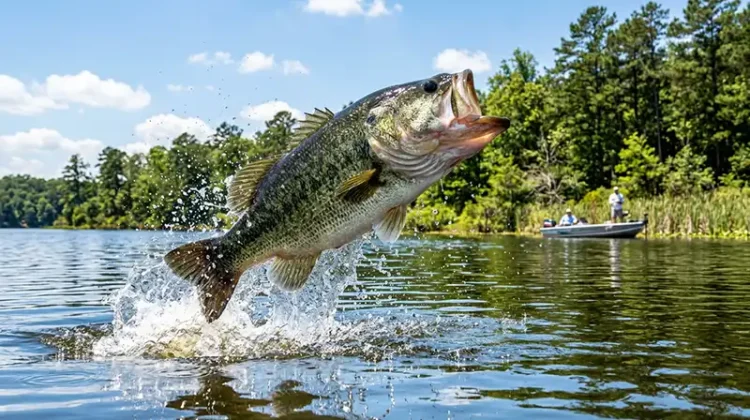
Largemouth bass often jump out of the water and fly through the air when caught on a hook to break free. This spectacular sight will send a shiver of excitement through even the most experienced anglers.
This information will indicate the characteristics and behaviors of the bass you can expect to encounter.
The Best Places for Bass Fishing
Certain bass species are among the most popular for sport fishing worldwide. Bass fishing has been introduced to every continent except Antarctica. This is only because it’s too cold for the fish and most people!
Bass fish’s ideal habitats generally have clear, calm, slow-to-non-flowing water. Mild water temperatures of 80° to 90°F will be present, along with abundant aquatic vegetation that provides feeding environments for their prey. There will usually be cover nearby, such as the sunken limbs of a tree, between rocks, or under roots.
You’ll have to go to rivers, lakes, ponds, reservoirs, and streams to fish for them. Minnesota, California, and the lakes of North and South Carolina are the most popular places in America for bass fishing. There are some great reservoirs in Texas and New York.
In Europe, bassing fish are primarily ocean-going species found along Europe’s western and southern coasts and Africa’s northern coast. They can also be found in shallow coastal waters and river mouths during Europe’s summer months.
Fishing in waters different from the ones mentioned above is unlikely to yield as wide a variety of bass fish.
Make sure you check the area where you plan to fish. Most states have size limits on fish. If the fish you catch is not the minimum size, you must let it go. There are sometimes maximum quantity limits for certain kinds of fish as well.
There can also be daily limits or a certain number of fish you can keep in one day.
It’s also important to check if you need a permit to fish in the area you’ll be fishing in. In some places, fishing without a permit is illegal, and being caught doing so could result in a fine.
Only veterans and children are exempt from the permit requirement in some states. Although many fish species have an open season year-round, some do not. So, you’ll need to look at your state’s regulations to determine what times you are allowed to fish.
The Best Times for Bass Fishing
The prime time to catch bass is before their spawning season. During their pre-spawn in spring, when the waters are a nice, mild temperature, around 55 to 65 degrees.
The best time of day for bass fishing is early morning or late evening when the sunlight isn’t too bright overhead.
However, this should not stop you from bass fishing during other times. The fall is also a great time to fish, as the weather is agreeable.
A mild afternoon will also bring out the bass in the middle of winter.
You may also enjoy reading:
The 10 Best Spinning Rods For Bass
The Ultimate Guide to Understanding Fishing Hooks
What Are The Different Types of Fishing Lines?
What do Bass Eat?
It is a good idea to have an in-depth knowledge of what bass fish like to eat. This will help you choose your lures and baits.
It has been stated that fully grown largemouth bass feed on small fish like perch, sunfish, and minnows. They also eat frogs, crayfish, insects, lizards, and small aquatic birds.
However, according to more recent studies, bass fish eat anything!
They will eat whatever is readily available in their environment. Biologists have examined the stomach contents of bass from across the continent and found a wide variety of material.
Some of the more surprising creatures discovered in bass stomachs are snakes, grass shrimp, and even smaller bass fish!
It seems that what bass eat depends more on their size. They’ll eat whatever they can catch that can fit in their mouths.
This is why smaller bass will eat small prey, and larger bass will eat bigger prey. For example, a largemouth bass could eat a rainbow trout up to 10 to 12 inches long.
Young bass need to feed on insects and insect larvae, which are now considered a vital source of food that enables them to grow well. This will help them thrive in lakes, ponds, and rivers with many aquatic insects.
Once they reach around 8 inches long, young bass fish switch their diet from insects to small fish.
Bass don’t like eating plants. Although aquatic plants have been found in bass bellies, this is because bass prey on other species that often eat them. Bass do not get any nutrition from eating plants.
Best Bait for Bass Fishing
This video has been included to clarify the topic. Credit goes to
Bass Fishing Tips & Techniques by Bass Resource
Remember, though, that bass eat different types of bait depending on the time of year. The general rule of thumb is that early in the year, during springtime, they like crawfish and similar creatures, so they use peach-colored patterns. They like shad and similar species in the summer and fall, so it’ll be best to use chrome- or silver-colored baits.
There are many kinds of lures and baits available. However, choosing the right lure depends on several factors, such as the type of bass commonly found in the area, water depth, and visibility.
Yet even with this information, narrowing down the best choices for your use can still be difficult.
Most experienced anglers own a variety of baits and lures to suit every weather or water condition. Here is a list and brief description of the most common kinds.
Crankbaits
These baits look like baitfish or crawfish—two of bass fish’s favorite foods. They come in all sizes, shapes, and colors. They work well in most kinds of water and are easy to cast.
They are a quick way to fish over large areas of water, and depending on the type of lure and rod they are attached to, they allow for both shallow and deep fishing.
Spinnerbaits
Spinnerbaits look like baitfish and spin through the water as they’re slowly reeled in. They can also quickly cover large water areas. When casting deeper underwater, they produce more vibration than crankbaits or plastic worms, which helps attract larger largemouth bass.
Spinnerbaits are available in various sizes, colors, and designs to work well in any environment and condition.
Worms
Artificial worms are a versatile bait. It can be fished from the top of the surface to the bottom depths of rivers and lakes.
You can get them in any size, from tiny three-inch worms to huge ones over 10 inches long. They are available in any color and can be rigged in whatever suits your needs!
A Jig and a pig
A jig and pig is among the best performers in enticing big bass. It is so successful because it looks and acts like a crawfish when dragged along the bottom of the water. It’s a great bait for catching bigger bass, since the bigger ones tend to be deeper.
Larger bass don’t go higher in the water, and the big ones don’t tend to jump up to catch the spinnerbaits and crankbaits.
A bucktail jig is a very basic but effective lure variation. It works so well that it is included in some survival kits! These lures might feature plastic tails, curly or straight, and work well in a variety of conditions.
Topwater Lure
Using a topwater lure can make for some very exciting catches. These baits flash and wiggle, attracting active bass that rise to the surface and pull them under.
Topwater lures are made in various sizes, colors, and actions. You can make these work in many different ways with whichever fishing rod or method you choose.
Many other baits and lures are available, but these are the favorites for bass fishing.
Of course, you can adapt its use to whatever condition you are fishing in and catch whatever fish are around.
Artificial Baits vs. Live Baits
As much as pro anglers like using artificial bait for their practical designs, some fishermen argue that live bait attracts some of the biggest bass fish they have ever caught.
Both kinds of bait have benefits and drawbacks. Here is some information to help you choose your bait preference.
One of the main things you’ll find about live bait is the cost. The cost will increase, whether it’s live shrimp, frozen squid, pinfish, or ballyhoo.
Also, the time it takes to catch live bait is considerable (if you would prefer to catch them as opposed to buying them)
Then there’s the mess; live bait can make quite a mess at the bottom of your boat at the end of a long day! Artificial bait doesn’t make a mess in that way. Conversely, some fishermen believe live bait is safer, especially when multiple people are fishing simultaneously.
Some environmentalists believe that artificial baits pollute rivers and lakes. While this was likely a common practice in the past, most manufacturers now use biodegradable materials to make artificial baits.
We recommend trying both, not just for the experience but also for the first-hand knowledge that will help you develop your own opinion and preference.
Bass Rods and Reels
Any experienced fisherman knows what kind of rod or reel he (or she) prefers to use. However, not all fishing equipment -or outfits- suits all fishing circumstances. So, we will discuss which are the best ways to catch bass fish.
If you have ever gone fishing with the wrong rod and reel, you will understand the importance of getting it right. The type of fishing you want will affect the rod and reel you will use. For example, if you use a very light lure, you will need a small spinning reel and a light-action rod.
But if you put a small spinning reel on a heavy rod, it will not work properly. Casting will be very difficult, and you might break your line and lose your fish!
A fast-action medium rod is perfect for casting smaller crankbaits. A light tip will cast the lure better and give it strength and stability for controlling the fish.
The matching reel should be able to handle an 8 to 12-pound test line, which is a good range for these lures. If casting deep-diving, larger crankbaits, you need a long rod with a low gear ratio and strong gears. This will allow you to reel in the tough-pulling lures.
When bait fishing with plastic worms, things can vary greatly. You must ensure that your reel, rod, and line match the type of bass you are fishing and the weight of the sinker being used.
Spinnerbaits can be used with a heavier rod and a light tip, which aids casting. Bass often slam onto a spinnerbait hard, so it’s important to have equipment that will withstand the impact and allow you to control the fish.
Ensuring that you have each other will allow you to enjoy your bass fishing even more; your outfit should make it easier and more efficient for you and, therefore, more successful!
Best Bass Fishing Methods
Some experienced anglers may say there are many ways to catch fish. This is true, especially with bass, which is why they are among the favorites to catch.
We have gathered some of the best hints, tips, and guides to successful bait fishing from experienced fishermen nationwide.
- The easiest time to fish for largemouth bass is in the early spring when they move closer to the water’s surface.
- Reuse your damaged worms! Bass fish will see
 your old, chewed-up worms as an injured, easy meal when fishing in shallow water.
 - Bass fish can be lazy, opportunistic foragers, so try using baits that crawl slowly along the bottom of the water, such as nightcrawlers or crayfish and shad-style baits.
- Bass are attracted to the color red! Use a spinnerbait with a red or pink head and a crankbait with red hooks whenever you can. The red will look like blood to predatory fish; they will think the bait’s injured and make it an easy target.
- Keep your hooks sharp. Bass fish have bony jaws, so your hook must always be sharp enough to penetrate their mouth. The metal nail files in your kit will do a great job of sharpening your hooks!
- Keep your hands, feet, and core warm when fishing in cold weather. These are the places that lose the most heat. Keeping your core warm will prevent the cold from affecting you too much. You can also buy heated apparel with remote controls to keep you enjoying your winter fishing trips for longer!
- Bass always swim with the current, so to be in the ideal position to catch your bass, fish with the wind at your back! It may affect the distance of your casts, but it’s worth the sacrifice. The fish will see your bait before it sees your boat, and the wind will carry away any noise that might scare off close-by bass.
- As you cast your bait, try to make it skip across the water, as you do with a rock or pebble. To do this with your rod, you will cast your line out and stop halfway instead of following it through. This will cause the bait to skip across the surface slightly, attracting more attention than expected. This is also a good way to get under docks and other obstructions.
- Another good tip is to check the water in your livewell. Bass are known to spit up whatever they are currently feeding on. This will give you an indication of which color lure to cast that day.
- Cast your lure shallow in the springtime. During spawning season, some bass guard their beds against wind and other predators. Focus on shallow areas, like coves or pockets. The bass will bite to guard their eggs and feed themselves.
- Some experienced bass anglers recommend fishing before a storm!
The best time to fish for bass is just before a front comes through, and they say the worst time is after a storm. The weather build-up seems to make the bass more active. So, a wall of clouds moving in is a sign to set out.
If the weather is too nice, bass are less likely to bite! You can test this tip for yourself!
- Be persistent; Bass is a cantankerous kind of fish. This means they are grumpy and hard to deal with. You may have to cast your line many times before you can get one to bite. So keep offering your lure to it at the same locations, in different ways, until it finally notices and bites!
- Bass are known to be tough fighters when being pulled out of the water. To make holding on to them easier, do it safely. To correctly hold a live bass, hold its bottom lip between your thumb and bent pointer finger. Ensure you maintain a tight grip.
Bass Fishing Techniques
There are many ways to fish for bass. An experienced fisherman would have developed a few of their own. Some known methods can inspire you or be adapted and personalized to suit your preferences.
The Popper
Poppers are topwater baits. The technique aptly named “popper’ requires the angler to pop the lure as it is reeled in, pausing every second to allow it to steady. This technique imitates the movement of a wounded fish. The sporadic movement and stopping can attract the attention of nearby bass.
Walk The Dog
Another well-known retrieving method is “walk the dog.” This technique can be done using a soft-frog or Zara spook-type bait. To do this, you will quickly twitch your rod tip up and down while consistently and slowly reeling in your line.
Pitching and Flipping
Pitching and flipping are two of the best methods for getting into shallow water with a thick cover. Although these techniques are similar, one is usually better than the other in certain circumstances, especially when distance is involved.
To master this technique, you will need a long rod between 6 1/2 feet and 7 1/2 feet, a good soft plastic bait, and lots of practice!
Pitching
To use the pitching technique, you will let out your line enough to pull down on your bait. Hold the release button on your reel to keep it open, and with one smooth motion, swing your rod tip towards the water and allow the bait to catapult towards your target. Your timing is vital to your ability to get this right.
If you can master it, you can get your bait into tricky stops without scaring away the bass.
Flipping
The flipping technique takes more practice than pitching, but once you understand it, you can perfect your presentation and hit the location you targeted with more precision than pitching.
To do this, start by letting out 8 to 15 feet of line and closing your reel. Then grab the line between the reel and first-rod guide and extend your other arm to the side as you pull on the line.
Raising the rod, the bait will now swing towards you. Swing the bait to your targeted location and feed the line through your freehand. Make the remaining line taunt and prepare to strike.
This method can be awkward at first, but once you get good at it, you can catch some elusive bass in places you would not have been able to.
Bumping the Stump
Bumping the stump is a great technique when fishing in deep water. As you feel your crankbait hit the bottom or another surface, like a rock, reel up your line and quickly reel it back down. Let it float a little, then repeat the up-and-down motions. This movement will get a bass’s attention and tease them into biting
Jerkbait
This is one of the simplest bass-fishing techniques and may be one of the easiest to learn. The most difficult part is knowing the right bait to use at the right time.
It’s best used in clear water, where bass can easily see it. Jerkbaits come in a variety of sizes, shapes, and colors. They work by imitating wounded baitfish.
To use this technique, you will jerk the bait, as the name indicates.
Twitch or jerk your rod tip a little while reeling your line, mimicking the unnatural movement of an impaired fish. This will attract bass, which will think it has spotted an easy meal.
Drop-shotting
This stylish technique requires a little more planning than the others described above, but if you can manage it, it’s worth the effort.
If you can fish with a plastic worm, you will have a head start on this method.
The main difference from drop-shotting is that the worm’s end is weighted. So when you cast it deep into the water, it appears as a column of enticing worm flesh. As you reel the bait up, allow it to dance a little to make a good show of itself.
This technique can be easier than others if you suspend the bait and do not retrieve it until you notice some action.
This kind of drop-shot worm bait comes in a range of lengths, from a short 2-inch to 2 feet long. You choose your length depending on the type of water you will be fishing in. You must use a longer worm for muddy lake bottoms than in clear waters.
The purpose is to be easily spotted by bass fish, after all.
Some Bass Fishing Guidance
Above are some handy tips and information that might make your bassing expeditions easier and more successful.
Here are some general guidelines and best practices to help enhance your overall knowledge and skills in bass fishing.
This video has been included to clarify the topic. Credit goes to The Bass University
Fish in the Right Place
As many reputable anglers believe, one of the most important factors is to focus your efforts where the fish are. There’s no point in fishing for fish that are famous for hiding in dark, covered spaces and being looked for in wide open spaces! We must go where we know they will be.
Bass are known for lurking in cover, which allows them to hide from the prey they hunt. So, we must find the areas covered in the water we are fishing in. Cover comes in many forms, including rocks, logs, structures, boat docks, lily pads, grass, and solid things in and around rivers, lakes, and reservoirs.
This is not to say that bass are never found in open water; they are more likely to be in places where they can also find their prey and the safety that cover provides.
Fish Outside of Your Comfort Zone
As with many other skills, learning new things is a good way to extend your knowledge and abilities.
Fishing in waters different from those you normally frequent will force you to adapt your habits to foreign conditions. If you’re used to fishing in your local muddy lake, using spinnerbaits and jigs, try visiting a clear river and experimenting with a drop shot, for example.
Only one or two fishing methods will soon become repetitive and less challenging. Becoming a versatile fisherman will allow you to become more skilled and enjoy more successful trips, keeping your hobby interesting and exciting!
Plan Your Techniques With the Weather
Understanding how the weather affects bass fish behavior is vital to the results of your fishing trips. When planning to fish in bright, sunny weather, remember that bass like to stick close to cover to conceal themselves and wait for passing prey to appear. So, to catch these lazy fish, it’s best to use a bait that you can flip and pitch along the bottom, such as a jig or Texas-rigged soft plastic.
In cloudy or overcast weather, bass fish will generally become more active and responsive to moving baits.
Weather conditions can dramatically affect bass behavior. Understanding how bass behave under different weather conditions is vital to a successful bass angler.
On cloudy days, bass tend to be much more active and willing to expose themselves to feed. So, choose baits like topwater plugs, crankbaits, and spinnerbaits to attract their bites.
Water temperatures will also dictate the outcome of our fishing outings.
In cool water temperatures, slow-moving baits work better, as bass tend to move more slowly, too. They won’t have to exert too much energy to catch their ‘meal.’
Warmer water temperatures usually mean bass are more active and respond nicely to faster-moving lures. So, it is good practice to always check the temperature and the weather and choose your technique and outfit that will best suit it.
Work With the Wind!
As much as windy days seem to hinder our fishing, knowing how to use them can help!
In wind gusts of more than 15mph, it may be difficult to steer our boats steadily and throw a decent line, but this kind of wind is also enough to cause significant disturbance to the water’s surface. As a result, the bass becomes much more active and is more likely to notice and bite at your bait. Another benefit of the strong winds on the water’s surface is that you can disguise your boat movements and not spook the fish!
So don’t think windy days mean no fishing.
Note the Water Levels
The water levels of rivers, lakes, and reservoirs can rise or fall depending on the season and the weather. This will change the water conditions from what you are accustomed to.
Don’t let this throw you off. You will need to adjust your methods to suit the different conditions.
If the water level in a lake or river is higher than normal and is reaching bushes or overgrown vegetation, you will first have to think about how to get through this new cover to access the fish, which may make your fishing more challenging.
In this case, you can try flipping a jig to any visible cover.
If this high water is warm, the bass will likely scatter, as the temperature will make them more active and able to venture out of their cover to other areas. When this happens, please focus on the bottom structure, as the bass will likely move along the bottom, going from one cover to another. You might also find them along migration routes, such as points or ditches.
If the high water is in a reservoir, you could cast your line at the back of the creek or look for a corner bank. Sometimes, water levels can rise so much that they cover miles of areas that were very shallow before. These are also good places to catch some migrating bass.
However, although there might be plenty more water now, remember that bass fish will not wander too far from the locations they are used to holding on to cover. So stick to the original banks’ logs, Lilly pads, and coverings.
Work on Your Knot-Tying Abilities!
It is a worthwhile endeavor to practice your knot-tying skills. Losing a fish because of a poorly tied knot can be devastating!
Tying knots on a boat is not the simplest task. Mastering a tight knot is a valuable skill to enhance your fishing experience.
This must be true because there are many instructional videos online that you can use to learn how to do this well. Tying a good knot is one of the most searched fishing tips on the internet!
We advise you to choose your favorite knot, which can be used for various purposes, and perfect it at home. Try some simple, versatile ones, such as the Clinch or Palomar. Focus your effort on the ones that you are more comfortable with. Trust that this is a worthwhile investment of your time!
Do Your Research
It may not seem like a fun idea at first, but once you see the benefit in planning your fishing trip before you even look at your rod, you’ll never set out again without doing so!
In this modern age of technology, there is a wealth of knowledge available that you can use to ensure that the odds are stacked in your favor.
Spending some time researching the predicted conditions, the weather, the likely water temperature, and the layout of the lake or river will give you plenty of indications about what outfit and other equipment to pack.
There is a plethora of online sources you can use to research the area you will be fishing. Google Earth can give you a better view and understanding of the water you plan to fish in. Other sites like Fishidy can help you identify key locations where you might find the fish you are hoping to catch.
Look for sites that can provide invaluable information, such as the locations of creeks, docks, ledges, or other things that create environments where bass fish are likely to be found.
Researching before your trips is a good practice for becoming a great angler. You will be surprised how implementing these guides can break your records and improve your success rates in bass fishing.
Final Thoughts
I emphasize that successful bass fishing is a blend of persistence, research, and adaptation. While beginners can find success in the early spring when fish move to the shallows, becoming a master angler requires stepping outside of your comfort zone to try new techniques like “drop-shotting” or “pitching.”
By matching your lure choice to the water temperature and researching your location via tools like Google Earth, you transform a game of luck into a rewarding science. Ultimately, the “grumpy” and “cantankerous” nature of the bass is exactly what makes the catch so satisfying.
Fishing for bass is challenging, which makes bass a favorite among anglers. Bass fishing requires patience, knowledge, and sometimes a bit of luck.
However, armed with the hints, tips, and guides, we hope we have provided some interesting information to enhance your fishing expeditions.
If you successfully implement all the knowledge here, with practice and patience, you will become a great angler!