
Thank you for reading our post, please rate this article at the end.
Reading Time: 9 minutesLast Updated on July 30, 2026 by Paul Clayton
Table of Contents
12 Top National Parks for Pitch Black Stargazing
Key Takeaways
-
- Unmatched Darkness: National dark sky parks and monuments shield you from artificial urban glow, letting you see the Milky Way, distant galaxies, and even the Northern Lights with the naked eye.
- Basic Sky Navigation: You can easily estimate angles using your hands—stacking 9 fists held at arm’s length from the horizon brings you directly to the zenith (90 degrees straight up).
- Atmospheric Quality Matters: Knowing terms like transparency (sky clarity) and seeing (air stability) helps you understand why high-elevation and desert parks offer such sharp, steady views.
- Diverse Camping Options: Every featured park offers accessible frontcountry campgrounds with amenities as well as secluded, primitive or backcountry sites for deep wilderness solitude.
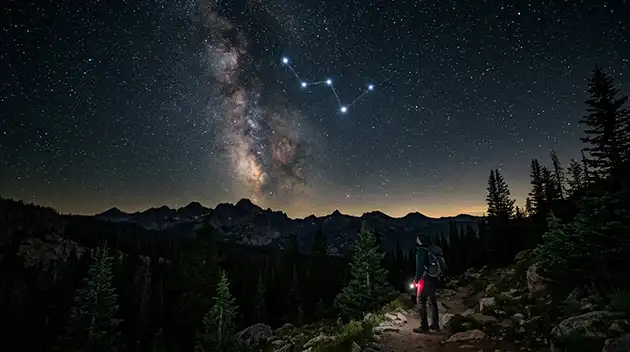
- Timing & Gear: Plan trips around the New Moon to avoid natural lunar light pollution, and always use a red-light headlamp to protect your dark-adapted vision.
You know that feeling when you step out of a tent in the middle of the night, pull your jacket tight against the chill, and look up, only to realize you’ve forgotten what the sky actually looks like?
- Can You Rent an RV for a Year?
- New vs. Used RV: Navigating the Price Trends
- Today’s Best Pop Up Campers
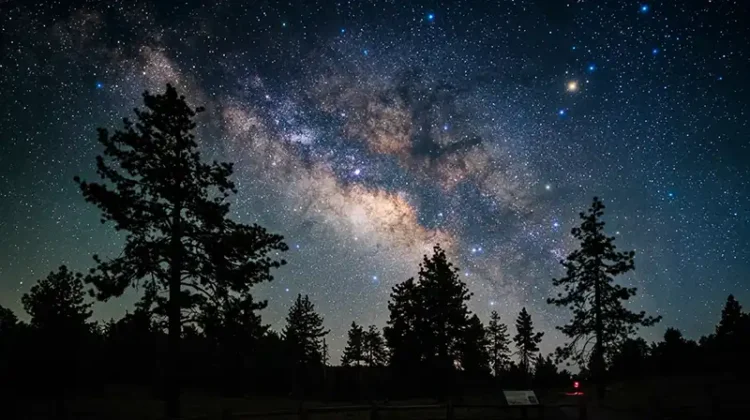
Living around city streetlights and glow, most of us get used to a muted, hazy gray overhead. But step into a true dark-sky preserve, and everything changes. The first time I pitched a tent in a real dark-sky pocket, I stood there like a kid at a magic show. The sky wasn’t just black; it was glowing. Millions of pinpricks, so detailed it felt like I could reach right up to the highest point above my head, what astronomers call the zenith.
If you’re itching for that kind of awe, our national parks are the ultimate escape. But finding a great spot is only half the battle. Knowing how to read the night sky makes the whole experience ten times better.
Reading the Sky: A Quick Cheat Sheet for Campers
Before you head out, it helps to know a few basic terms so you aren’t just staring blindly into space. Think of it like learning the basic trail signs before a big hike.
Finding Your Bearings
-
Zenith: The spot directly straight up above your head. It’s your top-down reference point in the night sky.
-
Meridian: An imaginary arch running from true North to true South, passing right through your zenith. When stars or planets cross this line, they’re at their highest point in the night.
-
Altitude: How high a celestial object sits above the horizon, measured in degrees (from 0 degrees at the ground up to 90 degrees at your zenith).
Understanding Your Viewing Conditions
-
Light Pollution: The artificial glow from cities that washes out faint stars. Parks actively fight this so you get crisp, ink-black skies.
-
Seeing: How steady the atmosphere is. On nights with “good seeing,” the air isn’t turbulent, meaning stars hold steady instead of twinkling wildly, making them sharper to look at.
-
Transparency: How clear the air is of clouds, dust, or humidity. High transparency means the deep cosmic background really pops.
What You’re Actually Looking At
-
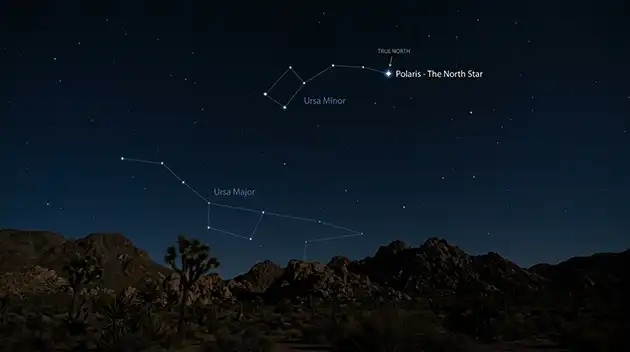
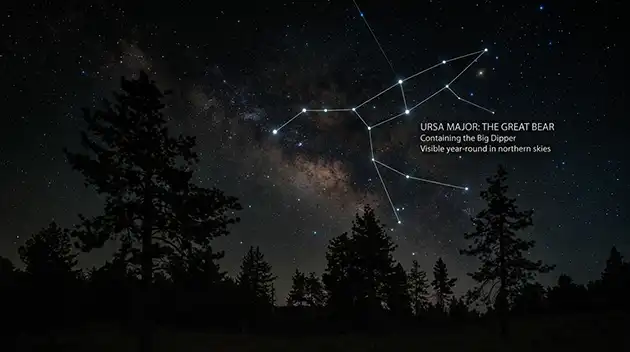
Asterism: A recognized pattern of stars that isn’t an official full constellation; think of the Big Dipper (which is actually just part of the larger Ursa Major).
-
Constellation: One of the 88 officially designated map regions dividing up the night sky.
-
Deep-Sky Objects: Faint, incredible targets sitting way outside our solar system, stuff like distant star clusters, glowing nebulae, and entire galaxies.
12 Unforgettable National Parks for Pitch-Black Skies
1. Death Valley National Park (California)
Don’t let the harsh name fool you; after dark, Death Valley feels like stepping onto another planet. Shielded by mountain ranges and sitting far from major cities, light pollution here is almost zero. On clear nights with great atmospheric transparency, the Milky Way arches right over the salt flats of Badwater Basin, casting a faint shadow on the ground.
Where to Camp:
-
Furnace Creek Campground: Great if you want a few home comforts like an on-site store and cell signal. It accepts reservations and sits close to visitor programming ($10/night).
-
Wildrose Campground: Tucked into the western side of the park, this primitive spot is free, first-come, first-served, and offers pure quiet under a towering zenith.
2. Big Bend National Park (Texas)
Down in a remote pocket of southern Texas, Big Bend boasts the absolute darkest skies in the lower 48 states. It forms part of a massive international dark sky reserve crossing into Mexico.
The air here offers incredible seeing. If you track an object as it crosses the meridian high above the Chisos Mountains, the clarity will blow you away.
Where to Camp:
-
Chisos Basin Campground: Nestled in a high mountain valley at 5,400 feet, giving you elevated views framed by rocky peaks ($16/night).
-
K-Bar Primitive Sites: Roadside sites K-Bar 1 and 2 ($10/night) offer absolute solitude with unobstructed 360° horizons.
3. Mesa Verde National Park (Colorado)
High elevation and dry air give Mesa Verde incredible sky transparency. But what really hits you here is the deep connection to human history. The Ancestral Puebloan people lived in these sandstone cliffs hundreds of years ago, using the altitude of rising star patterns to track their agricultural seasons.
Catching a ranger talk here where they share Indigenous star stories and traditional sky navigation is unforgettable.
Where to Camp:
-
Morefield Campground: A cozy spot just 4 miles inside the park entrance with plenty of tree cover, open April through October ($54/night).
-
Bay City Gulch: A free, primitive 5-site spot located about 30 minutes away in the San Juan National Forest.
4. Isle Royale National Park (Michigan)
This wild island in Lake Superior takes real effort to reach via ferry or seaplane. But with zero car traffic and no light pollution, you’re rewarded with untouched nightscapes accompanied by the soft calling of loons.
Keep your eyes pointed low toward the northern horizon; if space weather lines up, vibrant auroras will dance across the lake.
Where to Camp:
-
Lane Cove Campground: A north-facing backcountry site on the water, offering a front-row seat for northern lights hunting.
-
Trails End Campground (Copper Harbor): Base camp at the tip of Michigan’s Upper Peninsula ($15/night) before catching your morning ferry out to the island.
5. Voyageurs National Park (Minnesota)
Voyageurs is a watery maze along the Canadian border where you navigate by boat during the day and by asterisms like the Big Dipper at night. As part of a cross-border dark sky initiative, the park actively works to preserve its pristine night conditions.
Paddling a kayak across glass-still water while stars reflect all around your boat makes you feel like you’re floating through a deep-sky object itself.
Where to Camp:
-
Woodenfrog Campground: Primitive lakeside camping set inside Kabetogama State Forest ($17/night).
-
The Pines of Kabetogama Resort: Offers full hookups and resort amenities right on the park’s edge ($95/night, seasonal).
6. Glacier National Park (Montana)
Glacier’s sharp peaks and turquoise lakes are legendary, but the park turns into a whole different wonderland at night. Joined with Waterton Lakes in Canada as an International Peace Park, it holds some of the crispest air you’ll ever breathe.
Standing on the shore of Lake McDonald on a clear night, watching distant stars and deep-sky galaxies mirror on the calm water is pure magic.
Where to Camp:
-
Apgar Campground: Sits at the southern tip of Lake McDonald, giving you quick walking access to the north-facing shore ($23/night).
-
Glacier Campground: Located 1 mile outside the west entrance, surrounded by forest with easy access to nearby outfitters ($60/night).
7. Great Basin National Park (Nevada)
Tucked away in eastern Nevada, Great Basin is one of the most remote, underrated gems in the entire park system. Because it sits far from any major metropolis, the atmospheric transparency here is off the charts. On a moonless night, you can see thousands of stars, distant planets, and the Andromeda Galaxy with the naked eye.
Where to Camp:
-
Wheeler Peak Campground: Sitting high up at nearly 10,000 feet elevation, putting you well above valley haze ($20/night, seasonal).
-
Baker Creek Campground: A lower-elevation option along a quiet stream, primitive and open to the stars ($15/night).
8. Bryce Canyon National Park (Utah)
Bryce Canyon isn’t just famous for its surreal crimson hoodoos; it’s also one of the grandfathers of dark-sky preservation. The high desert altitude (over 8,000 feet) means thinner air, which translates to exceptional seeing and minimal atmospheric distortion.
Where to Camp:
-
North Campground: Close to the Visitor Center and Rim Trail for easy night hikes out to Sunrise or Sunset Point ($30/night).
-
Sunset Campground: Steps away from trailheads, offering reservable and first-come sites under ponderosa pines ($30/night).
9. Badlands National Park (South Dakota)
If you want wide, sweeping 360-degree horizons where the sky touches the earth in every direction, the Badlands deliver. The park’s stark, eroded pinnacles and mixed-grass prairies create a hauntingly beautiful backdrop after sunset.
Where to Camp:
-
Cedar Pass Campground: Located near the main scenic loop with cozy sites framed by rock formations ($23-$38/night).
-
Sage Creek Campground: A free, primitive spot down an unpaved road in the wilderness area, often visited by roaming bison.
10. Natural Bridges National Monument (Utah)
This remote Utah hideaway became the world’s very first certified International Dark Sky Park. Owachomo Bridge, a massive natural stone arch, creates a perfect natural frame for viewing or photographing the Milky Way as it passes overhead near your zenith.
Where to Camp:
-
Natural Bridges Campground: A small, 13-site primitive campground ($16/night) that’s quiet, off the beaten path, and surrounded by pure desert wilderness.
11. Capitol Reef National Park (Utah)
Tucked into south-central Utah’s Red Rock Country, Capitol Reef holds an official International Dark Sky designation, boasting near-zero light pollution and crystal-clear high-desert skies. Standing beneath massive stone cliffs while stars spin overhead feels completely wild.
Where to Camp:
-
Fruita Campground: Nestled inside a lush historic orchard surrounded by red cliffs with easy night sky access ($25/night).
-
Cathedral Valley Campground: A free, 6-site primitive spot in the rugged backcountry surrounded by towering monoliths.
12. Black Canyon of the Gunnison National Park (Colorado)
High elevation (around 8,000 feet) and sparse surrounding populations give Black Canyon phenomenal sky transparency and rock-steady seeing. You can stand at the South Rim overlooks and watch the Milky Way stretch directly across your zenith, spanning from horizon to horizon above the canyon abyss.
Where to Camp:
-
South Rim Campground: Located near main canyon rim overlooks like Chasm View and Dragon Point ($20-$26/night).
-
North Rim Campground: Secluded and reached by an unpaved road, offering primitive camping ($20/night) with almost no ambient artificial light.
Frequently Asked Questions
What is the best time of month to go stargazing in national parks?
The ideal time is during a New Moon or the few days right before and after it. When the moon isn’t in the sky, artificial and natural light are at their absolute lowest, allowing faint deep-sky objects and the Milky Way to stand out in full detail.
Do I need an expensive telescope to enjoy dark-sky parks?
Not at all. In certified dark-sky parks, the naked eye is often more than enough to see thousands of stars, the dusty core of the Milky Way, satellite passes, and meteor showers. A basic pair of $10\times50$ binoculars is a fantastic, lightweight tool that will reveal lunar craters and distant star clusters without needing heavy camera gear.
Why do I need to use a red light headlamp instead of a regular flashlight?
It takes your eyes about 20 to 30 minutes to fully adapt to total darkness. White light from standard flashlights or phone screens immediately breaks that night vision, forcing your eyes to restart the adaptation process. Red light doesn’t disrupt your pupils nearly as much, keeping your eyes acclimated to the dark while letting you navigate your campsite safely.
What is the difference between a dark-sky park and a regular national park?
An official Dark Sky Park (certified by DarkSky International) actively takes measures to reduce ambient light pollution. This includes using shielded outdoor lighting, running community outreach programs, and tracking atmospheric quality. While many remote national parks have naturally dark skies, certified parks formally commit to preserving those dark nightscapes for the long term.
Can I see the Northern Lights at these national parks?
Yes, but location and space weather matter. Northern parks like Isle Royale in Michigan, Voyageurs in Minnesota, and Glacier in Montana offer the highest likelihood of spotting the aurora, especially during periods of elevated solar activity. Keep an eye on space weather forecasts and point your gaze toward the northern horizon on clear nights.
A Few Pro-Tips for Your Trip
-
Measure Sky Heights with Your Hands: Want to estimate an object’s altitude above the horizon? Hold your fist out at arm’s length; the width of your fist covers roughly 10 degrees of sky. Stack 9 fists from the horizon straight up, and you’ll hit your 90-degree zenith.
-
Watch the Moon: Plan around a New Moon. A bright full moon acts like natural light pollution, washing out fainter constellations and galaxies.
-
Protect Your Night Vision: It takes about 20-30 minutes for your eyes to adapt to dark conditions. Switch your headlamp to a red LED mode so you don’t ruin your vision (or your neighbor’s!).
Final Thoughts
-
Experiencing a true pitch-black night sky is a powerful reminder of how vibrant the cosmos looks when freed from city light pollution.
-
By using simple hand measurements and key navigational landmarks like the meridian and zenith, you can confidently orient yourself under the stars anywhere you camp.
-
Whether you choose the salt flats of Death Valley, the high hoodoos of Bryce Canyon, or the watery wilderness of Voyageurs, each of these 12 national parks offers a front-row seat to the universe.
-
Pack your red headlamp, check the moon phases before booking, and head out to reconnect with the timeless beauty of a wild, starry night.