
Thank you for reading our post, please rate this article at the end.
Reading Time: 3 minutesLast Updated on October 28, 2026 by Paul Clayton
Part of our guide: How to Winterize an RV: Complete Step-by-Step Guide
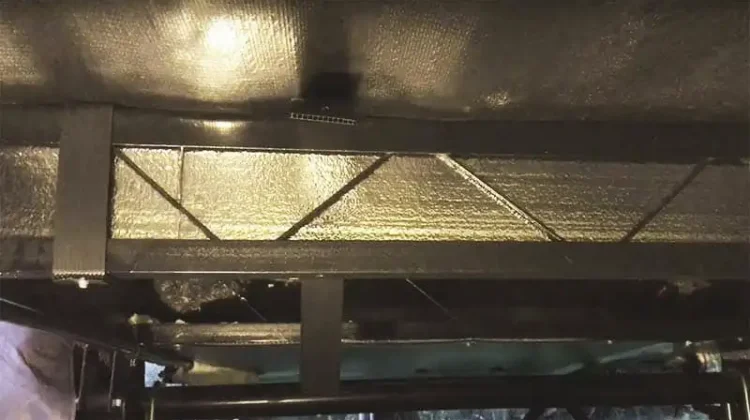
To insulate an RV underbelly, inspect and clean the underside, seal gaps and holes, attach rigid foam board (or apply closed-cell spray foam) between the frame rails, cover it with a coroplast or similar underbelly sheet, and finish by skirting the RV for winter. Focus on the areas around the fresh and holding tanks, water lines and dump valves, since that’s where freezing does the most damage. For temporary winter protection, RV skirting and tank heaters add a lot of protection without a full underbelly project.
Underbelly insulation options
| Option | Pros | Cons | Best for |
|---|---|---|---|
| Rigid foam board (XPS or polyiso) | Affordable, DIY-friendly, removable for repairs | Must be cut and secured carefully | Most DIY projects |
| Closed-cell spray foam | Seals gaps and air leaks, high R-value per inch | Messy, hard to remove for plumbing access | Sealing irregular areas |
| Reflective foil bubble insulation | Light, easy to install | Low R-value on its own | Supplementing other insulation |
| Skirting (temporary) | Blocks wind under the RV, big impact | Seasonal setup | Winter camping |

Table of Contents
Key Takeaways
| Topic | Key takeaway |
|---|---|
| Why insulate | Protects tanks and pipes from freezing and saves heat |
| Materials | Foam board, reflective insulation or spray foam |
| Steps | Inspect, clean, measure, insulate and seal |
| Seal gaps | Close openings to keep out cold and pests |
| Maintain | Check for damage and moisture |
How to Insulate an RV Underbelly in 5 Steps
1. Inspect and clean
Raise and support the RV safely on jack stands, never only on stabilizers. Remove any old underbelly covering, look for water damage, rodent nests and loose wiring, and fix leaks before covering anything. Let wet areas dry.
2. Seal gaps and holes
Fill holes around pipes, wires and the frame with expanding foam or sealant, and use steel wool in larger gaps to block rodents.
3. Install the insulation
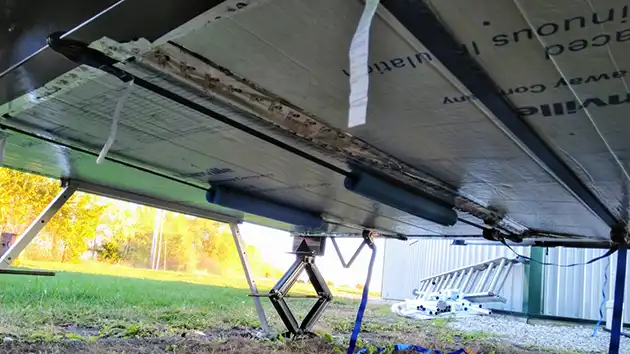
Cut rigid foam board to fit between the frame members, working around tanks and lines. Use construction adhesive compatible with foam, and fill seams with foam-safe sealant or tape. Leave access to drain valves, low-point drains and tank sensors.
4. Protect the plumbing
Wrap exposed water lines with foam pipe insulation, and consider heat tape on vulnerable lines and tank heater pads on tanks. Make sure any heat tape is rated for the application and installed per the manufacturer.
5. Cover and close it up
Fasten a coroplast (corrugated plastic) or similar underbelly sheet to the frame with self-tapping screws and large washers. This protects the insulation from road spray and keeps critters out.
Spray Foam vs. Foam Panels
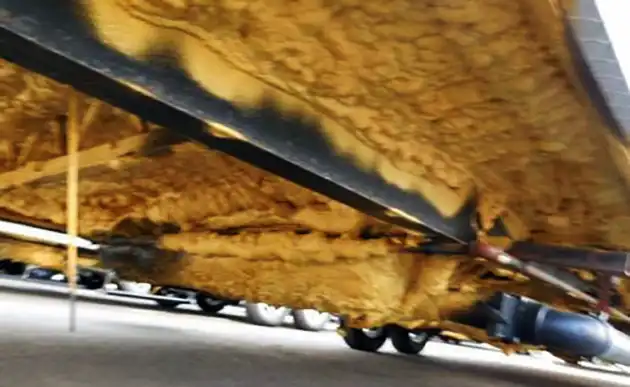
Spray foam is great for sealing odd-shaped gaps and adds strong insulation, but it’s hard to remove when you need to repair plumbing, and it can trap moisture if applied over damp wood. Foam panels are cleaner and easier to remove. Many DIYers use panels for large areas and spray foam only to seal gaps.
Temporary Winter Options
- Skirting: vinyl, insulated panels or foam board around the base of the RV blocks wind.
- Tank heaters and heated hoses keep water flowing.
- A safe heat source in wet bays, where appropriate.
More cold-weather tips are in how to keep RV pipes from freezing. If you’re storing the RV, follow our winterizing guide.
Frequently Asked Questions
Is underbelly insulation worth it?
If you camp in cold weather, yes. It helps prevent frozen tanks and lines and keeps floors warmer.
What R-value should I use?
As much as fits between the frame rails. Even 1 to 2 inches of rigid foam makes a noticeable difference.
Do RVs come with enclosed underbellies?
Many four-season models have enclosed and heated underbellies. See the best cold weather RVs and RV insulation basics.
Can I insulate the underbelly temporarily?
Yes. Skirting and foam board placed around the base can be removed in spring.
Final Thoughts
Insulating your RV underbelly is a practical upgrade for cold-weather camping. Use the right materials, seal gaps and inspect it each season.
Resources
- Insulation manufacturers’ installation guides
- RV manufacturer cold-weather guidance




